New Mexico is the only state that has a state question, and it’s a question anyone who lives here is familiar with: “Red or Green?” The question refers to what kind of chile pepper you’d like your food slathered with. Abigail White, a proud Burqueña, believes in the importance of this question. “If New Mexico had a dating app, your chile preference would be the first question,” she says. It’s emblematic of how important chiles are to New Mexican culture. “New Mexico chile is what sets us apart from all the other states. It’s a huge part of our history and culture. It’s something that New Mexicans can be proud of. Plus, it’s a staple crop,” says White.
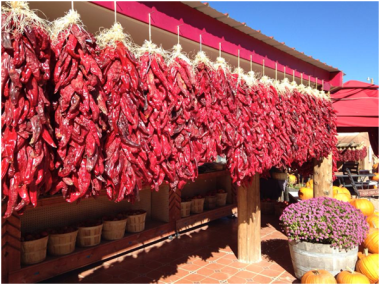
It’s tradition in New Mexico to dry red chiles and hang them as ristras. Image by Nicole Curtis Ammernan via santafe.org.
Still, the market for chiles is growing. And many are working to ensure that New Mexico’s industry grows as well. Recently, the New Mexico Chile Advertising Act, requiring sellers of chiles to label where they’ve been sourced from, has gone into effect. So that consumers know when they are truly getting a New Mexico chile with all its unique flavor and value. And there has been a push for more agritourism surrounding the chile. Like the Hatch Chile festival, which brings thousands to eat and celebrate the chiles. Also, there is hope that the NMSU Chile Pepper Institute will create a hardier variety that can survive a machine harvest. Or a pepper more resistant to drought and pests.
Chile runs through the veins of New Mexicans. It is not just a staple for our economy; it is a staple for our identity. The smell of chiles roasting is the smell of home. It should flourish so that the whole world can appreciate that identity.
Chile rellenos are one of the most famous chile dishes. In New Mexico, you will get it proudly slathered with red or green chile. Image by Flickr/eekim via NewsCastic.
What keeps the masses of people acting in unison against global warming and resource overuse these days? Obviously there are those who don’t believe, for one reason or another. But for those who do accept science as the objective truth — and they can truthfully say they care — how much do they actually do? Why do some do more than others? Is there an environmental incentive that makes taking action more pertinent to some? It may be against human nature to concern ourselves with something that doesn’t seem to imminently endanger our survival. A huge obstacle in building an army of eco warriors is the people’s lack of exposure to the physical and observable negative effects of global warming, such as extra hot summers, agricultural impact from drought, plant and animal die offs, etc. It would help a great deal if they saw these depressing sights with their own eyes, and thus through the lens of sustainable food and agriculture.
Think about what we are shown in the media, like vacation spots. A given place usually gains much more popularity if it is famed for its beauty, rather than for signs of direct or indirect destruction from human impact. Tahiti, the Bahamas, the British Virgin Islands, Yellowstone Park — all places that are attractive because their look appears unaffected by humans’ abuse.
Some areas of the planet are much more affected and/or show the effects of global warming more vividly than others; if one doesn’t see the direct consequences of global warming and overuse of resources, they are so much less likely to act or even truly care. Places like California and the US Midwest, which play an enormous part in the food system are such places. While parts of California like the central coast are beautiful, if you’ve ever been there in multiple seasons, you’d see that the health of the land depends on the seasonal climate. In the winter, after the rains have come, the grasses on the hills are a rich green, and the shrubbery is thick among the trees; in the summer, though, the grasses turn a golden brown, and the shrubbery turns sparse. California is by far the main food-growing state in the US; 90% fruits and vegetables that the nation eats are coming from California. A number of factors, including overpopulation and global warming, have caused the state to be in a perpetual state of drought, which particularly impacts the farmers.
California’s weather system may have naturally brought about a drought, but climate change has definitely exacerbated it. The farmers are part of the relatively few in the state that actually have to deal with and worry about lack of sufficient water. It also affects immigrants and others looking for farm work; with less water to use, there is less farming to be done, and fewer laborers to hire. Many of the rest in the people in the state, even if they are aware of California’s drought as a whole, are so much less worried because it does not directly affect their lives like it does the farmers. Farmers here are aware and realize the importance of being an active eco warrior because of what they have seen and experienced. The same idea applies to Alaska.
If one is impacted harshly by global warming, they never let it out of mind. The fishermen and women in Alaska, specifically Bristol Bay, who make their entire year’s living off the sockeye salmon that come through once each year, are all extremely proactive and passionate eco warriors; they are aware as well because their lives’ practice is the fish — a food source that must remain sustainable. The people here work for three or four months fishing during the salmon spawning season and live off that salary for the rest of the year. If global warming were to affect the salmon population to a serious degree, which they already vigilantly watch for, all those people’s lives, stability, and even the local economy would greatly suffer. The wildlife oversight organizations that look after the Bay have people diligently calculate estimates of total salmon throughput each year. They are so serious about preventing overfishing that they installed a rule that all the salmon fished out during a given season can never exceed 50% of the total estimated number of salmon throughput that year. The people have monitoring, rules, conservation, and action–all because the consequences of a critical amount of resource overuse, in this case a seriously harmful hit to the salmon population, would be incredibly problematic for the livelihoods of everyone in that area. Anyone who depends on the fish outside of the Bay’s population would be affected, too. Members of New Mexico’s agriculture system also share this same awareness.
My friend Julia is directly involved in New Mexico agriculture herself, and is a farmhand in Albuquerque with North Valley Organics. She lives completely off the grid in a solar-powered house, and is supplied by a propane generator for her water well. I asked her if there was a definitive moment in her life when she began to see through a lens of sustainable food and agriculture, and if so, when and why? In short, she responded with the following. The farms are all about reusing materials and the ground. This is especially important because sustainability has gained a lot of popularity, and it is present in many people’s minds; however, many less people are actually committed to being acting and make change. Between working on the farm and school projects on sustainability, Julia realized that sustainability is more of a fad for many people; nevertheless, if we were all small scale farmers, the world would have fewer problems with hunger and declining environmental health. Many people probably don’t do what Julia does because sustainable living requires a lot of commitment, planning, and focus. Since beginning work on the farm she’s realized also that buying locally helps remove consumer demand for the products of big agricultre, large corporations that generally produce and distribute food much less sustainably.
Photo Credit: Julia Dee
If someone were to look closely at cultures and areas with populations that are directly affected by the consequences of global warming and resource overuse, they would gain a new level of care as an eco warrior. I believe the key to effectively spreading the passion for being eco warriors is to take those who are not interested in the the toils of humans’ impact and immerse them in an environment where it is extremely pertinent. If people better understood what kind of struggles are rising, though they probably do not see them or are directly affected by them on a daily basis, the problems would become much more real and worth their attention; they would begin to see through the lens of sustainable food and agriculture.
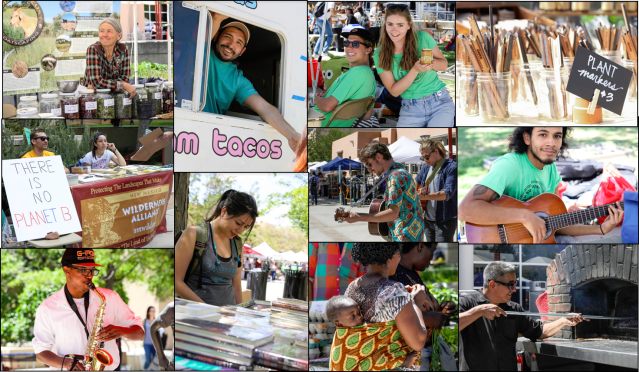
You’re invited to join us for the 10th Annual UNM Sustainability Expo, happening this year on Thursday, April 19 from 10:30am to 2:30pm on Cornell Mall. The Expo will feature a local growers’ market, interactive educational displays, and a book exchange. The event will also showcase numerous alternative transportation, energy conservation, waste reduction, and sustainable lifestyle practices.
Grab lunch from food trucks at the growers’ market, and stick around for live music during the noon hour. Interact with sustainability-minded organizations at a variety of engaging displays and activities. Learn about sustainable initiatives on campus and in the surrounding community. Bring home some plant starts for your backyard garden or some fresh produce for dinner.
This Expo is organized by UNM students in the Sustainability Studies Program Growers’ Market Practicum class. Longtime coordinating partners include the UNM Office of Sustainability and UNM Parking and Transportation Services.
Stay up to date on Expo happenings on our Facebook page. Come celebrate Earth Day with us – three days early – on April 19!
Highlights of the 9th Annual Sustainability Expo, April 2017
When I was a child, my father would often pack the whole family into the truck and go for extended camping trips in Southern New Mexico, while he did field research for the New Mexico Department of Game and Fish on various quail species that lived in the region. We explored the Organ, Sacramento, Piloncillo, Gila, San Mateo and other mountain ranges as well as the grasslands and deserts below. I would spend all day roaming the landscape, and then would build mini villages made out of whatever plant and geologic material I found. I would build complex fairy houses for my baby sister, and we would escape the gritty world for a spell. I was constantly making extravagant wreaths out of the local flora and presenting them to my family members. I would collect flowers of all kinds and press them in my father’s flower press for later creations at home. He would teach me a bit about the ecology of the area, and I would imagine how previous peoples who lived there would make their way in the world. Humans, as well as plants and animals, must adapt to their surroundings if they wish to thrive, or even to survive.
Camping at Capitan, New Mexico on a quail field research trip with family and the two of the best pointers, our Weimereiners Gus and Lick
Camping at Capitan, New Mexico on a quail field research trip with family and the two of the best pointers, our Weimereiners Gus and Lick
Little brother and sister next to tent in the Gila Mountains
Little sister and I splashing in river in the Gila Mountains
My brother and I sketching at our campsite in the Gila.
Me, about 12 years old, in the Copper Canyon near Creel, Chihuahua, with a Tarahumara couple. From a very young age I was fascinated with the diversity of peoples and cultures
Now I find myself with a family of my own in Northern New Mexico, having journeyed from my homeland in Chihuahua, to Southern New Mexico, to Big Bend country in Texas, a stint in Kansas and Austin and finally to my home in Dixon, New Mexico. Those early botanical experiences have remained an important part of me, and I am still making fairy houses, now with my children, and wreaths, but now trying to make a sustainable living out of it. I make a wide variety of dried floral arrangements, and source all ingredients from our farm or gather them in the wildlands surrounding Dixon, NM.
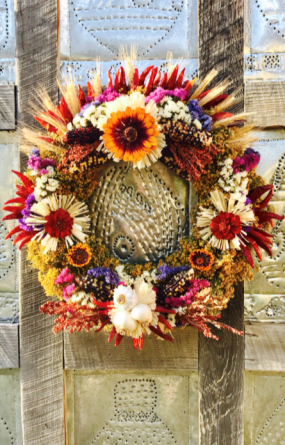
Wreath with lavender sprigs, chile pequin, local juniper, homegrown Indian corn, sand dried zinnias and wild sunflowers on a corn husk wreath base.
Grape vine wreath base with homegrown sorghum, Indian corn, garlic, statice, zinnias and strawflowers. Wild snakeweed accents.
Cholla cactus cross with grass cord on ends. Sorghum, chile pequin, garlic, poppy pods, strawflowers, zinnias and wild oak and cottonwood leaves
Snake weed wreath base with statice, strawflowers, culinary sage, roses and wild acorns found in Penasco.
Corn husk doll with roses, statice and handmade Day of the Dead skull mask. Hair made from corn silk.
Grapevine wreath base with sorghum, Indian corn, chile pequin, garlic, statice and wild snakeweed and poor man’s pepper accents.
Fall and Christmas wreath with sorghum, wheat, millet, Indian corn, chile pequin, garlic and pinon cones.
Christmas wreath with wild rosehip base, pinecones, chile pequin, Indian corn, wheat, and pine boughs.
Tania at Santa Fe Farmers Market. Photo by Gabriella Marks.
Ric at the One Straw Farm booth at the Santa Fe Farmers Market
Wreath with many of the popular food crops of New Mexico in celebration of the bounty of the Fall harvest and inspired by the revered and radiating beauty of the Virgen de Guadalupe effigy.
My partner Ric and I operate One Straw Farm, an organic (not certified) vegetable and flower farm. My arrangement business, Season’s Muse, is inspired by the culture, ecology and magic of the Upper Rio Grande bio-region. We work hard to ensure that everything we produce stays true to our commitment of growing crops in a way that does not harm the land, water or air. I try to tell a story in my creations about the region by coupling various farm-grown plants and flowers and wild plants together into unique arrangements. I use many traditional New Mexico food staples in my arrangements such as corn, wheat, sorghum, chile pequin, garlic, pinon cones, gourds and amaranth. I sell my works at the Santa Fe Farmers Market and am one of the artists on the Dixon Studio Tour held every November. Each arrangement also has a bit of my own history woven into it, because everything in it consists of ingredients that I either grew, gathered or bartered.
This slideshow requires JavaScript.
Each Spring, we start tens of thousands of plants in the greenhouse for transplanting when the weather is settled. Everything we grow at the farm is raised using the same organic standards that certified organic farmers are required to use, including only using natural ingredients and not using chemical pesticides, fertilizers or herbicides. We custom mix our potting mix, which includes our own special compost and garden soil. The fields are kept fertile by a combination of growing cover crops and applications of compost, manure and minerals. Weeds are controlled by implementing a system of stale-bed preparation and flame weeding, as well as copious amounts of weeding by hand.
This slideshow requires JavaScript.
We irrigate from a traditional acequia and use drip irrigation for all of our crops. Acequias are 400-year -old community institutions in New Mexico that trace their roots to Spanish, Moorish, Native American and Mexican irrigating traditions. Every year the parciantes, meaning the users of the ditch of the acequia, participate in “La Fatiga” and “La Jara”, or the annual cleaning of the ditch, a testament to the communal aspects of acequia culture still in place today. Jaras, or willows, are also a crucial part of many of my arrangements. I harvest the same willows that are cut every year from the ditch banks and use them to make hundreds of wreath bases before a very busy Studio Tour season of preparation.
A few months of irrigating, weeding, thinning and trellising pass before most things are ready to harvest. When the flowers, grasses, sorghum, chiles, corn and other plants are ready to harvest, I am in the field every day harvesting, and then pressing thousands of flowers in the sand to dry, or bundling, tying and hanging to dry the other crops.
The presa, main head gate and the compuerta that is opened in the spring after “La Jara” and “La Limpia” (annual ditch cleaning) allowing the water from the Rio Embudo to be diverted into our acequia, La Acequia de la Plaza, which we then use to water our fields via drip irrigation.
Various varieties of millet bundled, tied and ready to be hung to dry.
Zinnias in the field ready to be harvested and dried.
Place zinnias upside down in flat boxes with about 1/2 inch of sand to dry.
Cover flowers in sand. I use fine sandblasting sand (25 grit) for its silica content. It works well for the smaller Profusion zinnias. Regular sand should work well for less delicate and larger flowers. Let dry for a week or longer, depending on humidity.
Dried Zoey Zinnias and White Profusion Zinnias.
Example of wreath using the above dried zinnias.
Zinnia field next to house. One of several flower plots.
Marigolds, zinnias, statice, sunflowers and sorghum plot in the fields below the house. My son Luis hanging out on the tailgate of our truck while I harvest flowers.
Fresh Zinnia
Dried Zinnias in various colors. Reds dry dark so if you are looking for a truer red zinnia, get the salmon colored zinnia variety, and they will dry like the zinnias on the far left. Most reds in nature dry a much darker color. The lighter and more vibrant your flower and plant colors are, the better the results when dried.
Dried Zinnias in various colors. Reds dry dark so if you are looking for a truer red zinnia, get the salmon colored zinnia variety, and they will dry like the zinnias on the far left. Most reds in nature dry a much darker color. The lighter and more vibrant your flower and plant colors are, the better the results when dried.
Dried Zinnias in various colors. Reds dry dark so if you are looking for a truer red zinnia, get the salmon colored zinnia variety, and they will dry like the zinnias on the far left. Most reds in nature dry a much darker color. The lighter and more vibrant your flower and plant colors are, the better the results when dried.
Various boxes full of dried flowers
Profusion Zinnias, also known as the Jazzy Mix or Persian Carpet, variety can be found through Johnny’s Seeds, Park Seeds, etc.
Drying Persian Carpet Zinnias. Same method as shown above. These Zinnias add the most beautiful touch to dried arrangements and yet are the most time-consuming to dry.
Another one of my favorite zinnias: Zahara Double Fire Zinnia
Various flowers drying in sand in flower room.
Sunflowers
Sunflowers
Sunflowers dried in open air.
Sunflower dried in sand.
Example of an arrangement with sand-dried sunflower.
Various varieties of celosia flowers and Love Lies Bleeding amaranth in basket and celosia plants in field.
Example of how I use globe amaranth to create balloons for my “Balloon Boy” corn husk doll.
I also spend many days in the wildlands, mesas and forests collecting amazing specimens at various stages of their development created by the original muse, Mother Nature. When I take part of a plant for my arrangements, I make it a habit to thank the plant for its bounty, and I never take it all. I always make sure not to compromise the health of the plant or the important ecosystem services they provide. Some of my favorite wild plants include Indian rice grass, snakeweed, sage, wild sunflowers, pinon cones, cattails, yarrow and dock.
Various wild plants, including horsetails, cattails, yarrow, wild grasses from Penasco, poor man’s pepper, snakeweed and dock.
Cutting wild daisies and white yarrow in Penasco
Cattails from Penasco
Wild plants hanging in flower room
Sand-dried wild sunflower from the Taos Mesa
I also trade our fresh vegetables for other flowers and plants that we don’t grow with other farmers at the farmers market. Santa Fe Farmers Market rules dictate that 80% of farm crafts be locally grown or wild-crafted, further adding to the sustainability of the work I do.
I strive to develop my craft into a valuable example of a sustainable art form that can spark interest and awareness about Northern New Mexican popular food staples, agricultural traditions and ecology. I hope to further the value-added aspects of Season’s Muse by inspiring a desire to preserve not only the traditions but also the natural beauty that surrounds us in the Upper Rio Grande bioregion. The diverse and unique landscape we live in is expressed in my works through the many wild plants that make Northern New Mexico such a rich and vibrant region with astonishingly beautiful landscapes. Because the plants I use in my arrangements are derived directly from these landscapes, it is their unique colors and textures that radiate from my arrangements and are therefore, a direct muse for the resulting design.
Leaves from the forest beyond Penasco. Colors of Fall that inspire my designs.
The light of the morning glistening on the moss of a bark. The muse as the interplay of light, colors and textures in the forest.
The resulting arrangement that in many ways was inspired by the colors and textures of the fall images above.
Leaves of a wild rose bush turning from bright hues of yellow to orange.
The seasons dictate how my days are organized. The entire Spring and Summer is spent growing crops (and children), and when Fall approaches, signaling a more reflective future, I am able to start making my creations. Plus, I have a huge new exciting assortment of material grown and collected from the year! The changing light of Fall triggers the artistic muse within me, and I now spend hours each day making arrangements. Each wreath is unique, yet related. Every little zinnia that gets glued next to a chile pequin, that is next to a sorghum sprig, that is next to an elegant dried member of the Polygonaceae family collected from a highway right-of-way, that are all carefully blended into the amazing bright yellow flower ocean of thousands of Snakeweed flowers that are on a jara wreath made from willows from the local acequia, are constant reminders of what I have been creating and developing all year, and all my life.
Watch a time-lapse video below of me making this wreath, from harvesting the jaras (willow), to making the wreath base and adding the snakeweed, and creating the look that calls out in celebration of the colors, beauty and bounty of Northern New Mexico agriculture.
My love for good, fresh food began while I was attending high school in Estes Park, CO. Our school embedded a strong belief that in order to learn and be successful, we must nourish ourselves daily with nutrient rich, unprocessed foods. Most teenagers seem to be comfortable living off ramen and assorted snack foods, so in order to invoke a passion for exploring new foods, the staff required all students to participate in the preparation and cooking of our own food, while providing a welcoming, communal eating environment. Meal times became a central place for creative collaboration and in depth discussions. Through this experience, I developed a belief that cooking and eating should not be rushed, because when we take the time to enjoy our food and community, a real beautiful thing happens: we connect.
The modern world we live in today is chock full of messages encouraging us to join the ‘rat race’ of society. We have automatic coffee makers set to brew at 6am, schedules that keep us running from sunrise to sunset, and less & less time to actually spend with our families. I truly believe that even though the world around us is moving at an alarming rate, we as individuals do not have to. We need to slow down and not depend so heavily on the systems that seek to make life easier, if they compromise our connections to food, people and the health of the planet.
History of Slow Food:
Carlo Petrini, a culinary expert and journalist in Italy, shares a similar belief. He became known for leading a group of activists in a 1986 demonstration against the opening of a McDonald’s location near the Piazza de Spagna in Rome. Armed with bowls of penne pasta, the people chanted, “We don’t want fast food…We want slow food!” The demonstration was a counter action to the ongoing globalization of fast food and fast paced lifestyles.
In the following years, Petrini developed a non-profit organization in Italy called Slow Food, with the philosophy that food should be good, clean and fair for all. A few years later, the Slow Food international movement began in Paris with the first Slow Food Manifesto signed. It wasn’t until 2000 that the USA branch was created, and today there is a local chapter in nearly every state! Currently there are over 1,500 local chapters in over 160 countries.
One of the most impactful projects developed by the Slow Food movement is Terra Madre, an initiative to protect and support small-scale producers and food artisans from around the globe. Every two years, the food communities of Terra Madre networks meet for a festive and educational time in Turin, Italy. Regional meeting are also held in numerous countries, such as Ireland, Tanzania, Brazil, South Korea and Japan. Together, Slow Food and Terra Madre have helped to raise awareness about issues pertaining to agricultural processes, production methods, the preservation of traditional food and cultural practices, and have supported countless livelihoods in doing so. In learning more about this inspiring movement, I was curious to discover if and how New Mexico has been involved with Slow Food.
Slow Food New Mexico:
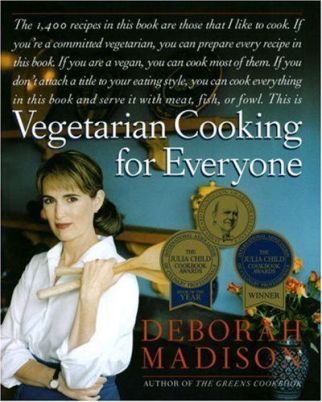
Currently, there are two active chapters within the state: one in Santa Fe and the other in Albuquerque. The Santa Fe chapter was founded in the year 2000 by American chef Deborah Madison who has been part of the food movement as a chef, writer, farmers’ market manager and cook. She has won multiple James Beard Awards for her writings, including her landmark cookbook ‘Vegetarian cooking for everyone’, and was the owner and founder of the restaurant, Casa Escalera in Santa Fe.
In an email conversation with Deborah, she stated that the first event they hosted was the most fun. At the time, Slow Food was new to many people, so the organizers asked that people bring anything that meant ‘Slow Food’ to them. Deborah said all sorts of things showed up, like a bottle of Guenon from the 1980’s, sweet potatoes cooked for days in an outdoor slow cooker, and mushrooms someone had picked and dried. Everyone spoke about why they chose their particular dish to share. Deborah is no longer part of the organizing board for the chapter.
The Santa Fe chapter is still active with numerous events promoting local food entrepreneurs. Members can discover the joys of locally made cheeses, chocolates, wines & spirits, and other foods from the region. The group also has a monthly book club with a long list of books of various topics, all having to do with food. The monthly dinner is a time when members can come together to share a homecooked dish and discuss the topics of the current book they are reading. Current chapter organizers are Ellen Lampert, Ardis Burst and Nina Rosenburg.
Slow Food Santa Fe Book & Dinner night, Photo credit: Amy
Slow Food Santa Fe Book & Dinner night, Photo credit: Amy
Slow Food ABQ:
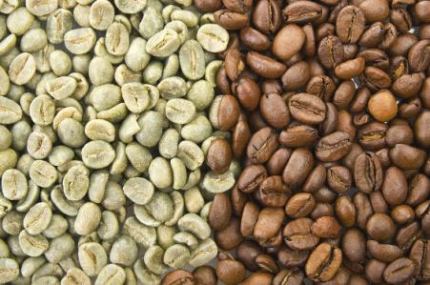
The Albuquerque chapter has gone through changes since its founding in October of 2013, yet still seeks to provide events and opportunities for members to explore local foods and culture around the city. Currently, Grit Ramuschkat and Katja Lauterstein are organizing events for the chapter, and the most recent event was a coffee tasting at local coffee roaster, Red Rock Roasters. The event included a tour of the roasting facility, a discussion about coffee production and sources, and a wonderful and informative tasting of three different varieties.
Rachel of Red Rock Roasters pours fresh brewed coffee during a coffee tasting in ABQ, Photo credit: Amy
Rachel of Red Rock Roasters pours fresh brewed coffee during a coffee tasting in ABQ, Photo credit: Amy
If you’d like to get involved with either chapter and learn more about their upcoming events, email or visit their Facebook page:
Whether it be your coffee maker at home, a quick brew you pick up on your way to work, or a trip to a third wave coffee shop with your friends, coffee has become the go to beverage of many. Coffee shops that are focused on the small business model and support the local community have emerged all over the country. The US Congress defines “local” as “less than 400 miles from a product’s origin, or within the state in which it is produced.” Coffee beans cannot be placed under this definition unless you’re in Hawaii or certain parts of countries in Central and South America or Africa, for example.
So why do many places claim to be “local?” Local coffee shops rely on different aspects of local, such as sustainable production, distribution practices, length of supply chain and level of community outreach. Albuquerque has grown further out of the typical Starbucks coffee scene, with dozens of cafes popping up over the last few years.
Prismatic
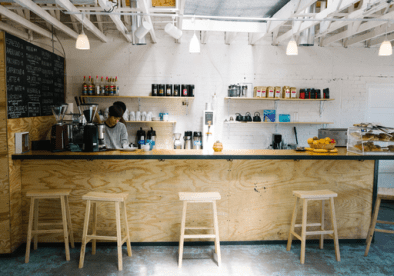
The first third wave coffee shop in Albuquerque, NM is Prismatic, located in the Sawmill district just north of Old Town. It is owned by Loren Bunjes, and is part of a neighborhood complex with mixed businesses that explore diversity and create a wider community within a single location. Apart from their coffee, they also have stroopwafels, a European (Dutch) pastry, made in house, with the milk and butter purchased from a local dairy farm: Rasband. They sell equipment to other coffee shops around town and host events with local breweries like La Cumbre and Boxing Bear. Loren says he thinks it’s important that the owners live within a few miles from the coffee shop itself, because this creates a strong producer to consumer relationship. Loren also mentions that they would like to sell nationally – but continue roasting in Albuquerque – to uphold the concept of local coffee, but spread the word around the country.
This coffee shop is one of few in Albuquerque to have a direct relationship with the coffee producers, because their business has grown from childhood memories to a family business. I talked to barista Alexis, who explained to me the story behind their local coffee shop: Two brothers from Cali, Colombia had to flee because of the escalating guerilla warfare and moved to the United States. They had grown up on their family coffee farm and decided to bring their roots to the US by being involved with the coffee industry. They named their coffee after their aunt, Villa Myriam, and grew it into an actual location, The Brew. Their business is focused on the value of family and friends and culture.
A customer had overheard our conversation and approached us to give recognition to The Brew, where they know his name and his usual order. He thinks this adds to the factor of local as a very personal and traditional manner based on cultural practices. Alexis mentioned that the story behind the coffee appeals to customers and employees by “making me feel like I am home,” and that “everyone is family.” And their employees are being “[taught] a recipe” instead of just working a machine. Apart from their close community outreach, their coffee is distributed to other local business like Rebel Donuts, Los Poblanos, Range Café, and Standard Diner, which grows a partnership of business, and cuts down on travel miles. Their social media appeal has something that others don’t because they use #farmtocup to inform people of their unique connection to their farm and business.
Zendo opened in 2013 by New Mexico native, Pilar Westell, and is dedicated to creating a welcoming and open space for the community. They have a large focus on promoting local artists by hosting art shows the first Friday of each month. Zendo works with other community businesses by providing baked goods and food from Burque Bakehouse, Planty Sweet, and many more. Pilar expressed her thoughts on being a local coffee shop by saying, “one of the things I love the most about Zendo is that we live here, we are part of this community and everybody that comes in here gets welcomed into this community.” Having a local business can be difficult but is still a “humbling experience.”
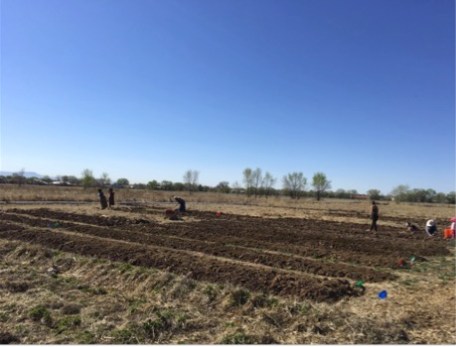
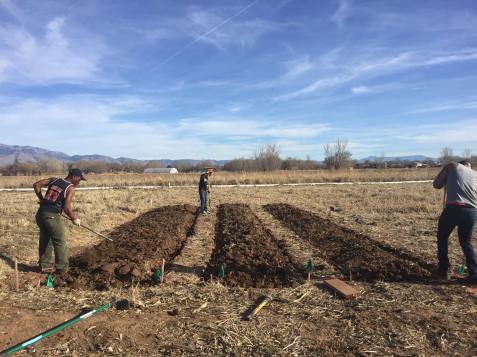
The Tres Hermanas Farm plot, located at the Rio Grande Community Farm. Three Congolese women are working in the field on the far left, and Zoey is walking toward them. Photo Credit: Author
Zoey is working on four different ways for refugee families to get involved with farming and gardening. One way is to work at the SWOP Garden in the International District, and another is to work on a couple garden beds provided by a local church. The resettlement agency also has a small piece of land on 8th St near Mountain Rd. It is part of Red Wagon Urban Farm & Community Garden, which is partially owned by the Harwood Art Center and Red Tractor Farm. And then there is the larger Tres Hermanas farm, which is community garden style and divided up into rows. The farm is located on the Rio Grande Community Farm and is about half an acre. Zoey says, “the goal of the program is to empower the Albuquerque refugee population by providing them with space to grow for themselves, and for their families and then to help them access market places that they wouldn’t know otherwise how to access.”
The Lutheran Family resettlement agency has offices in Denver, Colorado Springs, Fort Morgan, Greely, and Albuquerque. The program does everything from getting refugees into the country, picking them up from the airport, finding them a place to live, a job, schools for the children (and the parents), and in the case of the Albuquerque branch, an opportunity to work on a farm.
The number of refugees coming into New Mexico every year determines the agency’s budget. Refugees are coming from many countries, including Syria and the Democratic Republic of Congo. Since the new Administration’s policies have drastically reduced that number, it is possible that the resettlement agency will start seeing budget cuts.
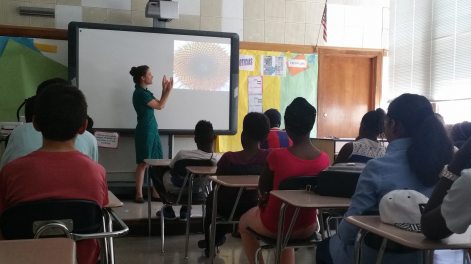
For the time being, Zoey is working hard to get infrastructure in place at the farm in case the budget cuts do occur. She visits the agency’s English classes to recruit more families to come out to the farm. She says, “It’s really important because I am establishing myself in the community. I don’t know these people and they’re not going to come to the farm if they don’t know who I am or what I’m talking about. Once people start to come then they start to talk about it and when I present about [the farm] they explain to the others what I’m talking about.”
Three members of Tres Hermanas Farm are working on preparing the soil for planting. Photo credit: LFS Refugee – Albuquerque
Right now there are about 20 families signed up and Zoey is looking to get about another 10 for this year. Many of the families come from agricultural backgrounds and have brought with them some of their traditional farming techniques. If the family doesn’t have a farming background Zoey and the Lutheran Family resettlement agency are ready and willing to help them through it.
In the future Zoey hopes to support the farmers through training programs such as the Las Huertas Farmer Training Program and to eventually set them up with a booth at the Downtown Growers’ Market. She also hopes to have farmers take more leadership over the farm. In the event that the resettlement agency funding does fall through, the Rio Grande Community Farm will most likely allow the Tres Hermanas Farm to stay put. With a little leadership, the farm could be entirely independent. In the meantime they are hard at work and you can look forward to seeing their booth at a future growers’ market!
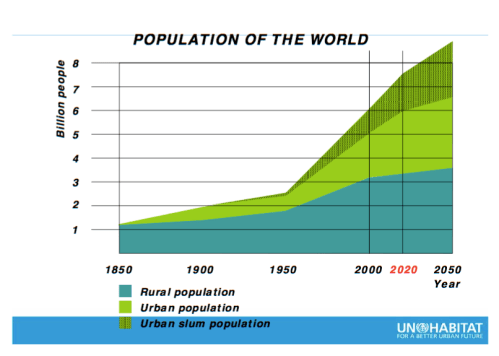
When someone mentions to you “local growing,” what do you envision? Local growing is a flexible term that can range from national production, to growing in your own backyard. While many of us may imagine farming as a way of life in the countryside, today we are finding that more people are leaving rural areas for urban ones, hoping to find a better life. According to the World Health Organization, “the urban population in 2014 accounted for 54% of the total global population, up from 34% in 1960, and continues to grow.” In addition, by the year 2050 we are expected to exceed 9 billion people for the world population. One of the questions being asked as time goes on is how we will make enough food to feed everyone on the planet?
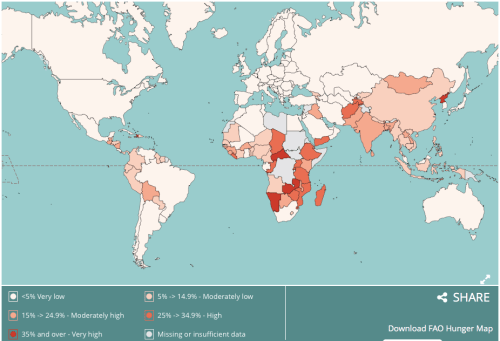
According to the 2015 Hunger Report, by the United Nations Food and Agriculture Organization, 11 million people in developed countries suffer from chronic undernourishment. As it turns out, we produce enough food around the world to feed over 10 billion people, but it’s not the lack of food that’s a problem. In 2014, the US alone wasted over 38 million tons of consumer available food. That’s roughly 20% of the waste brought into landfills every year. The principal problem is that many people in the world still cannot afford or access sufficient nutritious food. With many inner cities struggling with food access, it can be frustrating seeing these statistics. How effectively is the current food system in place serving its consumers?
In an attempt to combat the disconnect between the amount of food produced, and the food that reaches people’s plates, local farming movements have begun developing all around the world. One of the most creative movements today is turning unused land into land that produces food.
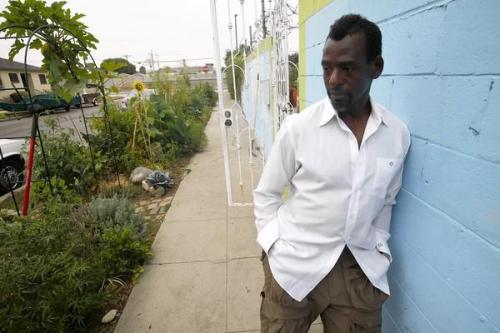
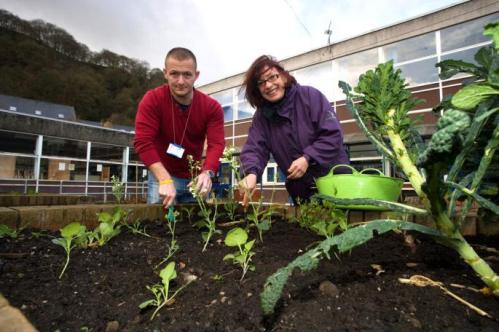
Ron Finley, from South Central Los Angeles, started a movement when he decided to plant a garden on the curb in front of his house. He was initially moved to grow food because he could see how the people in his neighborhood desperately needed a change. With minimal access to fresh foods in the area, Ron believed his garden would bring healthy opportunities to the people around him.
Pam Warhurst from Todmorden, England, asked, “How we can eat our landscapes?” and then co-founded the Incredible Edible, a movement to turn as much unused land around her town into edible gardens. What started out as an experiment among a handful of volunteers has now spread across 30 towns in England, and other parts of the world.
Food Not Lawns is an organization founded in 1999 by a group of activists who had volunteered for the Foods Not Bombs organization. The Food Not Lawns movement started out in Eugene, Oregon but has now spread to over 50 chapters worldwide, including one in Taos, New Mexico. Their efforts focus on educating people of the potential of the land they already own in front of their homes, and transforming it into usable and profitable garden beds.
These three groups, along with the rest of the local growing movement have three common values that drive their efforts to make a change. One of these values is spending power. Ron Finley says “growing your own food is like printing your own money.” If you can learn these skills and put them to use, you are in control of where you spend (or make) some of your money. The second is independence from the present food system. You are no longer limited by the options with which you are presented in your current situation, whether that means you can’t access a grocery store or afford the healthier options, or there simply aren’t enough adequate options to begin with. The third is being in control of what you put in your body. Every day, Americans consume astonishing amounts of sugar, up to 76 grams a day. We put harmful chemicals in our bodies through the pesticide residues and processed foods we consume. It can also be difficult to trust a product labeled “Natural,” “no artificial flavors,” or “Low fat,” because they can be misleading and uninformative. When we grow our own food, we know exactly where it comes from and we don’t have to worry about any misleading labels.
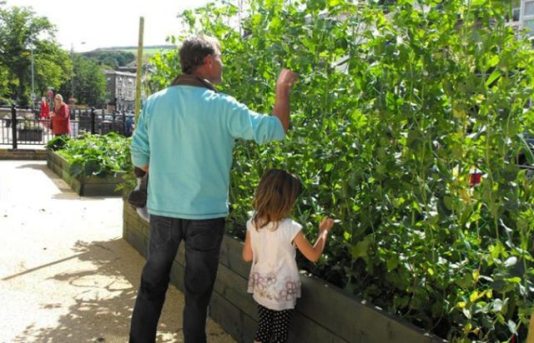
In addition to these three indispensable values, the examples of Ron Finley, Pam Warhurst, and Food Not Lawns go beyond community gardens and similar urban farming in one simple way: they function most importantly as “propaganda gardening.” Growing food where the public can experience and interact with the garden every time they walk by creates the type of conversation that can start a revolution.
Aquaponics is an up-and-coming method of growing that is great for our New Mexico desert climate, considering its efficient use of water. I have been growing using this technique over the past half year and would like to introduce you to the processes and practices of aquaponics.
Aquaponics originated as a spin-off from the hydroponic growing technique. Hydroponics uses grow beds in which the plant roots are fully submerged in water for periods of time and have complete access to oxygen the remainder of the time. The water is supplied with nutrients and is pumped into the grow beds; when the water hits a certain level it begins to drain, allowing the plant roots to access all of the oxygen they need. Aquaponics differs from hydroponics in the way the plants get their nutrients. A hydroponic system requires nutrients and fertilizers to be purchased and added manually into the water, whereas an aquaponics system generates all of the plants’ nutritional needs with a closed loop system. Believe it or not, the plants in an aquaponics system get all of their nutrients from fish waste, and the system produces plants and sustains the fish simultaneously. Aquaponics is an ancient idea but its modernization is happening slowly and only recently are gardeners recognizing this method as a more efficient way of gardening.
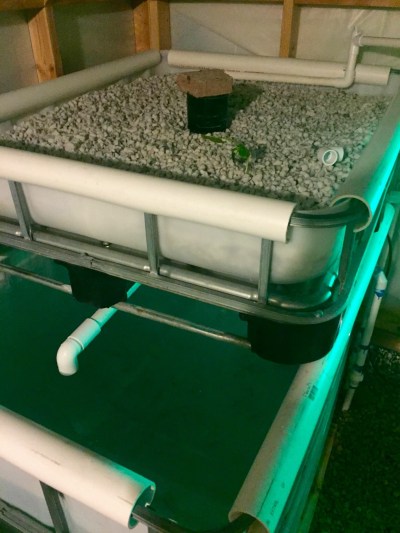
The aquaponics system. Photo credit: Chad Otoski
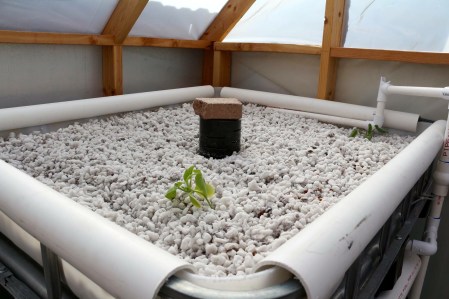
To become an aquaponics grower, you must first have a functioning system with a grow bed and a fish tank. Aquaponics doesn’t use soil, and the grow bed that you choose can be filled with a variety of media. I luckily was able to obtain my set-up from an old co-worker. He had built a small aquaponics system and sold it to me for $100. (You can find a system to purchase or easily build your own.) My system uses a media of tiny clay pebbles that you can buy in any gardening store. The media provides a base for the plants’ roots in the grow bed and allows it to be filled and drained of nutrient-rich water.
Your fish tank and grow bed must be nearby and to make for an easily draining system I recommend having the tank directly below the bed. Your system will also need a pump so the water can enter the grow bed and submerge the roots completely. Be sure that your pump will not overfill the grow bed with water. If the water rises too high it will leave the base of your plants prone to mold, which is not healthy for the ecosystem in the grow bed. I use a bell siphon that automatically drains water in the grow bed back into the fish tank once the water hits a certain level. The bell siphon uses only the power of gravity, which makes it a valuable yet simple part of your system. Once you have your system organized you should test it out to make sure everything runs smoothly. Once it does, you can buy some fish!!
The grow bed filled with media. Photo credit: Chad Otoski
In an aquaponics system the plants and the fish have a mutual relationship: the fish, through their natural functions provide the nutrients the plants need, and they keep the water circulating and clean. Just like growing in soil, you want a variety of nutrients feeding your plants. Fish waste is a perfect fertilizer. Since starting my aquaponics system, I have grown basic herbs. It is important to remember that it takes time for the nutrients in your grow tank to develop. It is good to start off growing plants such as salad greens and herbs that require low levels of nutrients. Eventually the buildup of nutrients in your grow bed will provide for nutrient-rich foods like tomatoes and peppers.
Fish are the most important component of aquaponics and making sure they are healthy ensures that your plants are healthy. You can choose from many different kinds of fish to fill your tank. Depending on the size of your fish, you should have one fish to every 5-10 gallons of water. Remember, your fish will grow. My tank holds almost 20 gallons of water and has three medium-sized goldfish. You want to make sure to feed your fish the best food possible. It is important not to overfeed them; in the end it will harm both your plants and fish.
The final stage of becoming an aquaponics gardener is to choose your plants! Even if you just put some seeds on top of the grow bed there is a high likelihood that they will sprout in a couple days. Have fun!
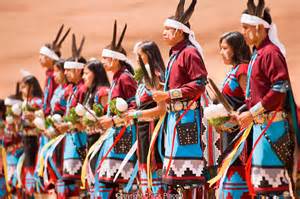
Today there are over 500 different Native American tribes. One thing they all have in common is sharing a deep reverence for the wellbeing of the environment and humanity. I learned more about indigenous people’s culture through independent research and a phone interview with an expert, Ryan Dennison. Ryan is from the Navajo Diné tribe, which he describes as having traditions deeply intertwined with nature. Ryan is an activist for environmental justice and indigenous rights, and has an extensive background working with FoodCorps and AmeriCorps. His main focus is helping to feed students of all ages living in poverty stricken communities.
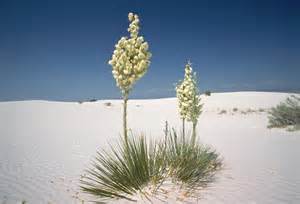
The first thing Ryan talked about was traditional and ancestral foods. Ancestral foods are the original crops grown by indigenous people, such as varieties of corn, beans, and squash. Many indigenous tribes refer to these crops as “The Three Sisters”. Ryan believes the decline of ancestral crops is due to western interventions and pollution. Luckily, he believes these crops will make a resurgence as people start living more harmoniously with nature. One sign of progress is the growing practice of foraging, which Ryan sees as being symbolic of the return of ancestral lifeways. Foraging involves collecting natural resources to use as food, medicine, and crafting materials. Indigenous people foraged for many different plants, but one of the most important to the Navajo is the yucca. Yucca root can be used to make soaps and shampoos, and its fibers can be used to craft many useful items such as rope and shoes. Some varieties also produce edible fruits and flowers during spring and summer.
Another topic Ryan and I discussed is the diet and food traditions of indigenous people. The diet of most tribes was once plant-based and seasonal. Meat was consumed, but in moderation and mostly during the winter when plant foods were scarce. The Diné and other tribes sing prayers during all food-related endeavors, and pray when planting and harvesting crops, when foraging, and when processing wild game. Indigenous people also believe moderation of how much food one consumes for a meal is important. A portion of food is measured by the handful, and on a regular basis, one must eat 1-2 portions of food for each of the three daily meals.
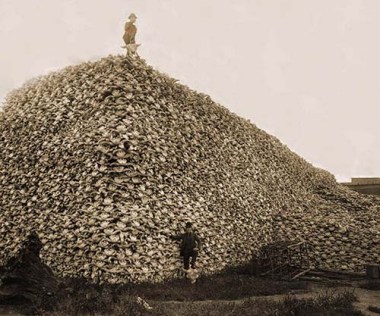
Lastly Ryan told me how Western influence has impacted the health and food traditions of indigenous people. Ever since European settlers arrived in the Americas they have forced indigenous people to leave their homelands, which ultimately destroyed their villages along with the ancestral crops. Settlers also over-hunted wild game that indigenous people once depended on, and introduced Western food practices such as raising livestock. The results have lead to a situation where many indigenous communities now live in poverty, have declining health outcomes, increased dependency on western policy, and – worst of all – a weakened connection to nature. Now it’s more affordable to eat processed foods rather than fresh produce.
Another way in which Western influence has affected indigenous ways of life is through the establishment of wildlife refuges. Wildlife refuges are good for protecting local wildlife and plants, however they have stripped away indigenous people’s rights to live off the land for the sake of their livelihood and cultural values.
If human civilization is to become more sustainable, it is crucial for us to reconnect with the natural world. I believe people could learn how to do this from the practices and traditions of Native American tribes. Imagine what we could accomplish by revisiting ancient wisdom with modern technology. Maybe we could incorporate indigenous planting practices, such as multi-cropping, into organic farming. Or we can make stronger medicines by safely enhancing the potency of medicinal plants used for many generations. I believe it is time for humanity to go back to its roots in order to move further into the future.
1. Join a CSA
2. Support your community's farmers' markets
3. Become a member of the nearest co-op grocery store
4. Start an edible [home, community or school] garden
5. Volunteer your labor at a local farm or ranch
Find local groceries, growers’ markets, farms, co-ops, and food pantries






 My love for good, fresh food began while I was attending high school in Estes Park, CO. Our school embedded a strong belief that in order to learn and be successful, we must nourish ourselves daily with nutrient rich, unprocessed foods. Most teenagers seem to be comfortable living off ramen and assorted snack foods, so in order to invoke a passion for exploring new foods, the staff required all students to participate in the preparation and cooking of our own food, while providing a welcoming, communal eating environment. Meal times became a central place for creative collaboration and in depth discussions. Through this experience, I developed a belief that cooking and eating should not be rushed, because when we take the time to enjoy our food and community, a real beautiful thing happens: we connect.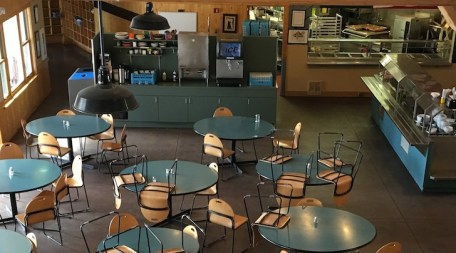







 ABQ Stew