
Adventures in Making Baby Food

Mila. Photo by Lisette.

Having a baby is the greatest thing that has ever happened to me. As soon as I became pregnant, I knew that I wanted her to have the best. I wanted to make sure that she started off her life as healthy as possible. I knew that once she started eating table food, I did not want to feed her store-bought baby food. I wanted to know exactly what was in her food. And, the only way I would be able to do that is by making it myself!

There are many benefits to making your own baby food. It’s cheaper, for one. You can save about $.30/ounce when you make your own baby food compared to store bought. There are also many fillers and preservatives that come in jarred baby food. I feel better knowing that I’m the only one handling her food and that I’m using natural ingredients. (You can even add your own spices, such as cinnamon, when you make pureed carrots. So much tastier!) The nutritional value of the food is higher, because you can freeze the food as soon as it’s pureed. It’s also better for the environment, because you are not amassing piles of used glass jars. And, lastly, you can buy fresh ingredients from your city’s grower’s markets, which supports your local growers and producers.

There are a few different “baby food” processors on the market today. They’re pretty expensive. I’m here to tell you that you don’t need any fancy equipment to make your own baby food. You just need pots and pans for cooking or steaming the food, a food processor or food masher, ice cube trays and freezer-safe storage containers. I’m sure that most parents have these items in their kitchen already. You might have to buy a few things, but it still won’t add up to how much you’d spend on fancy equipment.

Some great first foods to start with are sweet potatoes, bananas, apples, pears and green beans. A website that I followed throughout this process was Momtastic’s Wholesome Baby Food. It was a wonderful guide and had a lot of great ideas and recipes. This website breaks up the foods into categories starting from babies that are 4-6 months old and moving up to 10-12 months old.

It only takes me about an hour to make a few weeks’ worth of food for my baby. I was a little overwhelmed at first with the thought of having to make food weekly, but you would be surprised at how much comes out of a couple of apples, for example. I got an ice cube tray’s worth of applesauce out of 3 apples! That’s equivalent to about 12 ounces of food.

Apple Sauce
I start by coring the apples. I do leave the skin on until after I cook them, because it’s easier to peel them off when they’re soft. You can either steam or boil the apples. I prefer to boil them in water where I’ve added a little cinnamon and brown sugar. The spices seep into the apples while they cook. You can even add some of the water into the food processor or blender when it’s time to puree the apples. You can cook most fruits and vegetables this way.

Stew
You can start your little one on meats as well. Chicken and turkey are going to be the easiest to start with. I like to boil chicken thighs with carrots and potatoes. You’re not only making it easier by cooking 3 things at once, you’re also making a good chicken stock to add to the puree for tastier food. I also add fresh garlic in the processor with the chicken for a little extra flavor.
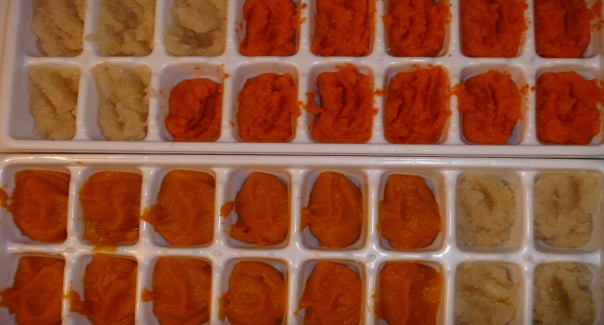
Baby food in ice cube trays. Photo by Lisette.

Freeze the Food
When all of the cooking is done, you are going to put spoon-fulls of the pureed food into ice cube trays. You can either cover the trays with plastic wrap or you can buy the ice cube trays that come with covers. I usually wait 24 hours before I take the cubes out of the trays and store them in glass jars in the freezer. You’re going to want to label the jars so it’s easier to grab what you need without having to guess what the food is. Carrots and sweet potatoes look pretty similar when they’re frozen! You can either defrost the food in the fridge if you plan enough ahead of time, or heat it up on the stove or in the microwave. Voila! Your baby has healthy, natural food that you can feel good knowing you’ve made yourself.

Posted by Lisette

Posted in Uncategorized | Tagged | Leave a comment

HERBS are FOOD is MEDICINE

Our current healthcare system addresses an individual’s sickness, when the body has already lost its natural balance. What’s more, rather than addressing the underlying cause of the imbalance, medicines are prescribed to cover up the symptoms. Usually this “cure” or magic pill has side effects and in order to combat the side effects some people have to take more medicine. Symptoms are the body’s warning signs of an imbalance and by ignoring them or trying to cover them up we do not get better. This process leaves us with our current system of health care that some people call “sick care.”

Navajo Tea. Image credit: Institute for Traditional Medicine

For thousands of years people have relied on more natural methods of treatment for keeping their bodies in balance,and even more importantly they have consciously or unconsciously focused on preventive medicine. This involved nourishing a person’s body with the proper food and nutrients to maintain homeostasis. The fact is that today most doctors receive little, if any, training in nutrition. According to Food Matters, only “6% of M.D.’s have received training in nutrition.” Considering that the most deaths annually in the U.S. are from heart disease and that obesity is a major contributing factor to heart disease, wouldn’t it make sense that all MDs should have rigorous training in nutrition?  That’s why I have chosen to ask a local herbalist about her perspective on medicine.

Bernadette Torres is an Albuquerque herbalist who began discovering the power of plants while growing up in Black Lake, NM. As a child she learned the different uses for plants and to this day continues to learn about plants from various teachers from many walks of traditional medicine. Bernadette is well grounded and accepting. She treats the whole person, not just his or her symptoms. I asked Bernadette: “How do you help people, and what are some of the problems you help them with?” She responded that stress and diet are the two main factors that she helps people address.

STRESS
“People experience stress in some part of their life, maybe it’s a relationship, a job, or some addictive habit. I just help them to recognize that the symptoms of illness have a root cause.” Bernadette is careful not to shame her patients, but instead shows them how to lessen stress and gives them positive alternatives. “I never tell people to quit their smoking, alcohol, coffee or other drug use. I show them alternatives that will help balance out what they are trying to heal instead of using those substances. I want them to use a substance that will bring a positive result instead of more negativity into their lives.”

Yerba mansa. Image credit: Medicinal Plants of the Southwest.

DIET
Bernadette emphasizes, “The other component is people’s diet. In our culture people are really dependent on packaged and instant foods. Those are two things that I think are really poisoning the body and we put so much of them into our bodies. When people feel healthy they are attracted to healthy substances and the attraction to unhealthy addictions fades.” Dr. Victor Zeines, in the film Food Matters, states that “food is at least a week old by the time you get it in the supermarket, and the nutritional value at best after 5 days is maybe 40%.” This goes to show the importance of eating local nutritious foods that don’t have to travel far. The loss of nourishment and declining quality of food during travel show that our current food system is not constructed in viable, healthy manner.

Stinging Nettles. Image credit: Desert USA

Patients come to Bernadette with a diagnosis from an MD, wanting to pursue natural means of treatment. “I research the herbs and I’m always really amazed at how much natural medicine there is and how many people have cured so many so-called incurable diseases. I want to promote [herbalism] so that people know they have a choice and so that people feel empowered by their choices.”

Many people are not aware of the benefits of using herbs for healing.  Bernadette illuminates the value of herbs: “Herbs are really working on people, by providing them nutrition. When we put good food and good herbs into our body, we start to heal, we come into balance, we feel stronger, we feel positive.”

Osha Root. Image credit: The Herb Depot

When talking about traditional herbs, Bernadette feels strongly that “local medicine has established itself and we don’t have to use a lot of water to maintain it, to keep it growing. It knows it’s environment so it actually breathes in and uses the same atmosphere, the same energy – it’s growing in the same area as us. Basically the constituents that it is taking in and breathing in are the same elements that we are taking in, so it works on our bodies more successfully than if we took medicine from other environments.”

Our ancestors focused on nutrition from local plant and animal sources to keep themselves healthy. It’s time we went back to the basics and did the same.

Bernadette Torres offers personal consultations and courses in healing and traditional plant knowledge. Contact her at: shabeta.abq@gmail.com or call 505-897-5755

Bernadette Torres

Want to read the full interview?

Posted by Kristiana

Posted in Uncategorized | Tagged , , , , , , | 3 Comments

What’s There to Wine About?

When thinking about good wine, many people’s minds travel to the rolling hills of Tuscany, or the fertile fields of southern France. From Spain to Napa Valley we import and export all varieties of this nectar of the gods. What most people do not know, however, is that some of the country’s greatest vineyards first sprang up right here in New Mexico.

The story of New Mexican wine began with the arrival of the Franciscan friars. El Camino Real served as the road to vines as the friars attempted to convert Native Americans to Christianity. Originally, the missionaries imported wine from Spain for the ceremonial communion. Because the Spanish government was worried about protecting their domestic wine industry and lucrative export business, it was illegal to export grapevines to the New World. However, in 1629, missionaries successfully smuggled grapevine cuttings out of Spain. Although cold winters and pueblo revolts in the 1600s initially posed a challenge for the mission grapevines, success came later when numerous vineyards sprang up in central New Mexico. Nearing the start of the 20th century, the state was 5th in the country for wine production.

So where are we now? According to the New Mexico Wine Growers Association, there are 43 registered vineyards that distribute their wines locally to globally. There are also over 32 different varieties of grapes grown in the area. We’ve come a long way since the 1600s. There are even researchers at NMSU dedicated to the study of which grape produces the best wine in our state. When I asked Bernd Maier, the state viticulturist working directly with researchers from NMSU, what gives NM wine an edge he said, “New Mexico produces unique wines that also do well in national and international competitions and the wine consumer is increasingly interested to taste wine from different regions in the world.” So who is making this wine? I was lucky enough to tour a number of New Mexican vineyards that distribute at a local, regional and even global level.

Casa Rondena is located in Albuquerque’s prosperous North Valley. The winery distributes to Northern/Central New Mexico and a few places near Las Cruces. Not all the grapes are produced on the property, but the fermenting and sugaring process takes place there. Other ingredients are imported from Southern New Mexico or Southern Colorado. I recommend their 1629 Founder’s Reserve. From speaking with the staff, it is plain to see the success of this business is substantial – but, it is the owner’s wish to keep the wine circulation local. A sense of community is present here, with its wine clubs, wedding parties, cooking classes and an overall joyous representation of the growth of something good. The Wine Tasting room is open to the public seven days a week and is a great escape to Tuscany-meets-the-Southwest.

The vineyard Estrella del Norte produces various labels, and is commonly known for their Santa Fe Vineyard brand. Owned and operated by Richard and Eileen Reinders, this grove is located on the road to Nambe in Northern New Mexico. They distribute mostly in New Mexico, but have reached out as far as Arizona and Southern Colorado. They have big plans for the future, but are not looking to expand too far. The reason for this is their dedication to producing quality, not quantity, wines while also adhering to sustainable practices. While their wine is not labled “organic,” the manual labor, water conservation initiatives and community-oriented environment are highly admired and respected by their customers and peers in the industry.

The third vineyard I’d like to mention is Gruet Winery, which has been internationally recognized for its sparkling wine. The Gruet family has been in the wine business for a long time. Coming from France, they brought their love for wine as well as the “method champenoise” with them. Their vineyard is located in Truth or Consequences and strives to use the least amount of pesticides as possible. They have a drip system feeding from Elephant Butte Lake that helps them minimize water waste and evaporation. I recommend the selection of 2008 Pinot Noir for a red and the Blanc de Noir for a brut.

This slideshow requires JavaScript.

Whether you can find them in another country or only at a unique local boutique, the wines of New Mexico are grown with tradition, excellence and passion. We were the first wine producers in the country and are continuing to preserve and enhance the state’s viticulture. So next time you are looking for something nice to share with special people, remember to seek out what is grown right under your nose, what has given culture to the ground just beneath your feet.

Vineyards visited in the formation of this blog include: Etrella Del Norte, Gruet, Casa Rondena, St. Clair, Vivac, Black Mesa and Ponderosa Valley. Please check out this interactive map to find out about more vineyards and locations. Cheers!

Posted by Kendra

Posted in Uncategorized | Tagged , , , | Leave a comment

Food Dehydration for the Backcountry: Lighten Your Carbon Footprint…and Your Pack

As an avid backpacker, I am often frustrated with the lack of food options I have when I enter the wilderness for extended backpacking trips. Furthermore, I am always striving to lower my ecological footprint in various aspects of my life, and sometimes struggle with the idea that by entering the wild I am unintentionally harming it. In an attempt to reduce my ecological impact, but increase my tasty food consumption, I have begun researching sustainable food options and ways to prepare snacks and meals, specifically tailored for eating while hiking and backpacking, i.e. lightweight/high calorie/nutritious foods. Through my research, I discovered the many benefits of dehydrating food.

Food dehydration is one of the oldest methods of food preservation. By removing the moisture from food, bacteria growth is halted, and the food is able to be stored for long periods of times. If done properly, dehydrated food can last for decades. Some of the benefits of dehydrated food include weight/space savings, longer shelf life, ease of preparation in the field, and lower ecological impact. I recently purchased an electric dehydrator, which speeds up the process of dehydrating and enables you to do it in a controlled, safe environment. An electric dehydrator has a heating element and small fan that dries the food slowly from the inside out.

When hiking in the backcountry it is important to bring enough food to replace the calories you burn. Using a calorie calculator, I determined that I usually require somewhere between 2700 and 3700 calories/day while backpacking. Beef jerky is an excellent source of calories and protein and is a great choice for snacking on the trail. In 1 oz there is 130 calories and 9g protein. I usually take a pound (16oz) of jerky on my two night backpacking trips. Granola is another excellent form of quick calories, averaging about 500 calories per cup. For my first attempt at dehydrating, I made granola, beef jerky and green chile stew.

Here are the recipes that I used:

Yummy Granola
What You’ll Need
5 cups rolled oats
1 cup raisins (dried grapes)
1 cup chopped almonds
1 cup raspberries (dried)
1 cup strawberries (dried)
1/2 cup honey
1/2 cup brown sugar
1 teaspoon vanilla
1 teaspoon cinnamon

Preparation
* Prior to making granola, dehydrate raspberries, strawberries, and grapes.
*  Mix all ingredients together until evenly distributed.  Spread in a thin layer on a cheese-cloth lined tray.  Dry until crispy.
*  Store in an air-tight container.
*  Eat on the trail.

Albuquerque Jerky
What You’ll Need
2 lbs Organic/Local Grass-Fed Lean Cut Beef (Flank, Sirloin, Top Round)
2/3 cup green chile sauce
2 tablespoons minced garlic
1 orange, freshly squeezed
2 tablespoons brown sugar
1/4 cup soy sauce

Preparation
*  Freeze the beef for 2 hours so that it’s easier to cut.
*  Trim away any fat.
*  Cut beef into 1/8 inch slices across the grain.
*  Marinate in a gallon ziplock bag with the remaining ingredients.
*  Let sit for an hour in the fridge.
*  Remove strips and place on dehydrator trays.
*  Rotate trays every couple of hours.
*  Dehydrate for 8 -12 hours…or until strips darken and dry.
*  Store in an airtight container.
*  Makes about 1 lb of jerky.

This slideshow requires JavaScript.

Green Chile Stew
What You’ll Need
3 or 4 Potatoes
2 Carrots
Roasted Green Chile
1/2 Onion
Corn
Celery
Garlic Powder
Flour

Preparation
*  Always wash your hands before and after handling raw meat, fruits, and vegetables.
*  Slice or dice all veggies to between 1/8″ and 1/4″ thick.
*  Blanch all of the vegetables by immersing them briefly in boiling water. This will help them avoid discoloration during drying, and will speed dehydration and reconstitution times.
*  Arrange vegetables on trays and dry for 1 – 1 1/2 days, making sure to rotate trays.
*  Store your dehydrated veggies in an airtight container.
*  To reconstitute: bring a pot of water to boil, add vegetable, and simmer for 20 minutes.
*  Serve and Enjoy!
*  Makes 2 servings.

Dehydrating your own food is a great way to shave weight off your pack, while at the same time lowering your ecological impact…not to mention the fact that it’s fun and easy!

Posted by Keenan V.

Posted in Uncategorized | Tagged , , , | Leave a comment

What Are We Wasting?

Image credit: myveryworstjob.com

“This one? Nope. Too soft. That one? Uh oh, that one is bruised. I don’t want to pay for a bruised one…” Many people go through a similar mental tête-à-tête when selecting the perfect avocado, or the most ripe, yet firm tomato. But, do you ever wonder who selects the produce that is not so ideal?  Pondering this question can lead you to discover many things that you may not have known about food waste.

When most people think of food waste, they think of the scraps left over after dinner or mushy, decaying produce at the bottom of the crisper drawer. Every citizen of the developed world plays a part in the 222 million tons of food wasted per year, which, mind you, is dangerously close to the 230 million tons of food that is actually produced yearly in Sub-Saharan Africa. It is positively astounding that the average individual in America produces almost 5 pounds of trash per day, the weight equivalent of a typical full-grown Chihuahua. Although the amount of food being chucked from our refrigerators and plates is on its own fairly shocking, or should be, there is also a significant amount of food that is lost from production, retail, and commercial sources. For example, according to California Watch, 6 million tons of food is “lost” annually during production, retail, and commercial processes in the state. In the US, there is an estimated 96 billion tons of food lost from these sources each year, according to Jeremy Seifert.

In order to put the amount of food wasted into perspective, the issue of world hunger must be examined. The day this piece was composed 17,063 people died from hunger. This saddening reality combined with the fact that over 518 million people in the world are obese demonstrates the huge disconnect between the availability of food and those who are in need of it. A nifty site called Stop the Hunger tracks world hunger along with a number of other variables surrounding food on a minute-by-minute basis. It is fascinating to compare and contrast the variables to get an understanding of the disconnects that exist within our food chain. How can we link them up?

Though food waste is immense, efforts to eliminate hunger and waste on local, national, and global levels are alive and well. In the UK an organization called FareShare works to bridge hunger and food waste. In 2004, they successfully distributed 1800 tons of food surpluses, which would otherwise have ended up in a landfill. In Albuquerque, many businesses strive to eliminate waste, as well as contribute to a healthy community.

In Albuquerque, many grocery stores strive to eliminate waste in their facilities. Whole Foods‘ partnership with Soilutions Composting Facility diverts 97,066 cubic yards of waste from the landfill per month. According to Walter Dods of Soilutions, 2 million pounds of food waste from Whole Foods were composted at their facility in 2011. Smith’s grocers are working to compost produce waste as well. Robin Seydel from La Montanita Coop gave me the 411 on the Coop’s creative approach to composting their bad apples – pun intended – by offering these fixings to farmers for organic chicken feed on a first come first served basis. This saves 1,000 pounds of waste per month from going to the landfill. Nationally, Trader Joe’s donated 25 million pounds of food in 2011. It was a delight to find that so many groceries have realized that food waste is just not sustainable.

The New Mexico Collaboration to End Hunger works with a number of organizations to end hunger in our state. The Albuquerque Center for Peace and Justice has free food programs that rely on donated food to feed the community. According to Julie Anderson at the Roadrunner Food Bank, last year the organization rescued 16.2 million pounds of food for the poor – with 50-60% of it coming from retail or commercial sources. These community groups are working to link up the food and the need, and are successfully filling bellies every day here in our community.

Everyone eats, and wasting food is an activity our world cannot sustain. Individual awareness and action can spread like a wildfire. Every person be an example and show others with their own actions that they value the earth and its fruits.

Posted in Uncategorized | Tagged , , , , | 2 Comments

Local Agriculture: Continuing the Tradition

Photo by Kateri

Respect, gratitude, and awe are all true emotions that have been evoked among nations throughout the world in regards to one volatile, unpredictable, yet vital resource: water. The culture that has been developed throughout New Mexico is no exception. In fact, it used to be that its existence depended upon the consistent flow of water through the great Rio Grande River basin, specifically acequias, to sustain life within the arid desert. It is because of this extreme climate that agriculture in New Mexico is so unique.

In this beautiful state, we are fortunate to live among some of the oldest agricultural lands in the United States. Many families, including my own, depended on the land they had to survive. Today, 45% of New Mexico’s farmers are above 60 years of age, and only about 4% of New Mexico’s farmers are under the age of 35. Somewhere along the line, farming became undesirable, possibly unrealistic, as an occupation. This is something that happened within my own family, and ever since I was a little girl my grandpa has asked his grandchildren, “¿Puedes trabajar en la granja para mí hoy?” – “Are you going to farm for me today?”

Until recently, I had never taken seriously this question my grandpa had jokingly asked us kids. But today, I think this is a question we must ask ourselves. Who is farming for us today? Who will farm for them in the future? This is something I have taken to heart, and so I have made it my goal to continue the tradition that had previously been in my family for generations. To accomplish this, I have been taking every possible opportunity I can to learn from experienced farmers the tricks of the trade. Here are some steps I’ve come up with to help give you a jump start on your own garden:

Prepare your space. The preparation that takes place before the actual growing season is often considered the most important process. The readiness of the future growing area could possibly determine the success of your garden. To prepare this space, all weeds (or plants that will go to seed and spread) must be removed. It is also important to find a way to efficiently irrigate before planting. For smaller areas, you will need to turn the soil over approximately a shovel’s-length deep. You can accomplish this either by using a shovel, garden spade, or a garden fork.

In the early spring months before planting, it is also recommended that you add amendments to improve the quality of your soil. Amendments are organic materials added to soil to improve its physical properties and to provide a good environment for germinating seeds and growing roots. Some examples of amendments you can use in your own soil include compost, manure, wood chips or grass clippings. (Note: Make sure amendments are dry or aged; young amendments may have too much nitrogen for the roots of young plants.)

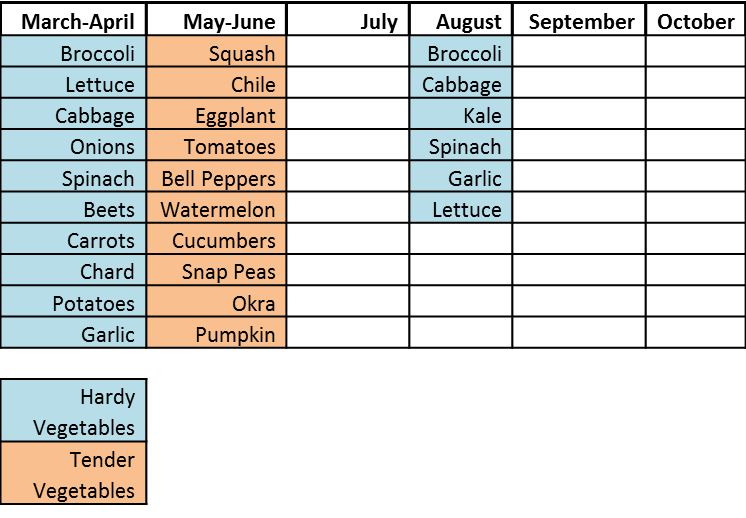
Planting. Albuquerque’s growing season typically begins sometime between April and May and continues through October. The table below lists plants commonly grown and their appropriate planting times. Spring and summer are not the only opportunities to have a garden; August is a great time to start planning for a fall garden.

Table 1. Crop Planting Times

(Note: The plants labeled as Tender Vegetables are less likely to germinate directly in the ground from seed; transplanting may be necessary)

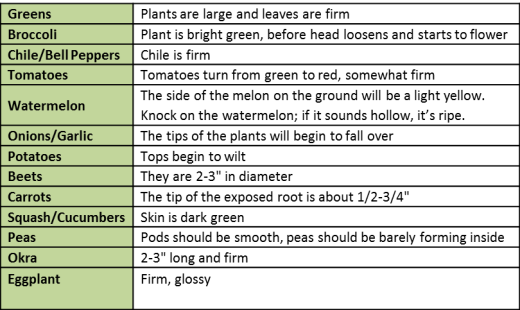
Harvesting. There is not a precise number of days to predict when vegetables can be harvested, but there are indicators given by plants that will determine their ripeness.

Table 2. Harvest Ready Indicators

Growers’ Markets. Whether you are looking to sell your vegetables or to buy some fresh produce, growers’ markets are a great way to celebrate local food in New Mexico. Check out these growers’ markets in the Albuquerque area:

Image credit: New Mexico Farmers' Marketing Association

ABQ Uptown Growers’ Market
Schedule: Saturdays and Tuesdays, 7am-12pm
Market Season: June 21st-October 29th                             

Albuquerque Downtown Market
Schedule: Saturdays, 7am-12pm
Market Season: May 28th-October 29th

Albuquerque Nob Hill Growers’ Market
Schedule: Thursdays, 3pm-6:30pm
Market Season: May 26th-November 3rd

Los Ranchos (winter) Growers’ Market
Schedule: 2nd Saturday of each month, 10am-12pm
Market Season: December-April

Los Ranchos (summer) Growers’ Market
Schedule: Saturdays, 7am-11am
Market Season: May 7th-November 12th

Albuquerque Northeast Farmers’ and Artisans’ Market
Schedule: Tuesdays, 3pm-7pm
Market Season: May 24th-October 25th

Posted by Kateri

Posted in Uncategorized | Tagged , , , , | 1 Comment

Ag1000: Southern New Mexico’s Source of Sustainable Fertilizer

As the global population continues to skyrocket, the fear of diminishing food security is ever more present. Will there be enough arable land to grow food crops for the rapidly rising population? The answer relies on the health of our soil, because without healthy soil, growing crops is out of the question. Industrial agriculture has diminished soil health with the use of chemical fertilizers and pesticides. In order to feed the growing population we must find new ways of producing large quantities of food for local consumers while also retaining the health of soil and ecosystems for the use of future generations.

In Las Cruces, New Mexico a pecan farmer by the name of Michael Salopek is doing just that. Mr. Salopek and his three brothers own a combination of pecan orchards and a fertilizer business called Western Blend Incorporated. The pecan orchards have been in the family for decades now, and in the 1990s the brothers collaborated to start up a fertilizer business. Although the brothers equally own the company, Mr. Salopek himself has created an innovative new fertilizer that can be used for conventional, organic or sustainable agriculture. I was lucky enough to shadow him and gain a better understanding of his product.

Mr. Salopek holds a license to brew EM-1 Microorganisms, which are microbial inoculants. In short, EM-1 produces high levels of polysaccharides, micronutrients, beneficial enzymes and organic acids that help build stable healthy soil. For a better understanding of all EM products click here.

Mr. Salopek combines EM-1, molasses and water into a brewing process in which his product Ag1000 is made. The brewing process is temperature controlled and the water is treated to decrease the chance of any contaminants forming in the fertilizer. Molasses is used in the brewing process to feed the EM-1 bacteria and initiate fermentation. After the brewing process, Ag1000 ferments in a holding tank. Fermentation allows the bacteria to breed and become active particles that can increase plant production and soil nutrient growth.

Most commonly, Ag1000 is run through drip irrigation lines during normal watering cycles, but can also be sprayed onto plants through a simple foliar program. This product can be bought in a variety of quantities ranging from one gallon to an entire holding tank of two hundred and fifty gallons. It is recommended that one hundred gallons are used annually on a one-acre field of crops.

Mr. Salopek reassured me that using less than the recommended amount will not hinder production, but just may not provide the most desirable results. He also explained that his product does not act like typical fertilizers that require greater amounts to keep up with demand. The application of Ag1000 can be terminated without any detrimental effects to crop yields or soil fertility. Crop yields and soil nutrients will continue to increase in years subsequent to the use of this product as well.

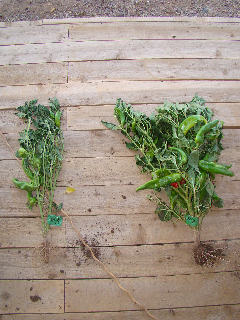
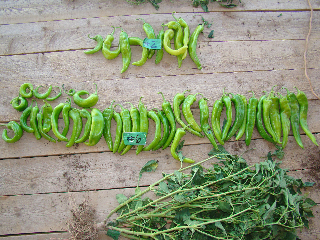
Western Blend distributes Ag1000 to a variety of farms in southern New Mexico, one of them being Penn Farms in Deming, New Mexico. Penn Farms has seen a drastic increase in crop yields of green chile. The images below – taken by Karajane Salopek, the daughter of Mr. Salopek – show the difference between plants that use and do not use Ag1000. The plants that use Ag1000 produced triple amounts of chile yields .

In principle, small local farmers around New Mexico should be able to use this product on their fields. It is fairly priced and after the initial investment is made, most farmers will see such a dramatic increase in production that the investment will essentially pay itself off with higher crop yields. Although small local farmers could potentially afford this product, whether or not the demand around Albuquerque or northern New Mexico is great enough is still up for debate. Considering Western Blend is located in the most southern city in New Mexico, delivering product to northern farms may be difficult, expensive, and inefficient.

Mr. Salopek is more than eager and willing to distribute his product on a small scale, but in all reality driving three hundred miles to deliver a miniscule amount of product is neither economically nor environmentally efficient. If demand were to rise, distributors in central and northern New Mexico could be established, but as of right now Western Blend will serve as a source of sustainable fertilizer to southern New Mexico.

Lastly, although Ag1000 can be used as a fertilizing agent, EM-1 Microorganisms have a variety of other uses that range from composting, small gardening, human consumption, aquaponic treatment, and even eco-friendly cleaning products. Western Blend is experimenting with Ag1000 and a composting product called bokashi composting. In short, bokashi is a high-speed composting method that decomposes matter through an anaerobic process also known as fermentation. Mr. Salopek has been spraying Ag1000 on cow manure to simulate this method of composting. After a month of turning and spraying the manure, it is officially composted and can be used on agricultural land to vastly improve soil conditions. The bokashi is still in experimental stages and is not being distributed, but it is just another great example of how versatile this product can be. EM-1 Microorganisms can be used for a variety of applications, and Michael Salopek has taken great advantage of this sustainable product that he says “has changed his life and will change the world.”

Posted by Garrett

Posted in Uncategorized | Tagged , , , , , | Leave a comment

Rot On! A DIY Experiment In Fermented Foods

Why Would I Try Fermented Food?
Fermentation is everywhere, a virtual food miracle that is as old as humanity itself. From the early civilizations that inhabited present day India and South Africa who created mead, an ancient wine made from honey, to the pickles and sauerkraut found on grocery store shelves today, fermented foods have been valued for their complex taste and health-supporting properties.

Is It Healthy?
Fermented foods and drinks are literally alive! With flavors that are bold and pronounced, fermented foods not only taste good but they are rich with organisms that produce alcohol, lactic acid, and acetic acid, all of which enhance and retain vital nutrients. Fermentation breaks down nutrients for digestion, preserves nutrients, creates new nutrients, and removes toxins from food. Eating fermented foods is an incredibly healthy practice that supplies your digestive tract with living cultures that are essential to assimilating nutrients. By eating live fermented foods, you are promoting diversity among the microbial culture in your body.

Slippery Boundaries
The distinction between food that is fermented and food that is rotten is highly subjective. In general, the alcoholic and acidic environments that fermentation yields are inhospitable to bacteria associated with food poisoning, such as salmonella. However, I cannot authoritatively state that something cannot go wrong in the fermentation process. Generally, the rule is if it looks or smells disgusting, feed it to the compost. In short, trust your nose. If your nose is not sure, taste a little. At the very least you can trust your taste buds, and if it doesn’t taste good, don’t eat it.

Super Size my Fermented Fries, Please!
Who hasn’t heard of McDonalds? Until recently, cultures over the world have evolved locally, creating amazing diversity in all aspects of life including food. However, today that rich diversity is being threatened by the expansion of a global market that demands uniformity. As a result, local culture, identity, and food have become diminished to a lowest common denominator: a nutritionally bereft corporate behemoth like McDonalds. Where once you could find local beer, bread, and cheese, these items have now been replaced with commodities such as Bud Lite, Wonder Bread, and Velveeta that taste and look the same no matter where you find them.

Fermentation is the opposite of uniformity, and is a small task you can undertake in your own home. When you learn to ferment you learn knowledge that has been used independently for generations of human food preparation. You begin to understand that unlike McDonalds fries, which always look the same and conform to your expectations, food actually possesses some quirky anomalies that will adjust your previous image of what you might expect. Therefore, fermentation gives you back the real knowledge of food that is lacking in the standardized American diet, as well as being easy and fun to try.

The DIY Experiments
The focus of this blog is to learn, experiment, and pass on some basic knowledge of fermented foods. I intend to try two recipes for some common fermented foods (recipes are from Wild Fermentation: The Flavor, Nutrition, and Craft of Live-culture Foods). I will report back on my success, or failure, with recommendations about the fermentation process and the resulting foods.

1. Brining Vegetables

What is a Brine?
The primary difference between vegetables that begin to rot and those that are destined to become fermented is salt. Using the watery protection of a brine is the easiest and safest way to ferment vegetables. Brine is a simple solution of water and dissolved salt. The main purpose of a brine is to serve as protection against the growth of unwanted microorganisms, and the favoring of growth of the desired strains of the bacteria, Lactobacilli.

Sauerkraut
Time Frame: 1 to 4 weeks

Ingredients (makes 1 gallon)
5 pounds cabbage
3 Tablespoons sea salt

Special Equipment
Food-grade plastic bucket (1 gallon capacity or greater)
Plate that fits inside bucket
1 gallon jug filled with water
Cloth cover (such as pillowcase or towel)

Process

  1. Grate cabbage (coarse or fine) into the bucket
  2. Sprinkle grated cabbage with salt as you go until all 3 tablespoons are used (can add more or less salt to taste)*
  3. Cover and weight the cabbage with plate and water jug
  4. Check back after a few days. Wipe away any surface sediment and rinse the plate and weight if needed. As time passes the flavor will get stronger. Taste it periodically over the weeks to see how the flavor evolves.

* Note: you may add any other vegetables, herbs, or spices in step 2 to be fermented along with the cabbage.

Observations

  1. When grating the cabbage, red and green have different consistencies. I found that green contained more water and therefore yielded more water for the brine. However, the red ended up being more crispy.
  2. I found that it was VERY IMPORTANT to have a tight fitting lid that fits snugly in your container. Mine was not! Therefore, some cabbage floated around the corners of the lid and became less fermented.
  3. After a week, due to warmer weather, the brine developed a film or scum that needed to be removed. I found that this was normal and to be expected. It continued to occur approximately every four days. I found that the lid would need to be removed and cleaned as well as the bottom of the weight.
  4. In the end, the brine retained a purple color from the cabbage while the cabbage itself  became a whitish to transparent color.

2. Cheese Making Made Easy

The following experiment is the most basic process for making fresh cheese. In its simplest form, it is technically not a fermented food. However, aging will begin to introduce cultures.

Farmer Cheese
Timeframe: 20 min to several hours

Special Equipment
Cheesecloth

Ingredients (makes 3 to 4 cups)
1 gallon whole milk
½ cup of vinegar

Process

  1. Heat milk to a slow boil, stir frequently. Then, remove from heat.
  2. Add vinegar, a little at a time while stirring, until milk curdles.
  3. Strain curdled milk through a cheesecloth-lined colander. Collect the curds in the cheesecloth and form into a ball.
  4. Hang the ball in the cheesecloth on a hook to drip.
  5. Weight the cheese for about 2 hours until it is firm and holds together. (Indian recipes often call for cubing the cheese, which is known as paneer.)

Observations

  1. One gallon of milk is a lot to put on the stove at once so I had to divide it into two sauce pans. Because it needed to be halved into two containers, I had to also halve the other ingredients as well. So, unless you have a large soup pot, plan on having to divide the milk.
  2. The recipe called for vinegar, but was unspecific about the type. So, I mixed rice vinegar and red wine vinegar together. I thought it would be more productive to use what I already had in the house for the recipe. I found it worked fine; however, I do not know how different vinegars would affect the curdling of the milk.
  3. Once the curds were strained they looked like cottage cheese but tasted like ricotta!
  4. Before pressing the curds under the weight to remove liquid and hold shape I added salt to help remove more liquid through osmosis. I also added dill weed and Bragg’s Organic Sprinkle for flavor.
  5. The cheese held shape after an hour under the weight and was mild and light.

So How Did It Go?
Overall the experiments were a success! To get me started in the realm of fermented foods, I chose recipes that were simple. Both the sauerkraut and the cheese were easy to make and tasted good in the end. In truth, all I wanted was something that was edible and I found that fermenting was as easy as it sounded. I would recommend it to anyone and I intend to continue to experiment with fermented foods in the future.

Posted by Anne

Posted in Uncategorized | Tagged , , | Leave a comment

Mushrooms: Significance and the Local Market

“Humanity’s use of mushrooms extends back to Paleolithic times. Few people-even anthropologists-comprehend how influential mushrooms have been in affecting the course of human evolution. They have played pivotal roles in ancient Greece, India, and Mesoamerica. True to their beguiling nature, fungi have always elicited deep emotional responses: from adulation by those who understand them to outright fear by those who do not.”
Paul Stamets

Although much of the history of mushroom use and cultivation is shrouded in mystery, the ecological significance of fungi (and mushrooms in particular) is becoming increasingly better understood. Mushrooms fall into three major categories based on their ecological function: mycorrhizal, saprophytic and parasitic. Mycorrhizal mushrooms form mutually beneficial relationships with the roots of many plants-they provide their host plants with essential nutrients in exchange for carbohydrates from the host plant. Saprophytic mushrooms are otherwise known as decomposers-they secrete enzymes and acids that decompose cellulose and ultimately return nutrients back into the ecosystem for reuse by a variety of other organisms within the ecosystem. Parasitic mushrooms live off of a host plant at the expense of the host plant’s health. All three categories contain species that show a great deal of promise in the following areas:

Permaculture- a theory of ecological design that seeks to develop sustainable human settlements and agricultural systems, by attempting to model them on natural ecosystems.

Mycofiltration- use of mushrooms for the filtration of biological and chemical pathogens as well as controlling erosion.

Mycoforestry and mycogardening- the use of mushrooms for companion cultivation for the benefit and protection of plants.

Mycoremediation- the use of mushrooms for decomposing toxic wastes and pollutants. To learn more about composting, mycoremediation and mycofiltration, check out this intriguing article.

Mycopesticides- the use of mushrooms for attracting and controlling insect populations.

Saprophytic mushrooms also show great potential in the development of 2nd generation biofuels. They naturally synthesize cellulases (enzymes that are capable of breaking down cellulose into simple sugars that can be easily fermented to produce ethanol). Furthermore, all three categories exhibit species that are edible, nutritious and/or have medicinal properties.

Mushrooms are delicious and nutritious (search “mushroom”)! Mushrooms are unanimously considered to be a “healthy food.” Generally, they are a good source of protein and carbohydrates, are low in fat, have no cholesterol and contain an abundance of beneficial vitamins and minerals. Furthermore, some noted medicinal properties of mushrooms include: antibiotic production, anti-tumor/anti-cancer activities, boost of immune system response, ability to lower cholesterol and treatment of nervous system disorders.

Now, with all of the benefits associated with mushrooms, the obvious question becomes: Why not eat more mushrooms?? For one, some people just don’t like the taste of mushrooms. Other possibilities might include lack of marketing and general diet and food trends. I personally have never seen a marketing campaign for mushrooms here in New Mexico. Furthermore, many people might not be aware of the versatility of mushrooms with respect to preparation or possible dishes – a situation that could be easily remedied by Googling “mushroom cookbooks” and noting recipes from stuffed mushrooms to mushroom chili!

In terms of growing more mushrooms, there seems to be no shortage of hobby growers here in New Mexico (just attend a meeting of the New Mexico Mycological Society) but as far as I have seen no local growers have broken into the larger commercial market. The evidence for this conclusion comes from the fact that, when asked where their mushrooms came from, Sunflower Market, Whole Foods, Smiths and Albertsons all said that their mushrooms came from one of two places: Monterey Mushrooms, Inc. (Watsonville, CA) and/or Phillips Mushroom Farms (Kennett Square, PA). This could be due to the numerous difficulties involved in establishing a large scale/commercial mushroom growing facility (generally they require a large initial investment of capital and they are labor/energy intensive).

As intimidating as all this may seem, the small scale/hobby mushroom growers here in New Mexico are tenaciously forging ahead. I don’t think it will be too long before we see more of them in growers’ markets and eventually selling their products to the larger grocery stores. At the moment, however, Exotic Edibles of Edgewood sells oyster mushrooms and their paté through La Montanita Co-op, and Skarsgard Farms sells oyster mushrooms through their CSA. Furthermore, they will both be attending the Lobo Growers’ Market – be sure to look for them on April 19th!

Anyone who is seriously interested in growing mushrooms or learning more about the intriguing world of mushrooms should visit the Mushroom Council, the American Mushroom Institute, and consider buying one or all of the following books by Paul Stamets: The Mushroom Cultivator, Growing Gourmet and Medicinal Mushrooms, and Mycelium Running.

Posted by Dan

Posted in Uncategorized | Tagged | Leave a comment

Viable Growers’ Markets in Rural New Mexico

Nestled in the foothills of the Sangre de Cristo Mountains of northern New Mexico is the small town of Las Vegas and the short distance of 78 miles away is Taos. These vibrant, small communities are situated in and around some of the most historically and ecologically rich farmland in our state. Both towns host seasonal growers’ markets that promote and uphold the importance of local food and local foodsheds. The question remains, however, just how viable and successful are these working models of rural markets?

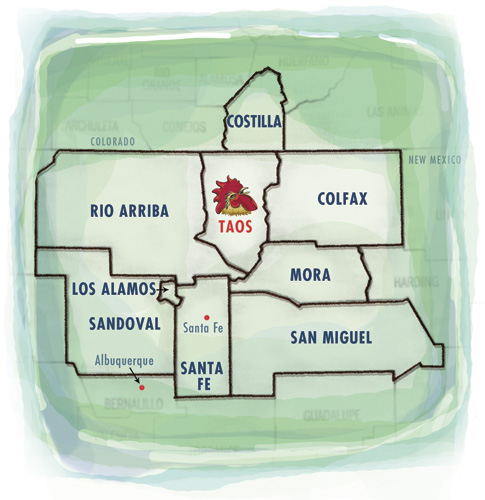
If you’ve ever attended the Taos or Las Vegas markets, you will know that they provide a mechanism through which local growers and vendors can sell their products and through which members of these small communities gain access to local, healthy foods. The Taos Farmers’ Market draws its vendors from eight surrounding counties, including Rio Arriba, Taos County, Colfax, Sandoval, Los Alamos, Santa Fe, Mora, and San Miguel, and also allows vendors to participate who are from Costilla County, Colorado. The Las Vegas Market is a tri-county market that incorporates San Miguel, Guadalupe, and Mora Counties. Both Markets offer a selection of products ranging from locally raised organic produce to value-added products made by local vendors.

The Taos Market will begin its 2012 season on Saturday, May 12th from 8am-1pm in the Town Hall Parking lot. The season will run until October 27th. If previous years give any indication as to the viability of this market, I’m sure it will be another successful season for them. The Taos market attracts a large crowd and plays an integral role in Taos’ local foodshed and community.

The Las Vegas Growers Market begins its 2012 season on Saturday, May 5th from 7am until noon (or sell out). As is the case with the Taos Market, the Las Vegas Market also encourages their vendors to use organic methods of cultivation and requires all value-added foods to be produced in a certified kitchen. The Las Vegas Market, though generally smaller than the Taos market, is home to a variety of wonderful products and sells local, healthy, and sustainable foods.

Martha Fielding, a vendor at the Taos market who has participated for the past six seasons, spoke regarding the viability of the Taos markets. Fielding said,

“Taos Farmers’ Market provides a venue for local growers to sell directly to consumers. As such it helps keep food dollars local and strengthens the ability of these vendors to make ends meet. I believe markets are an excellent form of investment at the lowest denominator, so to speak, much like Head Start for schools. Think of it metaphorically in terms of farming itself: modest investments in improving the soil mean far less costly intervention with artificial fertilizers, insecticides, weedicides, etc, and far better yields of nutritious crops.”

When asked what her vision for the Taos market was, Martha said she hopes it will become a “foundation stone of the local economy and a vibrant community-wide participatory and developmental venue.”

Daniel Hern, President of the Tri-county Farmers’ Market that operates in Las Vegas shared his insight into the health and viability of that market. Hern reports that last season the Las Vegas Market generated $65,000. However, he adds that farmers are not required to share how much money they make in a season, thus making this figure not entirely accurate. As for the number of vendors that participate in this market, Daniel said, “When I started ten years ago the Market had on average 10 vendors. Now we have on average around 20 vendors and at peak season we get as many as 40 vendors.”

Essentially, both markets represent an unyielding dedication to the promotion of our local foodshed, and embody a set of sustainable values regarding small-scale agriculture that seeks to cultivate and support local economies. I strongly encourage you to visit either of these markets and witness the unique experiences they have to offer. If we are to continue in our efforts toward a more sustainable world, working models such as these provide abundant knowledge as to the methods and practices in place that are responsible for  success. Farmers’ markets are but a small component of the sustainable life style however, they serve as an excellent foray in our quest for local, healthy, and sustainable food.

Image credit: Taos Farmers Market 2010

Posted by Cody

Posted in Uncategorized | Tagged , , | Leave a comment