The Magical Powers of Bees

Bees have long played an integral role in the survival of the human species as a whole. This could not be truer today, as many of our foods that come from trees, shrubs, flowers and root crops that depend on seasonal pollination from millions and millions of worker bees to facilitate a good harvest, thus playing a key role in food and national security. In fact, bees alone add $14 billion to the value of our nation’s crop production each and every year. Albert Einstein was rumored to have predicted that without the existence of these amazing creatures (animals, technically) the human population would cease to exist within four to five years. But did you know that bees, with a brain no bigger than the size of a grass seed, solve complex mathematical equations in minutes that stump current supercomputers for days? In this blog, I look to uncover both interesting facts about our dependence on bees, as well as beekeeping organizations within New Mexico.

Local beekeepers have long played the vital role as caretakers to these agile yet fragile insects. Summer is the height of beekeeping season, with the average worker bee living only six weeks (and working almost constantly). Winter is their ‘dormant’ season, and worker bees can live up to 4-6 months, surviving on the fruits of their summer labors. A single female called the ‘queen’ can produce up to 2000 soon-to-be bees per day in the height of summer. A large hive can easily contain over 70,000 individual worker bees, whose sole responsibility is to collect food for, first and foremost, the queen bee. New Mexico, with its numerous ecological zones, is host to a wide array of trees and plants that produce pollen and nectar that attract bees. In 2005, researchers at the University of Royal Holloway, London, discovered that bees have perfected a flight pattern that allows them to reach the greatest number of flowers in the least amount of time, solving what they call the ‘traveling salesmen problem.’ This is one reason why bees are so important to humans.

Pollination isn’t the only fascinating mathematical decision that honey bees do every day, either. They also use math when it comes to the building of their hives, their homes. Understandably, the living quarters are quite cramped in any hive, so bees have found the perfect shape to accommodate the largest amount of space possible in the least amount of area: hexagons. Because of their equal-sided shape, hexagons do not overlap and they can be constructed side by side leaving no gaps, thus saving space. Beeswax, which takes approximately eight pounds of honey to produce, is obviously a valuable commodity, and hexagons save as much of this resource as possible. These hexagons create ‘cells’, i.e. honeycombs, that facilitate food storage and nourishment, as well as the most vital characteristic, the protection and feeding of the queen bee, the sole mother and ruler of the hive.

As of recently, bees have also been discovered to interact with flowers based upon the electrical signals that the flowers are putting off. Scientists have speculated that the flowers, needing the pollination help from the bees, put off signals to stimulate a two way relationship: life for the plant and food for the bee.

There are a number of talented beekeepers that practice this form of animal husbandry here in New Mexico. For those looking into beekeeping for themselves, or simply just wanting more information or looking for like-minded people to connect with, The New Mexico Beekeepers’ Association is a great place to start. For a great read by someone who truly knows what he is doing, check out local author Les Crowder and his book, Top-Bar Beekeeping: Organic Practices for Honeybee Health, which focuses on, among other things, the proper handling and treatment of these vital insects.

-Posted by Russell

Posted in Uncategorized | Leave a comment

Smoothie Sailing

You are what you eat” is a saying that I think is discredited far too often. Do you ever really think about what you eat, what you’re putting in your body and the various processes and purposes that different nutrients serve? The answer is probably not. And that is a common answer that it often true for most Americans, which is not surprising because America embraces the culture of eating quickly or on-the-go because everyone is “busy.”

Too “busy” to pay attention to where their food is coming from and what exactly is inside of it. And it’s this nationwide lack of concern that has led to a manifestation of 50,000 fast food restaurants. This alarming number will only continue to rise if no action is taken on the individual level. Switching over to home-cooked, plant-based meals can begin to address mental health, systemic racism and classism.

On the basis of small scale action, I encourage you to attempt to make more time in your days to prepare home cooked meals and substitute on-the-go fast food meals for protein-, fiber- and B vitamin-rich smoothies. I do understand it’s hard to find time, as I too hardly find time in my own schedule between working and going to school full time. Make the time during precooked meal prep sessions or waking up a little earlier; your body will most certainly thank you. About 68.8% of Americans are obese, and about 18% of Americans 20 years and older are depressed. The alarming rise of obesity and depression are linked to poor eating habits over the course of many years. Obesity and heart disease are widespread in communities of color and lower income classes simply because cheaper foods are calorie dense and nutrient poor.

That being said, I want to present two smoothie recipes that incorporate brightly colored fruits and vegetables. But I want to take a quick diversion to quickly discuss exactly why it’s so vital to mental health to eat foods high in fiber and B vitamins. A very interesting fact is that most of serotonin production (the chemical in your brain that produces feelings of euphoria and happiness) occurs in the digestive tract. In fact, up to 80-90% of serotonin production comes from digestive processes. Foods high in fiber and B vitamins allow for more amino acid chain production of serotonin to occur.

Essentially, as more serotonin is produced, there is a decrease in depressed or anxious feelings. It’s simple, and it’s partially because you decided to have a fruit salad instead of fries for a snack! It’s incredible what the body can do when you treat it right. When you throw fiber into the equation it enhances the digestive process, making serotonin levels rise even more. It is a matter of getting used to new habits, when you’re breaking the chain of eating foods high in fats and sugars. Your stomach produces both good and bad bacteria. When you’re eating well, your stomach bacteria will make you have greater cravings of foods high in vitamins and nutrients. However, when you’re eating foods high in sugar, your body will crave it until you break the habit.

Fresh produce and bulk starches (rice, pasta, potatoes, etc.) are typically more affordable than eating out fast food on a regular basis. It’s just a matter of being aware of how to prepare these more balanced meals that don’t require massive amounts of sugar and fats to make them tasty. Here are a couple of my favorite recipes for smoothies.

Serendipitous Serotonin Smoothie
-1/4 cup of kale or spinach
-Half a cup of chia seeds
-1/4 cup of mango or pineapple puree
-One whole banana
-1/4 cup of yogurt (opt for soy/coconut/almond replacement if you’re vegan)
-1/3 cup of coconut milk
-1/4 cup of protein power (optional if you want to make a much more filling smoothie)

Directions: Place all contents in a blender, proceed to blend into a find puree or smoothie composition and enjoy! It should make two servings. This specific blend is nice because it is delicious and also contains many different ingredients that are B vitamin rich (coconut, mango, pineapple, banana) and packed with fiber (chia seeds and kale), all of which are going to be extremely kind to your digestive system.

Happy Happy Joy Joy Smoothie Smoothie
-1/2 cup of chia seeds
-1/4 cup of lemon juice
-1/4 cup of pureed carrot juice
-One whole banana
-One whole mango
-A handful of spinach
-1 tablespoon of honey

This smoothie directly boosts serotonin production. It’s not nearly as sweet as the previous recipe, but is a really nice energy booster as is also high in fiber.

-Posted by Cati

Posted in Uncategorized | Leave a comment

Díbe: A Navajo Way of Life

The Navajo Nation is a culturally rich tribe. Over time the Díne shifted from a raiding lifestyle to an agricultural society. The shift to a pastoral and agricultural lifestyle created an opportunity for the Navajo to become one of the most modernized Native societies in the United States. Mrs. Castillo, a well-known sheep owner from Window Rock, AZ states, “Sheep have fed us, they have kept us warm, and they have made us money.” But what is this animal’s story? I have interviewed Navajo Sheep Ranchers to help us understand why the sheep plays such a pertinent role in Navajo culture.

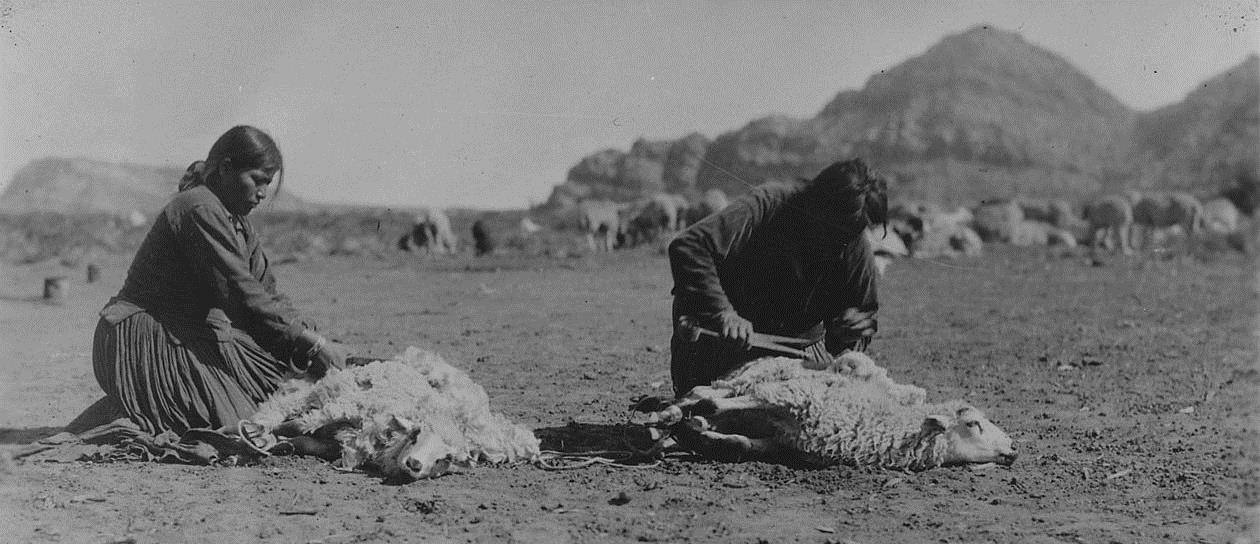
Sheep is Life Shearing sheep. Southern Navajo Agency 1933. Image from: https://tskies.com/sheep-is-life-the-story-of-the-navajo-and-the-churro/

Sheep is Life Shearing sheep. Southern Navajo Agency 1933. Image from: https://tskies.com/sheep-is-life-the-story-of-the-navajo-and-the-churro/

History of the Sheep
According to the Navajo Sheep Project:

In 1538 Hernando Cortez brought the first sheep to his home in Cuernavaca (near Mexico City). The first sheep were brought to the “New World” during the search for the Seven Cities in the 1540’s. The churro sheep was one of the breeds taken along.

After Coronado abandoned his search, he returned to Spain leaving behind some churro with the Pueblo people near Acoma. Trades were made allowing the churro to end up in the Navajo’s possession. Since then the Navajos have become quite unique by combining modern ranching with traditional ways of caring for livestock. Though many different types of livestock have been introduced to the Navajo Nation, such as cattle, horses, and even llamas, the sheep has a long history with the Navajo. The sheep has made the Navajo their livelihood. The Navajo rug, for instance, is one of the most beautiful pieces of art that has come from the Navajo. The introduction of the Navajo Churro could be called revolutionary because it allowed Navajo to become a self-sustaining people. Nearly 150 years has passed since the introduction of the churro, and the Navajo continue to steadily increase their herds. The Navajo Sheep Project states:

As trading increased so did the population of the churro. Agents of the Indian Bureau saw this increase in both Navajo Livestock and Anglo stockman in South West New Mexico. It was apparent that the range was not able to handle the increasing population. The BIA instituted a program for both soil and range conservation, which involved a heavy reduction in existing herds and flocks. Few Navajos understood why this plan needed to be put in place.

Range Fed
Range fed sheep have a higher nutritional value and have established a higher market value. They also build up a natural immunity to some illnesses, therefore there is no reason to treat them with antibiotics or other drugs. According to the Tribal Ranch Manager at the Navajo Nation Department of Agriculture, Ivan Becenti, “Grass-fed is becoming a buzz word fast, which could also be called organic.” People have different interpretations of what grass-fed should be, which is why creating a label for grass-fed is proving to be  controversial.

USDA has set a standard for labeling a “grass-fed ruminant, which includes that at least 80% of that ruminant’s primary energy source be composed of pasture, range, grass or other forage.” Grass-fed animals will generally grow more slowly than those fed corn-fed diets in a feed lot, due primarily to the high moisture content of fresh forage. Carcasses are based on weight value, making feed lots more viable because the animal reaches market weight sooner.

According to the USDA:

Grass fed sheep have less total fat, saturated fat, cholesterol, and calories. They also have more vitamin E, beta-carotene, and vitamin C, and have a number of health-promoting fats, including omega-3 fatty acids and conjugated linoleic acid (CLA) compared to grain fed livestock.

The Navajo reservation covers 27,413 square miles. A majority of the sheep ranchers on the reservation are elderly. The ranchers usually make trips into town once or twice a month to stock up on personal supplies for the month to come. With a poverty rate of 42% on the Navajo Nation and rising corn prices, range-fed sheep may be more economically viable than grain-fed sheep.

Family and the Churro
Churro were bred primarily for their wool. The churro wool was in high demand because of the many colors it offered. The men support the wool infrastructure and interface with the outside economic factors. Young people are often involved in traditional life through activities related to sheep and fiber arts. The Navajo have established a program to prevent the extinction of the Navajo Churro breed. Management plans are being implemented to sustain grazing pastures encouraging the reeducation of lost traditions in the Navajo culture due the near extinction of the Navajo Churro on the Reservation.

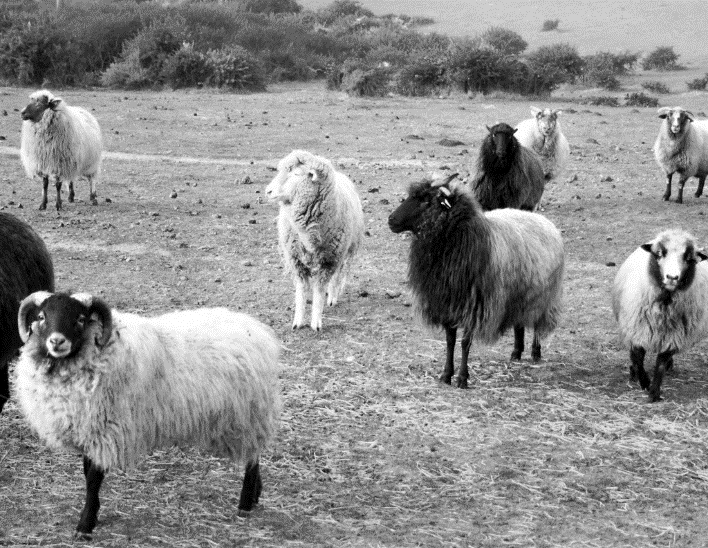
Navajo Sheep Project 2008. Image from: http://navajosheepproject.com/contact.html

Navajo Sheep Project 2008. Image from: http://navajosheepproject.com/contact.html

Mr. and Mrs. Castillo, both sheep owners in Window Rock, AZ, say, “The Navajo believe that the sheep is sacred, that they are weaved into their lives like the wool in the strongest rugs. The churro symbolize wealth, a good life, harmony, and balance of land.” The more sheep you have, the more affluent you are culturally and economically. This ideology is one of the reasons the Navajo Nation is overpopulated and overgrazed with sheep. Sheep are owned almost exclusively by women because the women do the weaving. Sheep ranchers own hundreds of sheep, caring for and managing their herd daily. Due to the large herds, many of the once green pastures have become overgrazed. Range management plans were not implemented until after the 1930s, but are now becoming more common.

-Posted by Lacey

Posted in Uncategorized | Leave a comment

What is Kale?

The winter crops have always baffled me. Recently, I was thinking about my latest visits to the farmers’ market. I see that almost every stand is selling kale. I mean, what exactly is kale? I was not raised on such a leafy vegetable and have no idea how to cook it. I think I used to see it on plates at fancy restaurants, there for a pretty part of the plate. I never ate it! So, I find myself passing the stands that sell kale. I guess it looks like some kind of lettuce, but I am still not sure. Would I eat it like lettuce? How exactly do people eat kale? What does it taste like? I mean, do I even want to eat something called kale?

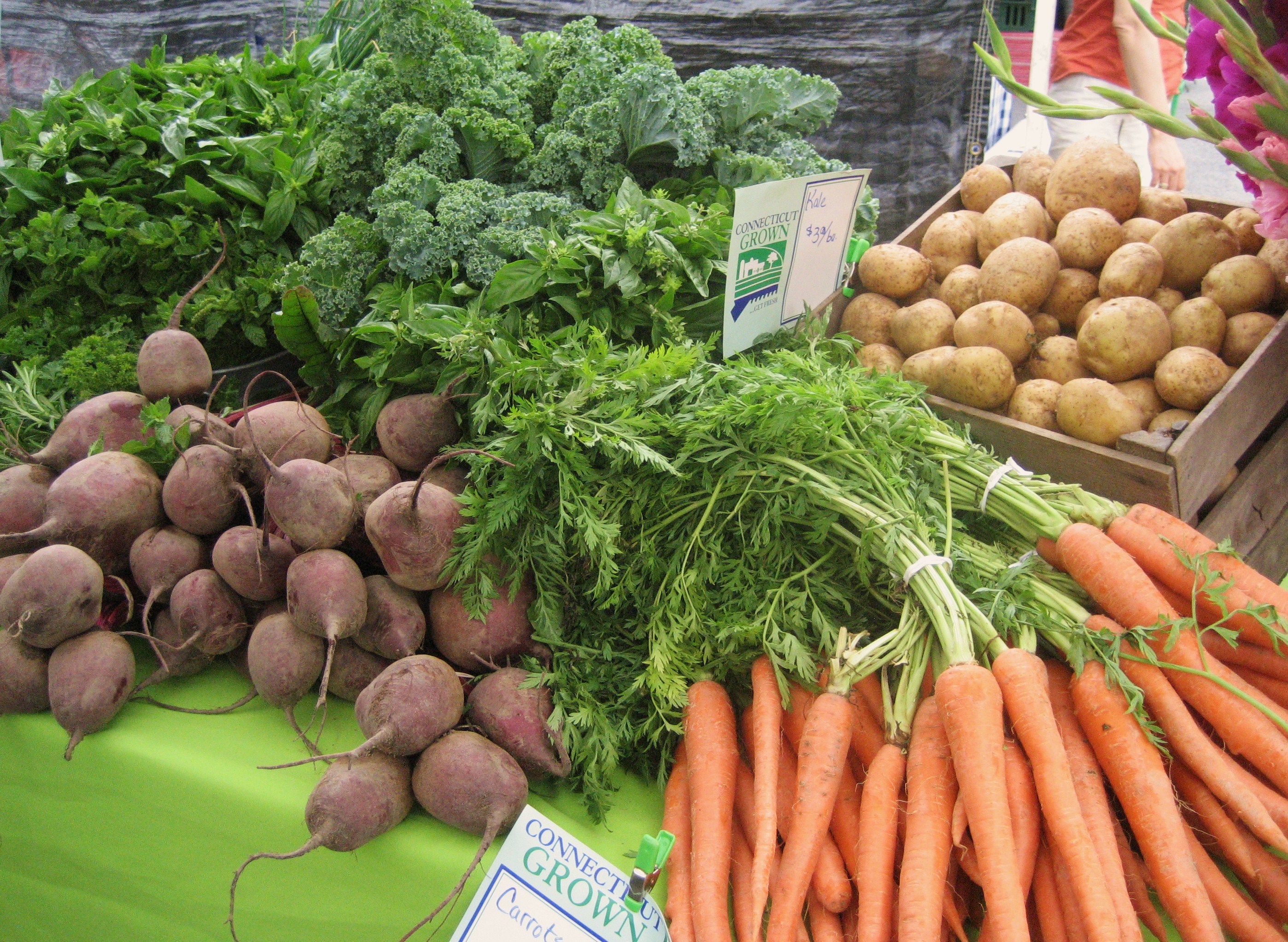
Kale and beets at Farmers’ Market. Image from: https://sweetpaprika.files.wordpress.com/2010/08/farmers-market21.jpg

Kale and beets at Farmers’ Market. Image from: https://sweetpaprika.files.wordpress.com/2010/08/farmers-market21.jpg

I start to laugh out loud as I remember the movie “My Blue Heaven” (1990). There is a scene where Steve Martin, playing an Italian New York mobster, goes to a grocery store in a small California town and asks the produce clerk, “Where is the arugula?” And she replies “What is arugula?” He says “A vegetable.” It is a very funny scene and it reminds me that unless you grow up eating such things as kale or arugula, you really don’t know what they are…much less know how to cook them. This made me think that I should look up some recipes for kale and give it a try. It is time I stop passing on the foods that are foreign to me especially when they are not foreign to the land in which I live.

My favorite website is Food Network, so I headed straight to the site and looked up kale. I found a lot of recipes which surprised me; I mean, who really eats kale? Then as I looked over the list I found recipes for kale chips, kale salad, sautéed kale, baked kale, roasted kale, and kale soup. So, I chose a recipe called Kale and Apple Salad by the Food Network Kitchen. I went ahead and actually bought some kale and made the salad. It turned out to be pretty good. I substituted the pecorino cheese with feta. They are both made from sheep’s milk so I figured the substitution would be okay.

The salad goes well with my homemade mushroom pizza. Does this count as a vegetarian meal? It’s delicious! I have found a new salad and I am no longer afraid of kale.

This attempt at cooking and eating foods unknown to me made me go look for other recipes. Walking through the farmers’ market I see beets as often as I see kale, and I found a recipe for Red Velvet Brownies by the Vegetarian Times. I made a batch for my son just to see if I could sneak some good vitamins into a favorite chocolate delight. I made this wonderful treat and didn’t feel bad when my son ate three brownies.

Adding a scoop of vanilla ice cream on top of a warm brownie square added just enough balance between cake and cream.

Other New Mexico crops that I have found foreign include chard and quinoa. It turns out that chard is much like kale in that it can be made in many of the same ways. There are recipes for sautéed chard, Swiss chard, and chard soup. I recommend looking through the recipe list on the Cooking Channel website, my second favorite site. Quinoa is a grain that is used much like rice. I found a recipe for Chicken and Quinoa Soup that looks tasty. It will be my next new food attempt.

I hope I have inspired you to take a second look at produce that can be found at winter farmers’ markets. Remember, if you did not grow up eating certain foods it doesn’t mean you can’t learn to cook and eat them. I recommend talking to the farmers themselves and always checking out the Food Network and the Cooking Channel websites. Once you look over a few recipes, try one that has other ingredients that are familiar to you. This will make it easier to introduce new foods into your diet.

Try new things and eat well!

-Posted by Angela

Posted in Uncategorized | Leave a comment

How to Throw a Fabulous Local Dinner Party

01The weather is warming up, flowers are in bloom, and spring cleaning is done. What should you do next? Well, it’s the perfect time to get some friends together and throw a fabulous dinner party with local food. Celebrate friends, family, and togetherness with a get together. Don’t forget to brag about where you got your local food and new local items.

TABLE TOP

Freshen up the look of your dining room table with some new linens. A simple table runner and some cloth napkins can add the perfect amount of fun and color to brighten up a spring dinner. I made my table runner using scrap burlap. When shopping for spring, don’t limit yourself to Easter colors, you can search for colors beyond pastels. I make sure to decorate in whites and neutrals to create focus on other unique colorful pieces throughout the year. For this season, I used a platter I found at Amapola Gallery that was hand crafted by Mary Sharp-Davis, a local clay artist. This beautiful turquoise dish complements the food, wine, and great conversation.

02At the center of the table, I placed two exquisite vases from Hanselmann Pottery among a pitcher, a cake stand with candles, and glass bottles. Always set the table with cloth napkins, which are a great choice for dinner parties because they are high quality and durable, and they reduce the amount of waste produced overall. I double layered the white and flax napkins and secured them with antique silver napkin rings.

FOODIE FUN

Make sure you know how many people you are cooking for before you head to market. Prepare ideas for recipes that include produce that is in season and grown locally. These ideas can set guidelines as to what you’ll be shopping for. However, you may not find all of the ingredients you need. Be prepared to be flexible and change up an appetizer or dessert if there are major missing components. Keep in mind your local growers’ market will likely carry baked goods, cheeses, honey, jams, and other value added products. These are easy to incorporate in any meal. Most unattained items can be found at your local co-op or grocery store.

03For starters, I had set the table with some local chips and salsa from Sadie’s of New Mexico, edam and smoked gouda from Tucumcari Mountain Cheese Factory served on Alligator Juniper from the Gila from the Los Poblanos Farm Shop, and whipped cream cheese and green chile jam from Nancy Hobson at the Los Ranchos Growers’ Market.

04To drink, I set the table with a pitcher of water with floating strawberries. For the adults, I provided a selection of beer and wine. The selection of beer was Marble Red Ale, Marble Wildflower Wheat, and Santa Fe Brewing Co. Nut Brown Ale. For wine, Casa Rondeña Serenade, Casa Rondeña Viognier, and Santa Fe Vineyards Moscato. As optional coasters for guests, I used coasters made out of wine corks from 1Thousand918Miles.

05Once the guests sat down, we began feasting on salad and exchanging stories of growers’ markets in town. This local salad consisted of salad mix, kale, sunflower sprouts, radishes, english cucumber, vine ripe tomatoes, and spiced with freshly cracked pepper.

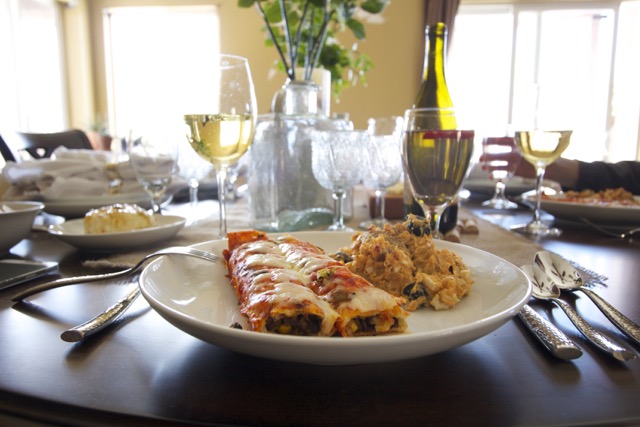
06The main course consisted of picnic favorite potato salad and enchiladas to welcome warm weather. I celebrated spices of New Mexico by seasoning the potato salad with red chile powder (a flavor I fell in love with when I moved to Albuquerque). The ingredients were potatoes, eggs, chard, olives, mustard, mayo, and spiced with Better Call Sal, Chimayo Red, and chile rojo (all spice ingredients from the Farm Shop). The enchiladas embraced the flavors of the chile pepper by using tortillas from Sabroso Foods, corn, black beans, jalapeños, monterey jack from Tucumcari Mountain Cheese Factory, harissa, green chile, red chile, and chile verde.

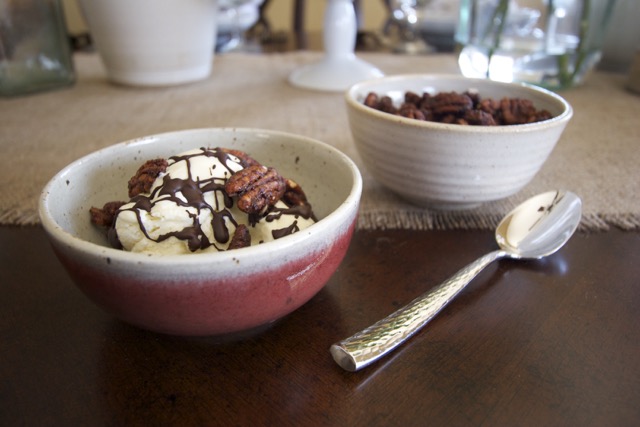
07For dessert, vanilla ice cream, melted dark chocolate, and sweet & spicy pecans served in lovely bowls from Hanselmann Pottery. It was the perfect way to end a meal.

FINISHING TOUCHES

Don’t forget to buy some fresh flowers from your local growers’ market. Or if you’re front yard is already in bloom, bring a few clippings inside to bring some joy into your home. I trimmed a few branches off of a shrub from my front yard to add some life to the dining room table. To stick with a local theme, add some local music to the mix. I suggest playing Eileen & the In-Betweens.

This slideshow requires JavaScript.

I hope this inspired you to have your own dinner party inspired by local food and culture.

-Posted by Melissa

*All photos taken by Melissa.

Posted in Uncategorized | Leave a comment

The Age of The Farmer in New Mexico

Agriculture has always been and will always be an important aspect of society. Without it we wouldn’t have food on the table, clothes to wear, or even plants to make medicine. In the present day, we are in an era of growing technology with greater access to jobs and opportunities. When you analyze these trends, we start to see an increase in the age of the farmer leaving our agriculture industry in jeopardy. The average age of the farmer has been increasing with each agricultural census that is taken with the highest population of farmers ranging from 55-64 years old.

New Mexico specifically is on the higher end of the spectrum, which poses many crucial problems. We all know that agriculture is a prominent and necessary component for any civilization to thrive. With a wider range of opportunity opening for the youth of the nation, we find the demand for jobs in agriculture is declining. Recent media publications rank agriculture as one of the least useful degrees. This poses a threat to the industry of agriculture because of a lack of lineage to take over as generations pass.

In order to further understand this trend and where it is heading, we can start to study the USDA Census of Agriculture. When comparing the 2007 Census to the 2012 Census, we can observe a steady increase of the age of the farmer from 59.6 years to 60.5 years of age. To further avoid the negative effects of not having a consistent agricultural community, we need to start increasing the percentage of young farmers. An idea as to why the average age is increasing is that there are fewer young people taking on jobs in agriculture, which is leaving a generation that is getting older as time passes. Even though we do see this increase in age, New Mexico still serves as a great agriculture state.

New Mexico has seen a 17% increase of agricultural products, totaling $2.55 billion since the 2007 Census. This data proves that as the years pass New Mexico is becoming a hotspot for agriculture, creating jobs and experience for young farmers. In order to keep New Mexico growing and strong there must be a focus on educating and inspiring youth to pursue agricultural careers. Through USDA advertisements stressing local food and agriculture published since 2010 and onwards, we have seen a peak in interest in agriculture especially from the youth.

USDA NASS 2007/2012 Agriculture Census Comparison.

USDA NASS 2007/2012 Agriculture Census Comparison

From the 2012 Agriculture Census, we can see that the number of farmers 25 to 34 years old is increasing slightly compared to 2007. Though it is a small increase, it is a step toward the right direction. There is also a decrease in farmers aged 35-54 years old and an increase in farmers aged 55+ years when comparing both censuses.

USDA NASS 2012 Average Age of Principal Operator from the years 1982-2012.

USDA NASS 2012 Average Age of Principal Operator from the years 1982-2012

Looking at the years of 1982-2012, there has been a steady increase in the average age of the principal operator starting at 51 years old and increasing to 58 years old in the most recent census.

Exposure and education are two critical components to getting younger people involved in the industry. It is easy to forget or take advantage of our agriculture industry and it’s hard to imagine what life would be like without it. This is why we need to involve more youth in the business and pass on the practices. Such programs as Youth Farms, Ag Star, and even New Mexico’s own Young Farmers and Ranchers Program and the New Agrarian Program show potential and outreach towards the community. Though the age of the farmer is growing in New Mexico, so is the community of new agrarians. Agriculture will always be a crucial aspect of our society because it provides us with one the greatest necessities of life. To inspire new farmers will give our state’s agricultural system the energy it needs to flourish in the future.

-Posted by Tyler

Posted in Uncategorized | Leave a comment

Just Garden.

So you are sitting here reading this article entitled, Just Garden. Sounds a lot like Just Do It, huh? The name probably caught your attention because you have been looking into starting your very own garden of some sort. Flowers, vegetables, herbs, an aesthetic appeal, fresh food, or organic produce, may be one if not a few of the reasons why you are thinking of starting your own garden. There a numerous reasons out there why people start gardening. Take a look at some of the top 10 Reasons To Garden.

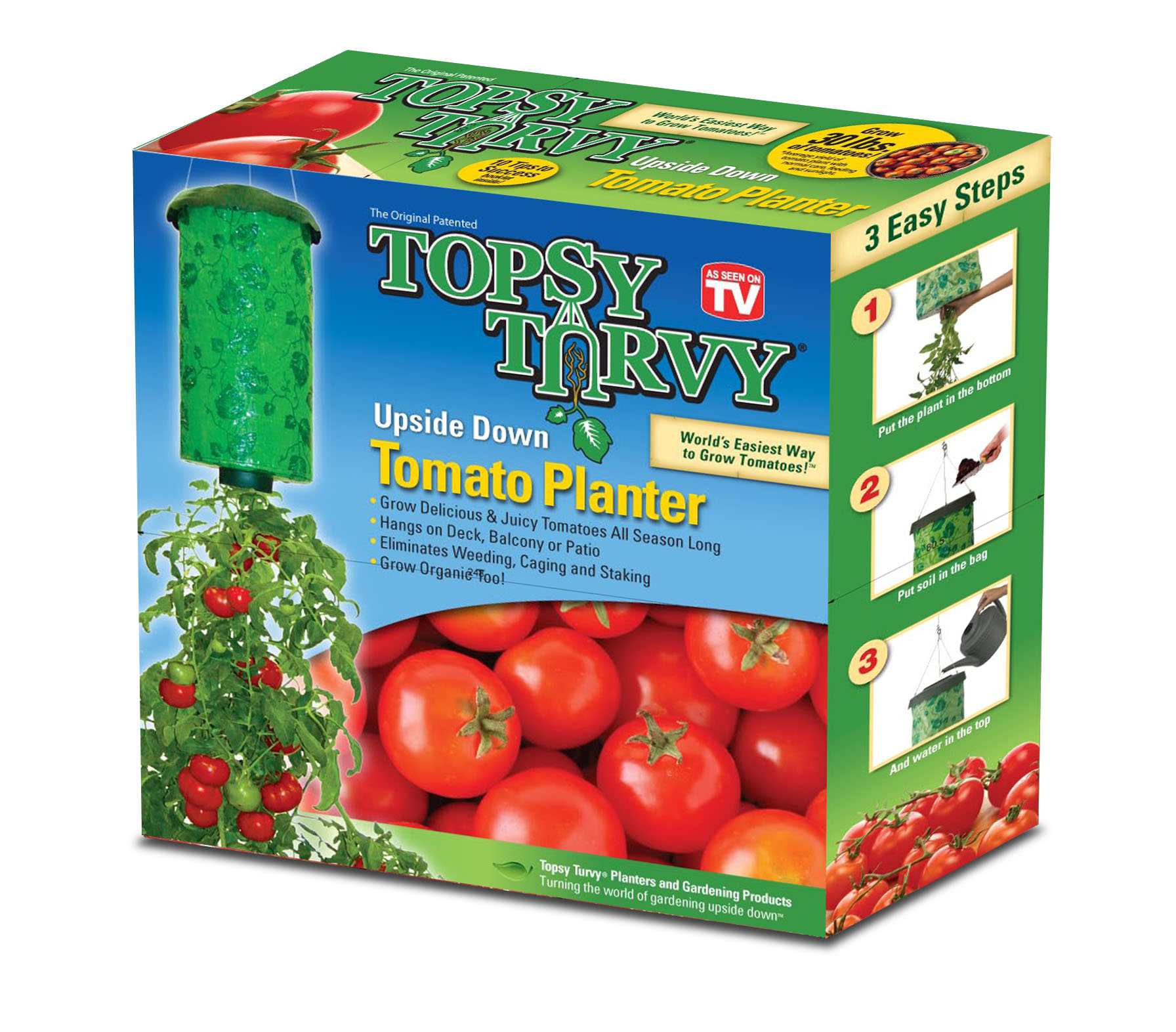
You have probably already done some research into the matter, looking things up like growing in the soil or building a raised bed, using a planter, or maybe even a Topsy Turvy for those upside down red tomatoes. Nowadays information is easily accessible online and via contacting the Master Gardeners in your area. Information like Gardener’s Pre-Planned Gardens provides simple instructions on how to plant different arrangements of plants in order to achieve a high yield for weeks.

Shoot! You already did your research and know that it is going take some initial money and time upfront. Why are you worried about that? Everything takes time and money nowadays. Starting a garden could end up saving you money in the future. For example, in NGB’s Top 10 Reasons the second highest reason is for exercise. You could cater to your garden so much you do not need that expensive gym membership. Do not just look at the short term with gardening. You simply cannot. It is a long term hobby, passion, sport, and lifestyle that needs your upfront commitment and long term energy.

So let’s talk long term. Yes, gardening itself is a long term process. This is only just the beginning. It is only scratching the surface. It is only the tip of the iceberg. It is like riding a bicycle. One never seems to forget how to do it no matter the time span. You can take your gardening skill set with you wherever you go. You move homes. You have children. The gardening community is friendly. Meet new people who can share their knowledge with you and vice versa. Gardening is an age old tradition that has been ongoing since humans decided to settle down and build homes. Take your gardening expertise and try out pots, different varieties of plants, and different techniques. Go organic, join a community garden, or even sell at a farmers’ market. Teach your children patience, that bugs are not scary, and that fresh food is delicious.

Over the past few years gardening has been on the rise in the country. People are starting to move towards healthier foods now more than ever. Although it has taken some time to get to this point, it is predicted to steadily increase over the coming years.

Recently I talked to a Maria Sandoval on the topic of gardening, more specifically on why she gardens, how she came to start, and what the future holds in store for her garden(s). Maria gardens because the price of buying organic fruits and vegetables is too expensive, and because growing herbs in the kitchen is simple, convenient, and easy. She is also worried about her carbon footprint and how it affects the world around her. She reflected on her past and how it brought her to the point where she wanted to start her own vegetable garden at home.

Maria talked about the garden her mother had when she was younger. When Maria moved out she also tried to start a garden but for the wrong reason. She guessed it was most likely just to have one because that is what she grew up with. However, when she moved to New York City she witnessed a local lot being transformed into a community garden, guerilla gardening of sorts. She had not tried to start a garden there or at her apartment at that point. What she witnessed was the joy, happiness, and the local gathering spot for people that the garden brought to the community. Once she returned to Albuquerque she started her own garden again, this time with the care and purpose that she was lacking before. Looking into the future Maria claims that she will definitely continue her gardens even in a new home if that means starting from scratch. She will take her knowledge wherever she goes, and find the right reason to garden.

Just Garden.

-Posted by Bill

Posted in Uncategorized | Leave a comment

Delicious Cheese without Dairy is Attainable and Available!

People choose to abstain from dairy or all animal products for a variety or reasons. Some have allergies or intolerances. Some choose a plant-based diet simply for better health. Others choose Veganism, in an effort to end the animal cruelty involved in the dairy industry. Likewise, Veganism is a religious decision for some. Finally, many are realizing the necessity of the reduction or elimination of animal products from our diets, for unavoidable environmental reasons.

Jonathan A. Foley explains in his 5 Step Plan to Feed the World that reducing or eliminating animal agriculture can play an integral role in successfully ending world hunger, as well as doubling our food production in order to feed the projected increase in population by 2050, all the while reducing greenhouse gasses.

Animal agriculture is responsible for 51% of greenhouses gasses!

In light of these realities, we face a necessary transition. And in this time of transition, we are faced with many questions. The most frightening for some being, “How will I live without cheese?!!”

To this burning and common question, I have two responses. One, you can live quite happily without cheese; it isn’t air. Two, thankfully, you don’t have to.

Many companies produce quality and even artisanal dairy-free cheeses, that are available online and at grocery stores. There are even soy-free and nut free cheeses, that taste great! Some really good dairy-free cheeses available at the Co-op and Smith’s in Albuquerque, (in order of awesomeness), are as follows:

  1. Fieldroast Chao Slices (3 varieties, including coconut milk with black pepper)
  2. Heidi-Ho Black Lava (fancy cheese spread! Everything they make is awesome)
  3. Daiya Shredded Cheese (cheddar or mozzarella, great for pizzas)
  4. Toffuti Dairy-Free Cream Cheese (also comes in an onion flavor)
  5. Daiya Jalapeno Havarti Block (also available in Cheddar, Smoked Gouda and Jack styles)

If you enjoy experimenting in the kitchen, there are countless published recipes, and even fully devoted cookbooks available on making your own vegan cheeses and cheesy dishes, with a variety of bases.

I have had great results with any cashew-based recipe I have tried and am currently smitten with coconut milk as a base. The recipe below is quick, easy and tastes so good hot from the stove that you’ll want to eat nachos until you explode. It has a great smoky flavor and is also nice as a cold spread with crackers – but, hot is definitely the best.

Smoky Garlic Coconut Milk Cheese
2 cans full fat Coconut Milk
4 teaspoons Agar Powder (Agar-Agar)
1 tablespoon Balsamic Vinegar
½ teaspoon of Salt
Pinch of Black Pepper
4 tablespoons Tapioca Starch (Cornstarch or Arrowroot Powder should work as well, but the cheese might be less gooey)
2 tablespoons Paprika
¼ cup Liquid Smoke
2 teaspoons Garlic Salt
1 teaspoon Garlic Powder
½ cup Nutritional Yeast

Photo by Heidi

Photo by Heidi

The ingredients I used are all pictured here in packages, with the exception of Tapioca Starch, but most of these are also available from the bulk bins at La Montanita Co-Op, including Tapioca Starch, Agar Powder and Nutritional Yeast. Bulk Bins are great, because you get choose the amount you buy and you generally save money, as well.

Assemble your ingredients beforehand, because the process goes fast. Pour both cans of milk into a pot and boil.

Once the coconut milk is boiling, add the Agar Powder, Vinegar and Salt and stir vigorously to dissolve.

Add Tapioca Starch and stir to dissolve.

Add remaining ingredients, (Paprika, Liquid Smoke, Garlic Salt, Nutritional Yeast*) to taste! Or use my suggested measurements.

*Your dominant cheesey taste comes from the Nutritional Yeast, or “Nooch,” so if you want more cheesey taste, add more Nooch! I always temper the Nutritional Yeast with Garlic Salt, because I think it’s a perfect compliment and integral in achieving an authentic cheesey flavor. They are great paired on garlic toast, popcorn and a million other things, too!

If you feel like the cheese isn’t smooth enough, it can be transferred to a food processor for a super silky texture.

I expect you will eat all this glorious cheese out of the pot with tortilla chips, but if not, it can be poured into Pyrex containers or covered muffin tins and refrigerated for later enjoyment. As I mentioned, this cheese is great with crackers, but really stands out when it is melted.

This slideshow requires JavaScript.

The recipe I used as a base for my coconut milk cheese is here. (Click for pics of beautiful quesadillas!)

Also, check out these links for more dairy-free and cruelty-free cheese recipes from various sources!

And check these links out, for Vegan Cheese Recipe Books available on Amazon!!!

And if you are interested in vegan baking, cooking or food in general, check out The Post Punk Kitchen and all the amazing cookbooks that these ladies have written, (like The Veganomicon!!!) Every recipe I have ever made from a PPK book (or the website) has worked and tasted great.

Finally, check these links out for more information on helping animals by living vegan.

Thanks for reading and for caring enough to make a change. Enjoy!

-Posted by Heidi

Posted in Uncategorized | 2 Comments

New Mexico Chile Breeding

Red or Green?

A question that every New Mexican has an answer to. One little known fact about green and red chiles is that they actually come from the same plant; green chile is harvested early on in the plant’s development, whereas red chile is harvested when the fruit becomes ripe. New Mexico is known for its chile peppers, and the cultivation of chile peppers can be traced back to the first North Americans.

Paul Bosland, author of Capsicums: Innovative Uses for an Ancient Crop and New Mexico State University educator, speaks of the history of the chile pepper plant. He writes that between 5200 and 3400 BC, the Native Americans were growing chile plants. This places chiles among the oldest cultivated crops of the Americas. This is the potential start of the chile pepper in New Mexico and, since then, it has become an important cash crop for the state. “In 2002, almost 17,000 acres were harvested in New Mexico.” Seventeen thousand acres is a considerable amount of land; so what it is that makes New Mexico’s peppers so special?

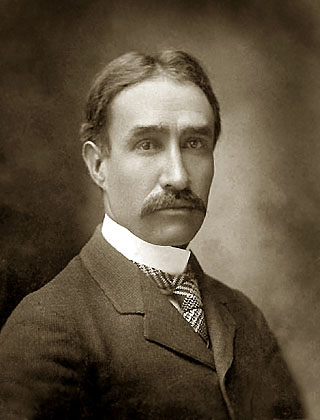
New Mexico is rumored to have the most flavorful, aromatic green chile in the United States, but is there any truth to this? The improvement of the chile started at New Mexico State University with Fabian Garcia who invented the first New Mexican seed type. Since that day, NMSU has invested in the Chile Pepper Institute and plant breeding of numerous chile peppers. Today, all New Mexican chiles can trace their genetic basis back to New Mexico’s number 9 chile that was first cultivated in the early 1900s, including the popular “Anaheim” green chile.

Capsaicinoids are responsible for a pepper’s heat and were a major part of Fabian Garcia’s research. Photo by the chilepepperinstitute.org

Capsaicinoids are responsible for a pepper’s heat and were a major part of Fabian Garcia’s research. Photo by the chilepepperinstitute.org

Fabian Garcia used hybridization and selection to control the genetic constitution of native peppers. Garcia suspected that selecting for a mild chile would increase consumption among Anglo citizens and pursued breeding peppers of different heats. He also aimed for the cultivation of a large, fleshy, easily canned chile. Danise Coon, New Mexico State educator writes, “While searching for the most easily canned chile, Garcia found that the hardier, blight-resistant chiles were naturally selected for and outcompeted those susceptible to wilt.” This means that the non-desirable peppers weeded themselves out and disease-resistant, desirable peppers were left to thrive and become researched further. One trait to he would research next would be the correlation between capsaicinoids and the heat of a pepper.

Garcia was one of the first horticulturalists to experiment with capsaicinoids. Capsaicinoids are responsible for a pepper’s heat and are prevalent on the seeds of a pepper due to their proximity to the placenta. A pepper’s capsaicin content is influenced by genetics, weather conditions, growing condition and fruit age. However, the most influential factors on the amount of capsaicin in a pepper is genetics and environmental stress. A cultivator can plan for a certain degree of heat in their peppers through selection and by limiting stress. A high degree of stress can change a pepper’s degree of heat and turn a pepper bred for low heat into a hot pepper as well as a hot pepper into a much milder pepper. Some examples of environmental stress would be temperature, precipitation and pollinators.

Chiles are typically self-pollinators, but the presence of insects can induce out-crossing and cross pollination. Cross pollination can affect seed production and make a chile sterile. When a chile is sterile, it is the end of its germline and it can’t germinate other chiles. So, if hybridization and pursuit of a new type of chile is desirable then insects should be excluded from its cultivation. Also, in order to get optimum heat and flavor out of a green chile a cultivator should minimize the environmental stress on their chile crop.

-Posted by Jared

Posted in Uncategorized | Leave a comment

Fermentation: Preserving Food the Sustainable & Healthy Way

Canned Veggies, by Erika Siegal.

Canned Veggies, by Erika Siegal.

THE HISTORY OF PRESERVING FOOD
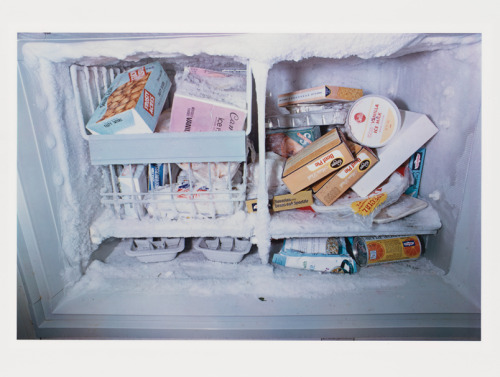
Preservation of food is an integral part of human history. It has allowed for humans to place roots and form communities, which facilitated the transition of hunter-gather societies to agriculture-based societies. There are many different methods of preserving food, the oldest being drying followed by canning, pickling, and fermenting. When agriculture became industrialized, societies embraced commercialized food which generated new inventions to preserve food. Modern methods of preserving food include refrigerating, freezing, pasteurizing, packaging, and adding artificial preservatives. Unfortunately, modern methods use energy, produce greenhouse gases, create waste, and reduce the nutritional content of food. In contrast, traditional methods of preserving food are sustainable, healthy, and can still be practiced in the modern kitchen.

Untitled, by William Eggleston

Untitled, by William Eggleston.

PROBIOTICS & OUR INTERNAL ECOSYSTEM
Most traditional and modern food preservation methods work by killing the bacteria or slowing the growth of bacteria in food. While bad bacteria are notorious for inducing illness, consuming good bacteria, also known as probiotics, are essential for human health. Humans contain an internal ecosystem, and it is what keeps our bodies healthy. Not unlike the ecosystems between plants and animals, microbial ecosystems need to be in balance to work. The human gut is filled with thousands of microorganisms called flora, which are microorganism that affect the immune system, digestion, metabolism, and brain. Flora is balanced when there are enough good bacteria to fight off the bad bacteria. Our gut flora is determined by the food we eat- the more good bacteria that is in the food we eat, then the more good bacteria that is in our bodies.

Food preservation has always faced the challenge of reducing food’s nutritional content since the methods kill or slow the growth of all of the food’s bacteria, including the good bacteria. Fermentation is unique in that the method increases the growth of bacteria in the food. Specifically, it increases the growth of the good bacteria which concurrently increases the nutritional content of the food. This means the product is a living food full of probiotics that will become a part of our internal ecosystem.

Untitled, by Andrew Holder for the Washington Post

Untitled, by Andrew Holder for the Washington Post.

THE FERMENTATION PROCESS
Fermented foods are so healthy because the process utilizes nature’s preservative, lactic acid. Fermentation is the process of converting sugars into lactic acid, which Lactobacillus microorganisms have the ability to do. Lactobacillus microorganisms are present in foods with natural sugars, like fruits and vegetables. When sugary foods are enclosed in an anaerobic environment with salt, the salt kills the food’s bad bacteria, leaving only the remaining good bacteria- Lactobacillus microorganisms. The microorganisms are then free to roam, eat sugar to their hearts’ content, and dispose of the contents. This process converts the sugar into lactic acid, which is the preservative of the food. It also breaks down the nutrients in the food which makes more nutrients available for digestion in the human body. The fat and happy Lactobacillus microorganisms are the reason the nutritional value of the food is exceptionally enhanced.

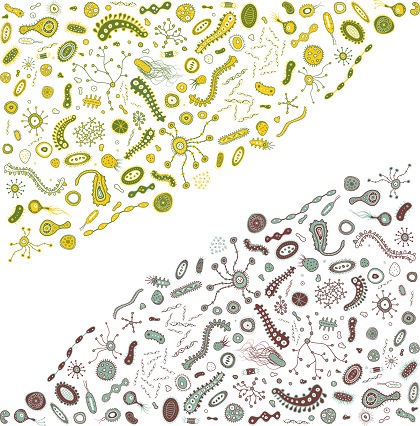
Bacterium Pattern, by 4Vector

Bacterium Pattern, by 4Vector.

THE MEDICINAL VALUE OF FERMENTED FOODS
Fermentation has been highly regarded within many cultures around the world. Long before microbiology was understood, humans observed the living qualities of fermentation and as a result, believed the food to be “prepared” by higher powers. If you try fermenting yourself you can also witness the extraordinary transformation by seeing the food bubble in the jar and smell the tangy aroma, knowing that the Lactobacillus microorganisms are hard at work. Our ancestors also valued the health benefits of fermentation. They experienced its boosts to the body’s immune system, and so fermented foods were considered to be medicinal. In a way, fermented foods are medicinal. Antibiotics help fix bacterial problems in the human body, but probiotics help prevent bacterial problems from happening in the first place. This is why probiotic-rich foods like fermented foods are important to include in our diets. The medicinal value of fermented foods is just as important in modern society as it was in ancient times.

My Gut, My Choice, by Alia Aka Tides for Threadless.

My Gut, My Choice, by Alia Aka Tides for Threadless.

FERMENTATION IN NEW MEXICO
Living in a society where it is hard to avoid processed food, fermentation gives us the ability to take back power over our own health. Fermented foods can provide our bodies with the nutrients and probiotics that most other foods cannot. Fermentation is also a step towards sustainable living. Fermenting foods at home strikes against the modern food industry by using low-energy food preservation methods as well as supporting local agriculture. New Mexico doesn’t have a history of fermenting, but New Mexico’s local agriculture would greatly benefit from implementing home-fermenting to its kitchen culture. Many favorite New Mexican foods, such as chile, jalepenos, and tomatoes, contain Lactobacillus microbes, so they are perfect for fermenting. This is why health-conscious and environmentally-conscious New Mexicans should consider reviving the lost art of fermentation with their very own southwestern twist!

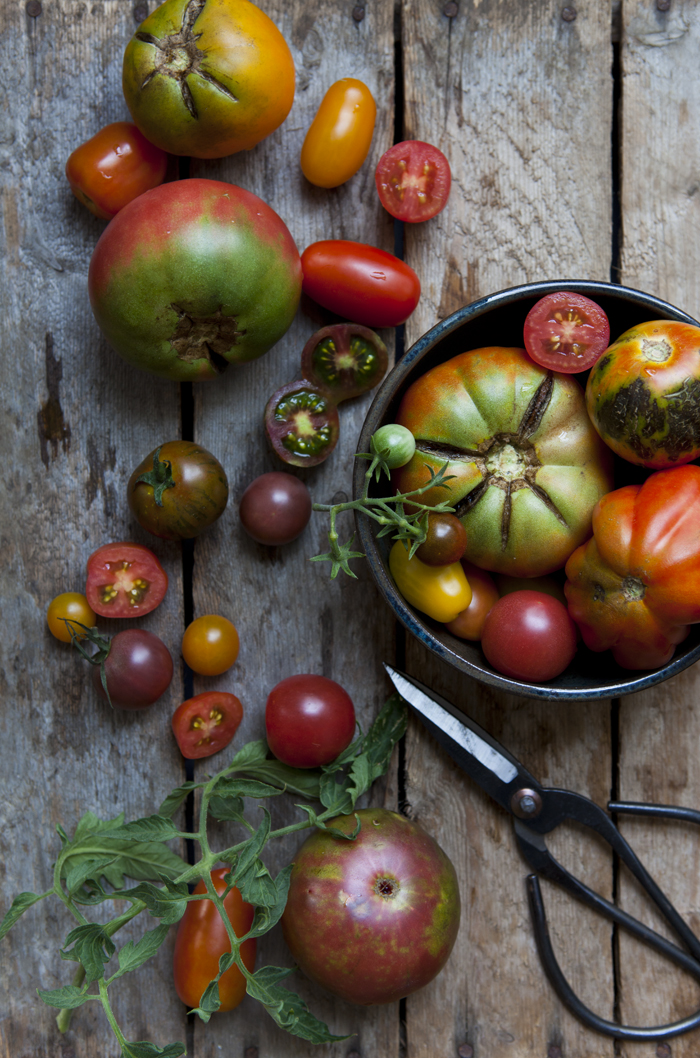
Heirloom Tomatoes, by Nicole Franzen.

Heirloom Tomatoes, by Nicole Franzen.

-Posted by Rachel

Posted in Uncategorized | Leave a comment