Lobo Growers’ Market Manager

Meet Kimberly Barnett, the Fall 2012 Lobo Growers’ Market Manager! Kimberly is a senior at UNM, studying food and water resources in the Bachelor of University Studies program. As a Sustainability Studies student she has completed both the SUST-402 Foodshed Field School and SUST-364 Growers’ Market Practicum courses, in which she learned about New Mexico’s foodsheds and how to organize and manage growers’ markets.

Kimberly grows produce on a small plot in Bosque Farms with her partner Jedrek, and works with him to sell it at the Northeast, Nob Hill and Downtown Growers’ Markets. She’s also developing a value-added baby food business that will use local produce, and is hoping to open a commercial kitchen in Bosque Farms some day.

Kimberly says, “I’m thrilled to be able to be a part of bringing local food to campus. It’s something I know the faculty and student body here have been wanting for a while. I think that completing the Growers’ Market class here at UNM, farming, and also working at three local markets has given me some of the experience I need to help make our campus market successful. My brain and my stomach are eager for exciting things to happen this semester!”

Welcome, Kimberly! We’re excited to have such a passionate and capable student managing the six-week series of markets.

Posted in Uncategorized | 2 Comments

The Lobo Growers’ Market is Coming to Campus this Fall!

EAT SMART, BUY LOCAL, BE LOBO!

It’s official! The Sustainability Studies Program is proud to announce that during the Fall 2012 semester we will be hosting a series of six weekly growers’ markets on UNM main campus. Come on by and support your local, sustainable growers and producers.

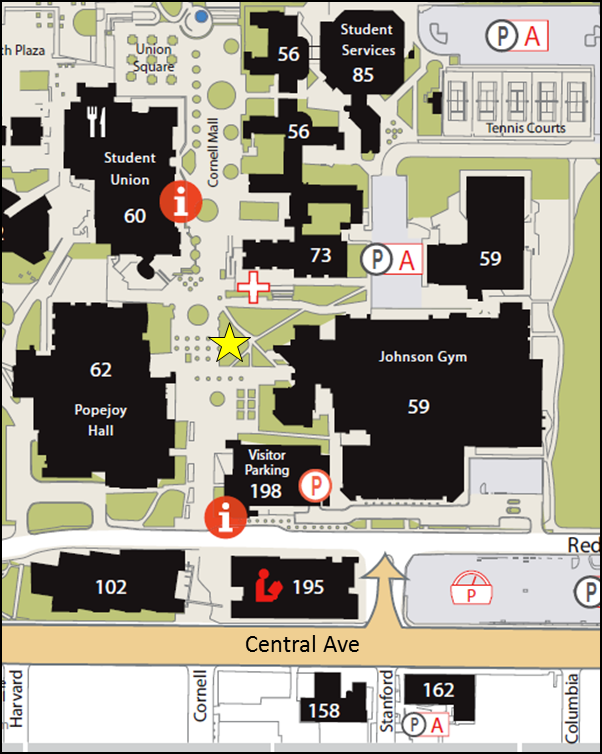
The market will run from August 29 through October 3, and will be held on Wednesdays from 10am to 2pm on Cornell Mall. There will be about ten vendors set up in the grassy, shady area between Johnson Gym and the bronze statues just south of the SUB.

The yellow star shows the market location. Join us Wednesdays, from 10am-2pm on the Cornell Mall. There will be ten vendors in the grassy triangle just west of Johnson Gym.

During late summer and early fall, local produce is at its best and most abundant. At the Lobo Growers’ Market you can look forward not only to fresh produce, but also to locally-made value-added products and prepared foods. Offerings will include tomatoes, corn, melons, peaches, pears, apples, potatoes, onions, summer squash, beets, carrots, herbs, chard, garlic, honey, salsas, fruit jams and preserves, aguas frescas, breads and pastries, tamales, and handcrafted soaps and bodycare products.

Markets will be held on:
August 29
September 5
September 12
September 19
September 26
October 3

Each market will be themed! You’ll have the opportunity to learn about seed saving, participate in a recipe swap, and watch a cooking demo.  Stay tuned for a final list of vendors and market themes…

In the meantime, we want your input on how to improve future LOBO Growers’ Markets. Let us know which products or specific local producers you’d like to see on campus, and we’ll do our best to make it happen! We appreciate the feedback.

← Back

Thank you for your response. ✨

Posted in Uncategorized | Leave a comment

2012 Lobo Growers’ Market

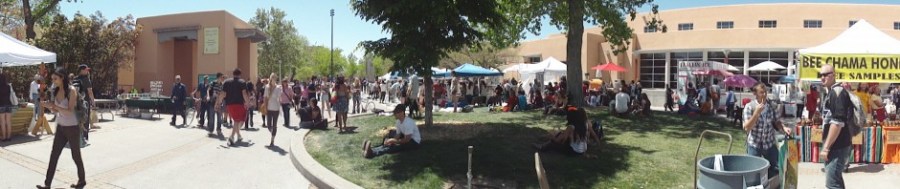
Due to the hard work of the UNM Parking & Transportation Services, Office of Sustainability and Sustainability Studies Program Growers’ Market Practicum students, the 4th Annual Sustainability Expo and Lobo Growers’ Market was a success! Over 60 vendors and thousands of customers enjoyed the mild spring weather on Cornell Mall on the Thursday before Earth Day.

This slideshow requires JavaScript.

Some of the many wonderful vendors that participated in our event:
A & J Family Farms
Agri-Cultura Network
Albuquerque Growers’ Market Alliance
Diane Marshall Pottery
East Mountain Organics
Erda Gardens
Exotic Edibles of Edgewood
Firenze Pizza
Flamingo Steve’s Italian Ice
For the Love of Bees
Fresh Produce ABQ
Good Food Eat Here
Heidi’s Raspberry Jam
House of Bread
Mother Nature Gardens
myTepache Island & Bee Chama Honey
Nob Hill Growers’ Market
Nolina’s Heavenly Organics
Ranney Ranch Grass-fed Beef
Shabeta’s Healing Garden
Skarsgard Farms & The Harvest Truck
South Valley Economic Development Center Commercial Kitchen
South Valley Soap
Sunshine Garden Body Products
The Zingaro
Urban Store

Join us next year for the 5th Annual Sustainability Expo and Lobo Growers’ Market on April 23, 2013! In the meantime, the Sustainability Studies Program is aiming to hold a series of six to eight weekly Lobo Growers’ Markets in the Fall 2012 semester. During August and September, local produce will be at its best and most abundant! Stay tuned for more info…

Posted by Jessica

Posted in Uncategorized | Leave a comment

Something Fishy in the Desert

Worldwide, the popularity of seafood is growing. In the U.S., seafood consumption is up almost 30 percent from 25 years ago. The average person eats more than 16 pounds of seafood per year, with shrimp, canned tuna, and salmon being our favorites.  This makes the U.S. a major stakeholder in the seafood industry.

The amount of seafood we consume annually is equal to the weight of 270,000 Hummer H2 sport utility vehicles. Eating all that seafood might not be the best thing for people, for the planet, or for profit.
(Source: Food & Water Watch).

Even in landlocked areas, such as New Mexico, Americans eat seafood. In Albuquerque alone, roughly 20 restaurants fit into the “seafood” category. In addition, dozens more have fish, shrimp or other seafood dishes on their menus. The city has almost two dozen sushi restaurants, “fast” seafood chains (such as Long John Silver’s and Captain D’s), and myriad other outlets that serve fish, like McDonald’s, Burger King, Wendy’s, Sonic and Blake’s Lotaburger.

Though the foodservice industry serves about 70 percent of our seafood, New Mexicans also purchase and cook seafood at home. As well as a few markets that specialize in seafood, most grocery stores in the region, from Albertons to Walmart, sell seafood.

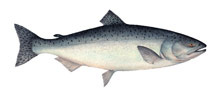
Wild Alaskan Salmon = “Best Choice”
Source: SeafoodWatch

Things to Consider
While seafood is a popular choice, fish lovers need to consider the sustainability issues associated with their choices. According to Greenpeace (UK), “a particular seafood is sustainable if it comes from a fishery with practices that can be maintained indefinitely without reducing the target species’ ability to maintain its population.” Another defining element is that the fishery practices must not affect another species in the ecosystem. This could happen by removing a food source, damaging the environment, or accidentally killing another species.

Key issues associated with non-sustainable seafood include overfishing, human health issues, and a rising reliance on aquaculture. Currently, 75 percent of fish populations are “fully or over exploited” (Seafoodchoices.org PDF).  To keep up with demand, close to half of the world’s seafood is now produced through aquaculture, which has its own sustainability issues. Almost 80 percent of U.S. seafood is imported. Much of this seafood is produced on crowded and unsanitary industrial-style farms, calling for the use of antibiotics and chemicals to keep bacteria and disease at bay. Despite these measures, seafood products cause approximately 18 to 20 percent of the U.S. cases of food-borne illness each year (Food & Water Watch).

U.S. Farmed Shrimp = “Best Choice”
Source: SeafoodWatch

Your Actions Count
Choosing to buy and to eat only sustainable seafood does make a difference.  Through the combination of consumer pressure, global fishery monitoring, and legislation, some types of seafood have rebounded and are now considered “sustainable.” The Environmental Defense Fund cites several species that used to be “Eco-worst” choices that are now “Eco-ok,” or even “Eco-best choices,” such as U.S. farmed shrimp.

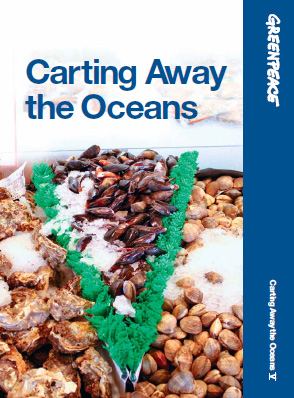
Source: Carting Away the Oceans, Greenpeace USA, 2011

What You Can Do

  • Speak your mind. Tell your seafood merchant that you are concerned about sustainable seafood.
  • Know the facts. Familiarize yourself with the issues and which seafood items to avoid. Refuse to compromise.
  • Vote with your dollar. Reward seafood merchants that make sustainable choices.
  • Eat less fish. Today’s demand for seafood far outstrips what can be delivered from sustainable sources.

General Sustainable Seafood Resources:

Sustainable Sushi:

New Mexico Local:

Posted in Uncategorized | Tagged , , , | Leave a comment

Eat Local for Less

In a world where big agriculture is king and cheap food is in high demand and production, making sustainable food choices is a challenge. For college students and others living on a limited budget, eating consciously becomes an even greater task. I set out to determine how feasible it is for a college student of average income to eat locally, organically and sustainably. I have been participating in a local CSA, buying local when possible and am attempting to produce some of my own food in an effort to create a model for eating locally and sustainably on a limited budget.

Food In New Mexico
New Mexico is no exception to the national preference for cheap food. Although New Mexico is home to 20,000 farms, only 8% of these farms sell direct to the foodshed and only 3% of food grown in New Mexico is consumed locally.  Despite the high potential to produce and consume food locally, New Mexico imports over 95% of its food. Cheap food has taken precedence over local food and less than 1% of all cash receipts for food purchases in New Mexico are spent on local food.

Local Food Budget
Community Supported Agriculture
Participating in local community supported agriculture (CSA) is a great way to eat locally and seasonally. Participants in a CSA pay a weekly, biweekly, monthly or yearly share to a farm in their area and receive a portion of the farm’s yield in return for their investment.  There are many local CSA options in the Central NM region, both seasonal and year round with varying and affordable prices.

Year Round:

Seasonal:

Farmers’ Markets
If you subscribe to a year round CSA, it will not be necessary to include a significant amount of funds for farmers’ markets. Opting out of a CSA during the summer growing season to shop at farmers’ markets in your area presents the opportunity for direct contact with the farmers growing your food and better awareness of seasonal offerings.  However, if a year round or seasonal CSA is most convenient and will encourage you to eat locally, this may be your best option.

Gardening
The price of gardening and growing your own food can easily be decreased by providing your own materials or sharing and trading with friends. Organic compost and potting soil can be expensive, but producing your own compost is free and includes the added benefit of displacing some of your waste from the landfill. A home garden can occupy a remarkably small space. Raised beds can be a solution to poor soil quality and indoor seedling starts or small herb gardens do not even require a yard.

-Organic Seeds: about $2.50/packet
-Seeds from friends or own seed saved year to year: FREE
-Organic potting soil: about $15.00/small bag (enough for 2 large pots or one 3×3 garden box or bed)
-Backyard soil mixed with homemade compost: FREE

Garden boxes can be made out of recycled or scrap wood (just be sure to make certain there are no synthetic or toxic chemicals that may leech into your soil).  Seedlings can be started in recycled yogurt cups. Backyard soil can be raked and mixed with homemade compost. When recycled, homemade and creative measures are used, growing your own garden can be inexpensive and eventually significantly reduce your food costs.

Garden Trial
Purchasing Seeds
The first step in my home garden trial was purchasing seeds. I purchased organic (and some local) seeds from a gardening store in my neighborhood, Rehm’s Nursery. I consulted with the staff for additional knowledge about what to plant for the season and which seeds to start indoors before moving outside to a garden bed.

Compost
Secondly, I prepared my soil. I raked the ground in my backyard to loosen the soil, watered the dirt to loosen it and stirred in compost from my homemade pile.

Planting
Next, I planted the seeds according to the instructions on the seed packets and the advice of the Rehm’s staff. Finally, I thoroughly watered the seeds and soil. I kept the soil moist, watering at least every other day and when the soil looked dry.

Seedling Trials
I started some of my seedlings inside, under the advice of the Rehm’s staff and other experienced gardeners, to allow the plants that require warmer weather to get started growing. I planted the seedlings in recycled yogurt and berry containers with left over organic potting soil I had. I put the seedlings in their containers in a larger plastic container to keep them moist and alternated them outdoors while it was warm and brought them inside at night until the weather warmed up.

Results
After about six weeks, my garden and sprouts have begun to grow. My compost pile is working very well and I am still subscribing to a local CSA through Skarsgard Farms.  I have been able to affordably eat locally and sustainably through creative measures and believe that anyone can do the same.

Posted by Hannah

Posted in Uncategorized | Tagged , , , , , | Leave a comment

Farm & Table Restaurant: Bringing the Taste of Community to Your Table

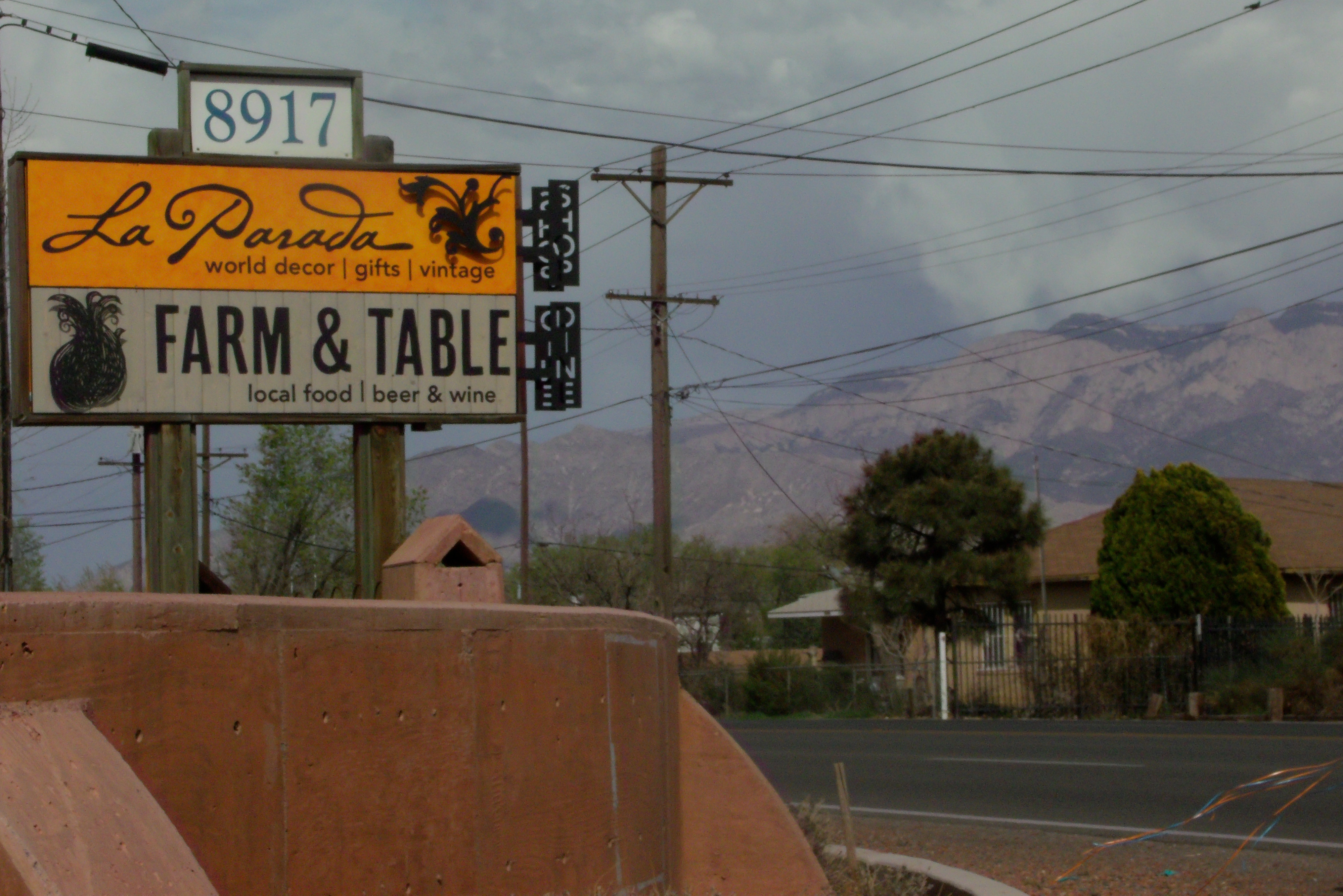
Farm and Table Restaurant, North Valley. Photo by Patrick

Restaurants are typically a difficult business to get into. A successful restaurant must have three important things to thrive. First, a restaurant must have a comfortable environment that is warm and welcoming for all customers. Secondly, a restaurant should have reasonable prices, so that people don’t feel like they are paying too much for what is served to them. Above all, a successful restaurant has to have amazing food: the type of cuisine that makes your mouth explode with flavor as soon as you remove the fork from your lips, the type of food that leaves you talking for weeks after you leave.

Sol Harvest Farm Greenhouse. Photo by Patrick

Married couple, Cherie and Joseph Austin, have created something that meets these three expectations and more. Farm & Table is a new restaurant located in the North Valley of Albuquerque. What separates Farm and Table (F&T) from other food establishments is that they are dedicated to serving locally grown produce and meats to their customers. By working with a number of different farms and ranches around New Mexico, F&T is able to fill up eighty percent of its current menu with local food!  F&T’s onsite farm, Sol Harvest Farm – visible from the restaurant patio – grows for the restaurant and also for a small CSA. Additionally, the best part about F&T is that they are dedicated to the concept of community. By working with local growers, ranchers, and other local businesses, F&T showcases some of the best foods New Mexico has to offer.

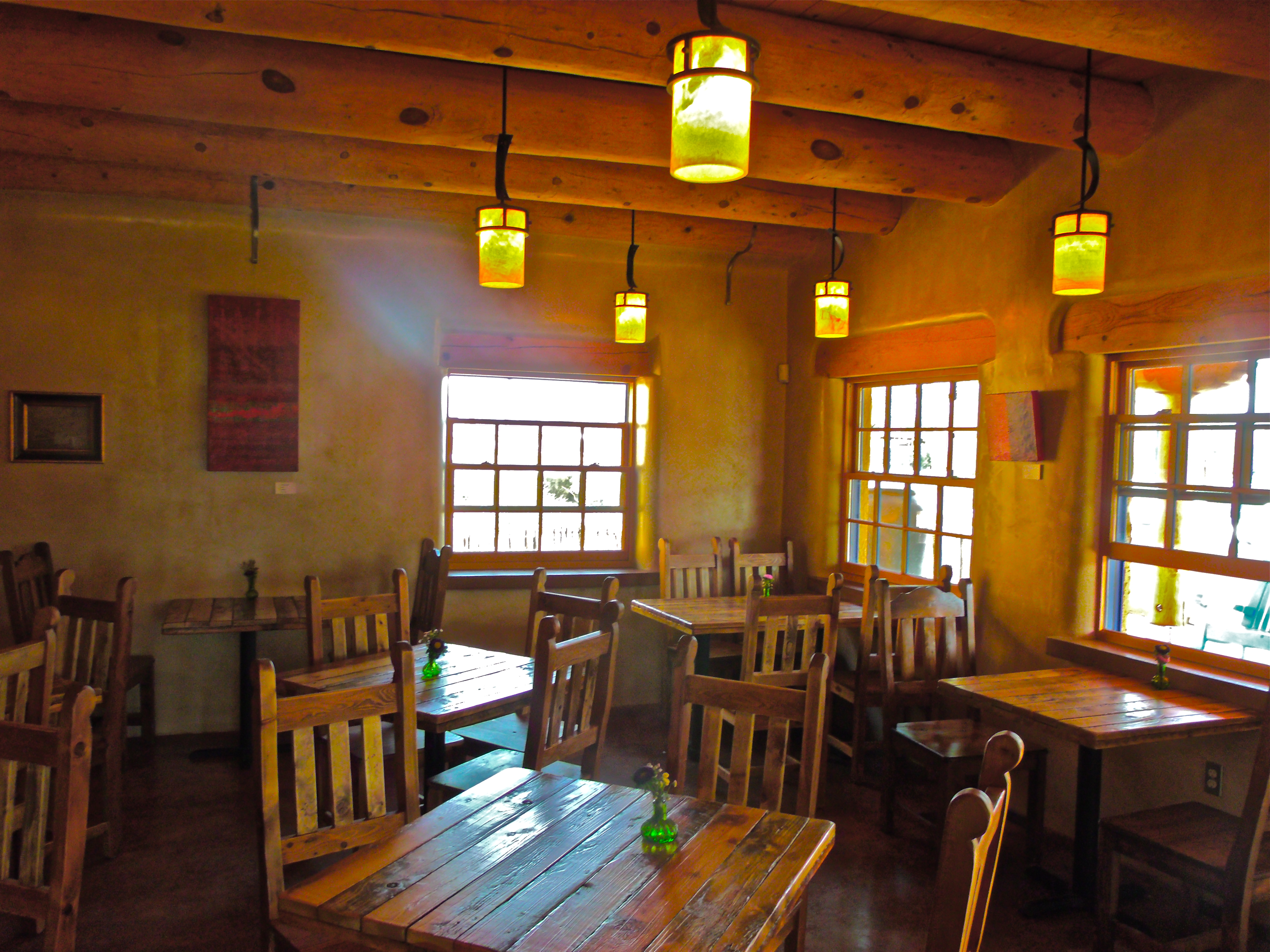
Farm & Table Restaurant Interior. Photo by Patrick.

When you first walk into F&T, you instantly feel at home. The interior is decorated in a warm southwestern style: stucco walls, maroon stained cement floors, wooden tables and chairs. F&T also displays beautiful local art on their walls. The size of the main dining room isn’t very large, but this only adds to the comfortable environment. When you sit, the waiter or waitress brings a plate with two different styles of bread served with rosemary infused olive oil, made in the South Valley.

The menu is clean and easy to read, and showcases the salads, appetizers and entrées that use locally grown produce and/or meats. The back of the menu offers a little info about what is in season and what ingredients you might find on your plate. The customer can learn what locally grown produce and meats are being offered that month, as well as where the products are from. The entrées include a wide range of fine dining cuisine, with dishes such as pan-seared duck breast over an apple puree served with an asiago polenta cake and braised local cabbage, as well as a more traditional menu item like the Farm and Table burger, comprised of local grassfed beef, Tucumcari cheddar and New Mexico green chile. All dishes are priced reasonably for the quality of cuisine.

Farm & Table is doing something beautiful; the owners hold a lot of love for the state of New Mexico and its community. They are bringing back a sense of community between growers and restaurateurs. You can taste it in their cuisine. With their warm environment, reasonable prices and food that takes your breath away, it’s easy to say that Farm & Table is by far one of the best local restaurants Albuquerque has ever seen.

Posted by Patrick

Posted in Uncategorized | Tagged , , , , | Leave a comment

Chickens for You, Chickens for Me, Chickens as Far as the Eye Can See!

Oh the chicken, the flightless bird that outnumbers humankind almost threefold: figures as of 2005 estimate that there are roughly 20 billion chickens worldwide! First domesticated 8,000 years ago in Southeast Asia from the red jungle fowl (Gallus gallus) and the grey jungle fowl (G. sonneratii) chickens undoubtedly are one of the most important domesticated animals to humankind. Not only do chickens provide eggs, a superfood packed with nutrients and protein (important for anyone living a vegetarian or reduced meat lifestyle), they also can be great co-gardeners! With literally hundreds of chicken species across the world suited for specific habitats and egg production, it can be overwhelming for the amateur chicken keeper/gardener to decide if chickens are the right choice. I would like to explain why keeping chickens is beneficial, what kinds of ordinances exist in Albuquerque regarding chickens, and my own experience preparing my dual purpose garden-chicken coop.

Some of you might be asking yourselves at this point: why do I need chickens? I can just go to the store and buy as many eggs as I want,right? And wouldn’t chickens destroy my garden, mocking me with their flightless mischief? While these are all valid questions that I have also asked myself, the benefits chickens have on their environment and your garden are simply amazing. For one, chickens love to eat insects that could pose a threat to your garden. Let me tell you they will literally eat ANYTHING, which means they poop a lot! While that might initially gross you out, don’t fear! Chicken poop is one of nature’s best sources of nitrogen, which is essential to growing vegetables. Coupled with composted kitchen scraps you can easily build fertile and organic soil.

Having your own chickens gives you food security: when the zombie apocalypse breaks out I predict it will be difficult to walk to the corner to buy eggs, but if you’ve got chickens you don’t have to worry! On a more serious note however, knowing where your eggs come from and the condition of the chickens laying them can protect you from large scale food system epidemics stemming from conventional egg production. Many who have researched conventional food production or who have seen Food Inc. know that often times the eggs or meat of sick chickens can be sent to market. Not only that, but you can feel good knowing that you have happy chickens that see the light of day and that you are on the road to becoming more self-sufficient. Last but not least, having eggs in your own backyard eliminates the packaging and carbon emissions associated with store-bought eggs that often travel more than 1300 miles before they reach your plate.

This slideshow requires JavaScript.

Now that you’re convinced how awesome it is to keep chickens, here is some information regarding keeping chickens in Albuquerque. The basics that you need to know are that it is legal to have chickens in town and that there are many stores that sell them. I won’t go into specifics but with the two links above you will be able to find out all you need.

So now that you’re armed with the right info you need to get started, I will briefly share the last few weeks’ experience I’ve had getting my own garden-coop going. Before I even thought about chicks, I had to get started on making sure I had a safe place to raise a flock. My first task was to repair the old chicken coop that had been collapsing in my backyard. I made sure there was no room in the mesh for predators to enter and set up a heat lamp in the spot I planned to have my chicks. I also built a fence around the coop so that my chickens will be able to get fresh air (and so my goats won’t destroy the garden I’m planning there). Since this is all still a work in progress the fence has not quite been finished.

After the initial prepping I bought my three chicks, Daisy, La Llorrona, and Blair from Miller’s Feed and Supply, which I chose because of its proximity to my house in Corrales. I also bought a bag of non-medicated/additive free chick feed and a simple water container that won’t fall over. After several weeks I bought two more chicks (names are still in the air) and it has gotten warm enough to turn off the heat lamp. Now that the chicks have started to get feathers and explore the coop, I’m looking forward to watching them grow and begin to lay eggs. So that’s pretty much it. I hope this inspired you to start a flock of your own, because if I can do it so can you!

Posted by Justin

Posted in Uncategorized | Tagged , , | Leave a comment

Food Fight: Combating Kitchen Food Waste

Food waste articles report that somewhere close to 40 million tons of food is wasted in homes across the United States. “A typical household throws away an estimated 474 pounds of food waste each year.” The primary culprit is that food we buy goes bad before we ever get around to using it. Here are some tips on how to avoid having to throw so much away.

Food Freezing
Freezing food is a great way to preserve food that you might not use right away, but want to keep for an extended period of time. There are a few cautionary notes and suggestions involved in food freezing. Proper packaging is key to ensuring food doesn’t lose its nutritional value and taste in the freezer.

Julie Garden-Robinson’s Food Freezing Guide suggests that you pack food tight and make sure air is out of the packaging. Label each package with the date and product and arrange it in the freezer so the food that’s been in the longest is up front and can easily be used first.

While pretty extensive, the Garden-Robinson Food Freezing Guide is something I find extremely useful. There is information about freezing all types of food from meat to produce, and even eggs and cakes.

Grocery List/Meal Plan 
Combating food waste begins outside the home in the grocery store.  A great way to prevent so much food waste is to practice smart shopping. Before leaving to the supermarket, see what foods you already have and incorporate them into a meal.  If you don’t have everything you need to make that meal put those needed items on the grocery list. Don’t shop on impulse. You are more likely to buy too much food you won’t use if you do.

For more tech savvy shoppers, there are iPhone apps that allow you to create a mobile grocery list.

This slideshow requires JavaScript.

Composting
Consider the feasibility of starting a small-scale compost in your kitchen or yard. Trust me, it’s not too hard.

Compost size? What do you have space for? Even if you live in a small apartment and have no yard you can still craft a small indoor compost.

Steps:
-Add soil to a plastic bin.
-Get some worms. Red wigglers eat fruit and vegetable scraps, crushed egg shells, coffee grounds, tea bags and leftover bread and grains. They do best without meat or fish scraps or fatty, oily foods.
-Keep wet/dry balance.

What to do with your compost when it’s ready:
When the compost starts to resemble dark, crumbly soil (usually in one to four months), it is time to harvest your vermicompost. Vermicompost starts becoming toxic to the worms if left in the worm bin for too long. Sprinkle vermicompost into your seed rows to give your plants a source of nutrients when they sprout.

Recipes for Using Up Produce:
Unless frozen, fresh produce doesn’t keep in the refrigerator for more than a week or so. If you have fruits and veggies that are nearing expiration you don’t have to throw them out. They can be made into a meal or snack!

FRUIT SMOOTHIE
3 servings. 135 calories, 2 g fat
Ingredients
½ cup of blueberries or any kind of berry
1 ripe banana
1 orange peeled and sectioned
1 cup of milk
4 crushed ice cubes

 Blend all ingredients in a blender until smooth.

*During the summer time, I use peaches that fall off of our tree. They might be a little bruised but in the smoothie you can’t even tell.

VEGGIE QUESADILLA
Ingredients
1 flour tortilla
Variety of vegetables –chopped
Minced garlic to taste
½  cup of cheese

 Sauté vegetables in a small frying pan with some olive oil. I like to use broccoli, tomatoes, and green chile, but really, you can use anything that you have. In summer, fresh garden vegetables are very nice.

Cut some slices of any type of cheese. This recipe is for 2 quesadillas, it will need to be about 1 cup of cheese total.

Melt the cheese into a large flour tortilla, add in the cooked vegetables and cook on a skillet until the quesadilla is hot throughout.

Posted by Caitlin

Posted in Uncategorized | Tagged , , , , | Leave a comment

A Quest for Locally Grown Food on Navajo Land

Growing up, I spent a large portion of my hot summer days and three-day weekend breaks visiting relatives near the Four Corners region and accompanying my mother on business trips throughout the Navajo reservation. Recently, my curiosity for locating local food on tribal lands has grown. Now, during single-day trips to Shiprock, Gallup and other places, I find myself surveying the sides of highways for permanent farm vendors and growers’ markets – with no luck. So, I began to wonder where I might be able to buy locally grown produce such as melons, beans, corn and squash in small rural towns and at highway crossroads that are normally lined with fast-food restaurants and large chain grocery stores.

When you drive along Highway 64 from Farmington to Shiprock, the scenery is composed of endless farms and trees following the San Juan River. According to the USDA 2007 Census of Agriculture, San Juan and McKinley Counties – which are in the northeastern region of New Mexico – have 3,786 farms operated by Native American Indians, for a total area of 3,918,017 acres. After discovering how many farms were nestled in these two counties within the boundaries of the Navajo Nation, I was surprised that locally grown food was not as readily available here as it was in distant urbanized areas away from large farms.

As I researched further, I used Google Maps to count the number of supermarkets around the Four Corners and Gallup area. There are nearly twenty-one chain stores within the reservation area such as Wal-Mart, Safeway, Smith’s and Albertson’s to name a few. From the New Mexico Farmer’s Market Association (NMFMA), I found out there are only four NMFMA certified farmers’ markets either inside or within close proximity to the Navajo reservation in New Mexico. This is a small number compared to the number of big box stores on tribal lands. The markets include the Shiprock Growers’ Market, Farmington Growers’ Market, Gallup Farmers’ Market and Ramah Farmers’ Market. Each varies in operating seasons and hours:

Farmington Growers’ Market
Location: The Farmington Museum at Gateway Park, 3401 E Main St.
Schedule: Saturdays, 8am-11am; Tuesdays, 4:30pm-6pm
Season: Saturdays from May 21st until first hard frost; Tuesdays starting July 12th

Gallup Farmers’ Market
Location: Downtown Walkway between Coal & Aztec
Schedule: Saturdays, 9am-12:30pm
Season: From mid-July to mid-October

Ramah Farmers’ Market
Location: Ramah Museum, 12 Bloomfield Rd
Schedule: Saturdays, 10am-1pm
Season: From mid-June until October 8th

Shiprock Farmers’ Market
Location: Behind the Wells Fargo Bank, south of the fire station
Schedule: Saturdays, 8am until sellout; Wednesdays, 3pm until sellout
Season: Saturdays, August 6th until October 29th; Wednesdays, August 10th until September 28th

I could not find any winter markets in the area, but I know my upcoming summer schedule will be filled with visits to these markets. Roadside vendor sales are not recorded by any USDA Census of Agriculture publications, making it more difficult to find exact locations of places to buy reservation farmers’ products. Since my search so far had proved difficult in sourcing locally grown food, I started to research which agricultural products were grown within the San Juan and McKinley Counties. This way I would know the types of food to look for in smaller trading post stores or markets such as Bashas’ Dine Market. My search showed:

  • 97 farms selling grains, oilseeds, dry beans and dry peas
  • 905 farms selling vegetables, melons, potatoes and sweet potatoes
  • 87 farms selling fruits, tree nuts and berries
  • 1,554 farms selling sheep, goats and their products
  • 896 farms selling cattle and calves.

Watermelon, potatoes, corn and squash are top items on the grocery lists of reservation visitors.

Overall, these American Indian operated farms encompass almost four million acres of land within the two northeastern counties of New Mexico. The Navajo Agricultural Products Industry (NAPI) stands out as a large industrial scale farming producer. The 110,630 acres of farm land sits south of Farmington and grows alfalfa, corn, beans, wheat barley and other small grains over 70,000 acres. During a few visits last summer to the Wal-Mart Supercenter in Farmington, I was able to buy a large bag of “Navajo Pride” potatoes which were grown on NAPI land.

I had to venture into other stores on the reservation in order to find locally grown food. In Crownpoint, which is north of Grants, there is a Bashas’ Dine Market that sold eggplant from Arizona and walnuts packaged in Window Rock. When I passed through Gallup, I went into the tiny La Montanita Co-op store where a three foot wide rack left of the entrance had fresh produce scattered on top.

It turns out, finding large amounts of Navajo Nation products on the reservation during winter months is quite challenging. After discovering the number of farms within the Navajo Nation area, I assumed I could simply walk into any local grocery store like the City Market in Shiprock and easily find a package of dried beans that was grown nearby. Luckily, I found a local grocery store in Farmington called Wildly Natural Foods that sold a variety of heritage beans, elk and deer meats, goat cheeses and blue corn flour from regional sources either fifty miles away in Colorado or from local farms in New Mexico.

On my road trips passing through the towns, the only types of roadside farm vendors I found were selling bushels of hay. Along U.S. Highway 64 between Farmington and Shiprock, I stopped at the Original Sweetmeats Inc. store in Waterflow. They sold fresh mutton, lamb and goat meats that were raised directly south of the store across the highway. Most of the local foods I found on my visits were meats, cheeses, milks, dried beans, flours and corn meals since I went during the colder months.

This slideshow requires JavaScript.

As the season grows warmer, I will have better luck finding fresh local food such as wild greens, roots and fruits. During this time, I know the roadside vendors will come out of hibernation to sell their melons out of the back of pickup trucks and the markets will open up for business. I realized small farmers have a hard time acquiring the proper certifications to sell their products in stores or markets.

When I had previously visited a Craft Market in Shiprock during the parade and fair season in October, I ran into a lady selling fresh corn that was steamed in the ground out of her pickup in a dirt parking lot. This method of cooking is a native tradition. She was covering her corn with a large blue tarp to protect it from the sun. She would let her customers pick through the corn they wanted to purchase but quickly covered the corn once the health inspector passed by. I am unsure of whether her actions were to avoid a health code citation or violation for not having a license to sell food.

These type of truck bed purchases are a frequent sight around the reservation, along with roadside stands and grills selling mutton stews. Thus far, I believe they are the closest many will get to buying “local.” For now, access to native grown food is limited for the people on the Navajo reservation in the Four Corners and Gallup regions. However, I am hopeful many more stores and markets will emerge in the near future that sell local products from farms right in the backyards of the reservation. If you ever venture far out into the dusty and arid landscapes of the Navajo Nation looking for some local grub, this map of local stores and market locations may help you in your endeavor.

Posted by Miriam

Posted in Uncategorized | Tagged , , , , , | 3 Comments

For the Love of Bees

Image credit: Earth Times

So, it is real: our most cherished pollinators, the bees, are experiencing astonishing declines in their population sizes. Bee populations are decreasing at shocking rates  primarily because of anthropogenic factors. It is time to put in some effort and give bees the space they deserve. Bees are a vital element in the continuity of diversity of thriving ecosystems, they are crucial pollinators, and they are producers of one of the most amazing sweets – honey.

This February I had the great honor to be a participant in the 2012 New Mexico Organic Conference held in Albuquerque, NM. There, I attended an inspiring workshop led by Les Crowder. Mr. Crowder is a biologist, educator, and nothing short of a beekeeping guru. He first learned the art of beekeeping from his grandfather in his organic garden. He then worked with commercial bee operations and realized that some of their practices were unsustainable, like the use of chemicals. So he came up with the design of the top bar hives, which are suitable for personal use or smaller operations. Today Mr. Crowder is  president of the New Mexico Beekeepers Association and his humbleness makes him a great inspiration for all those who come in contact with him.

Les Crowder. Top bar beekeeping system. Image credit: For the Love of Bees

Mr. Crowder’s love and passion for bees was evident as the workshop progressed. He taught the attentive crowd about the sophisticated existence of these amazing pollinators. He even emulated the buzz that a young queen bee makes before she hatches so that the older queen bee can find another home before her rival has a chance to kill her. He spoke about the way in which swarms find a new home by sending specialized bees in all directions to look for a good location with the proper entrance and orientation. When these bees find the ideal space, they leave their scent in the entrance and go back to the hive and perform a unique dance to let the others know the great news. Mr. Crowder also shared with us the different roles of all the bees in the beehive. He explained that the nectar collected by the bees eventually ripens into honey; it is essential to always keep honey raw to ensure its flavor and its beneficial enzymes for human consumption.

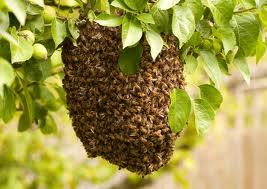
Bee swarm. Image credit: Albuquerque Beekeepers

Humans have an important role in working together to ensure the survival of other species. Mr. Crowder said, “Humans are super organisms all working together to make humanity.” The sad but true reality is that bees are dying due to our non-holistic agricultural practices. We need to stop using pesticides, insecticides, and fungicides. The lack of diversity in monocrops is also very harmful for bee populations. Mr. Crowder shared the interesting fact that in California up to 15 different insecticides have been found in pollen from almond trees. “We have to find a way to raise our food without all the ‘cides’,” he expressed. It is also crucial to step forward and plant habitat for bees to help them increase their pollinator power and honey production, even if you do not have a hive. Mr. Crowder encourages small-scale beekeeping as a “care taker role rather than an exploiter.”

Mr. Crowder is working hard to ban nicotinoids, which are one of the most widely used insecticides worldwide and affect the central nervous system of insects. Recently, these insecticides have been banned in Europe due to their connection with colony collapse disorder, which has wiped out 40% of bee populations in the US and Europe since 2003. Small amounts of nicotinoids do not kill bees per se, but they damage their nervous systems, and the result is that they cannot find their homes and the entire hive is not able to survive.

Neo-nicotinoids are still legally used in the US. Mr. Crowder informed us that companies that are doing the testing to guarantee that nicotinoids are not harmful to bees are the same companies that are selling the insecticides with EPA’s approval. What Mr. Crowder envisions is a future in which there would be independent testing on harmful pesticides, fungicides, and herbicides to hopefully forever ban their use.

Bee on willow flower. Image credit: John Denne

So, as for the rest of us, we can help if we work together to ban nicotinoids, make a shift to support local sustainable agricultural practices rather than industrial agriculture, and develop good relationships with pollinators to ensure their survival to benefit humans and biodiversity as a whole.

Les Crowder’s book “Top Bar Beekeeping” will be published any day now. He also offers great educational events in New Mexico. For more info, visit For the Love of Bees.

Posted by Eva

Posted in Uncategorized | Tagged , , , , , | Leave a comment