Gorillas in the Garden?!

We’re talking about g­uerrillas actually.

Normally, the term guerrilla invokes thoughts of sneak attacks and rebel soldiers but in a different context, guerrilla gardeners use a similar tactic of rebellion to address urban food issues, land use, and aesthetics. Guerrilla gardeners are independent fighters taking on a larger cause for food access and zoning bureaucracy concerning wasted and neglected spaces. They are the people who cultivate food access and the way we use our urban land via voluntary gardening in spaces deemed public. These spaces are ones which would otherwise go to waste as vacant or unused areas of land. Operating under the notion of spacial justice and freedom, guerrilla gardeners take up their tools and seeds rather than weapons in order to reclaim spaces and reform them to create a healthier community.

The term guerrilla gardening was first coined in New York in the 1970s when an activist named Liz Christy and friends took over an abandoned lot to cultivate fruits, vegetables, and herbs. Their group termed themselves Green Guerrillas and from there, the cultivation of public and civic land took flight as a form of addressing local food production in response to resource peaks across the globe. Guerrilla gardening has now become a grassroots movement that seeks to build community and food accessibility without asking for permission.

To get an idea of the current practice of guerrilla gardening, I watched a TED talk by Ron Finley about incredible possibilities of expanding rebellious cultivation through work he has done in South Central LA. According to Finley’s TED talk, 26.5 million Americans live in a food desert, a place where affordable nutritious food is hard to obtain. After realizing what this meant for his community, Finley and his group took over a curbside strip of land by his house and started planting a food forest. Rather than wait for a solution, Finley chose to “manufacture his own reality” and use the soil as his canvas and gardening his “graffiti.” With the example he put into practice, he hoped to inspire similar actions on grander community scales with the proof that his methods work.

As a global movement, there are plenty of groups you can get involved with in order to communicate this peaceful resistance to large scale food systems. By linking up with www.guerrillagardening.org, users can find the footprints of fellow guerrilla gardeners in virtually any place. Started by Richard Reynolds in London, http://www.guerrillagardening.org promotes the larger community of rebel gardeners seeking solutions to the current status quo of our global food system.
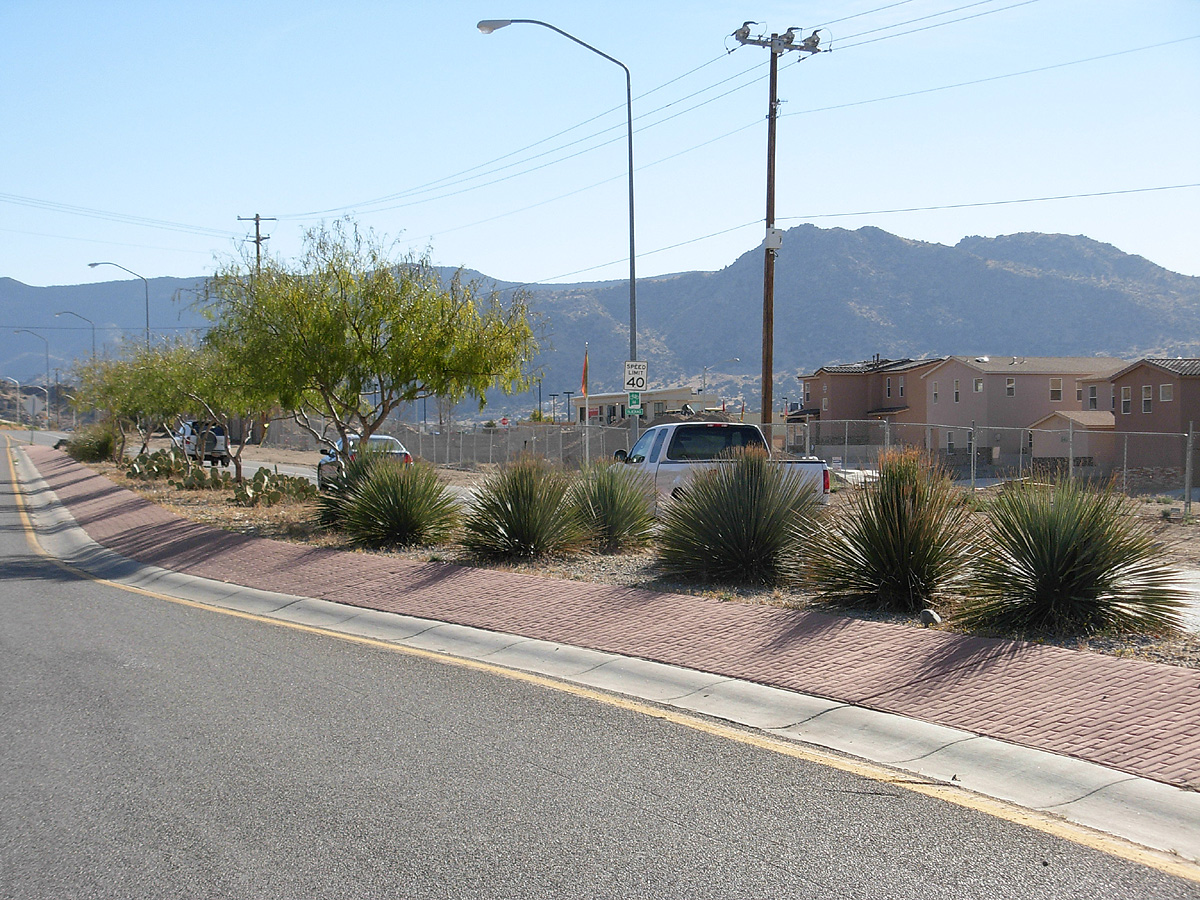
Guerilla median in Albuquerque. Photo credit: David Cristiani

Guerilla median in Albuquerque. Photo credit: David Cristiani

In my search for guerrilla gardeners in the Albuquerque area, I used the site and found information on work done by a former Albuquerque resident, David Cristiani. I was able to interview Cristiani over the phone and gathered information about how as a landscape architect working with Southwest landscapes, Cristiani made his mark in rethinking our landscape. After driving by the same poorly landscaped medians every day on Central and Tramway, Cristiani decided to take action on his own by planting Albuquerque native plants and trees during rush hour traffic one day. He wanted people driving by to see what he was doing and understand the importance of native species to our water thirsty area. Being familiar with Albuquerque native plants, he chose species that survive naturally on our region’s minimal rainfall. Cristiani questioned the status quo of unsustainable landscaping and wasted space, and was able put into practice some lasting changes in this Albuquerque median.

Although the plants he chose were not edible, Cristiani shared a lot of information with me about edible plant species native to the Albuquerque region and discussed the possibilities for a future food forest in our city. From honey mesquite to wild spinach, the options for creating edible spaces for our city are wide. Cristiani also shared sources on Brad Lancaster’s rain harvesting work towards creating a desert oasis in Tucson, Arizona. In order to make revolutionary changes using sources of life around in each region, Lancaster advocates for capturing water that would otherwise be running off and evaporating to use for growing edible plants within the public domain. A short film about his work, Free Water, shows how small changes in our infrastructure can lead to abundance versus scarcity in a desert.

When we mesh these ideas together, they become much more cohesive and viable options for change in a desert climate. By following the examples of individuals like Finley, Cristiani, and Lancaster, we can apply the changes we wish to see in the world by living and practicing those changes in ways that reach beyond personal gains. In a simultaneous act of defiance and community engagement, guerrilla gardening transforms our “not my problem” attitude in the public realm into a tool for broadening our awareness and caring for our neighbors as well…all while providing food along the way.

-Posted by Maya
Posted in Uncategorized | 1 Comment

Keeping Tradition Alive

The pueblo people of the San Juan are people of tradition. Ohkay Owingeh (San Juan Pueblo) is a community approximately twenty-five miles North of Santa Fe, and is a site where the history and practices of New Mexico are kept alive. Traditional ceremonies are held throughout the year to offer respect towards the earth and the community for the abundance they provide.

In visiting this indigenous region during a time of celebration, I was able to converse with some members of the tribe to better understand the culture and importance of tradition. Norma Naranjo, a member of the San Juan Pueblo tribe, practices such mores in her methods of cooking and baking. As the owner and founder of The Feasting Place, she strives to educate and feed the people of her community and the public through the experience of intimacy among food, culture, and practices.

The Feasting Place – Where Food Means More

The Feasting Place (TFP) is a local catering business in the Ohkay Owingeh region, which is devoted to practicing pueblo cooking styles and recipes, as well as educating the public through classes on the history that surrounds this culture. It was built on the idea that our food is much more than a source of nourishment; it’s a symbol of culture that brings the community together.

Blue corn grown by Hutch and Norma. Photo taken from The Feasting Place website: http://www.thefeastingplace.com/

Blue corn grown by Hutch and Norma. Photo credit: http://www.thefeastingplace.com/

Many of the agricultural practices, ceremonies and cooking methods that are used at TFP come from a dynamic blend of cultures that emerged from early colonization by the Spanish of the San Juan indigenous areas. Seeds are passed on for generations with sovereignty and are kept sacred as family inheritance. TFP grows and sells blue corn and chico corn, both of which come from seeds that have been passed on from their early ancestry. These are a popular commodity in Ohkay Owingeh and the surrounding area. They also grow other vegetables such as chile and squash, using farming techniques that were passed along with the seed. This includes the use of acequias, a communal water source for irrigation that was also brought by the Spanish colonizers. For many northern New Mexico farmers, this sharing of the water is vital and brings equality and value to their lives. The acequia community gathers every year to maintain the ditches so that the water can be properly distributed. This traditional way of sharing the water could offer solutions to parts of the world that face water scarcity, social inequity, or other resource exploitation (Sylvia Rodriguez).

Hornos used for The Feasting Place. Photo by: Higinio Martinez

Hornos used for The Feasting Place. Photo by: Higinio Martinez

Baking is also an important aspect to the cuisine at TFP. Norma has been practicing the art of horno baking since she was a young girl, learning from her mother and grandmother who were also raised in Ohkay Owinge. The horno is an adobe oven, often shaped like a beehive, and is a central tool for many dishes in the pueblo community. My favorite in particular is the pastelito, a dessert that consists of prune (or apple) filling with a thin, flaky crust. Prunes are traditionally used because plums were the most abundant fruit in the San Juan area during the cultivation of these dishes. The creation of the horno was intended for the community feasts that involved cooking and baking in high volumes with more efficiency. Observing this intimacy between the people and the land in Ohkay Owinge and The Feasting Place brings a sense of clarity and meaning to life without the distractions of material existence.

More Information

-Posted by Higinio

Posted in Uncategorized | Leave a comment

Composting 101

What is Composting?
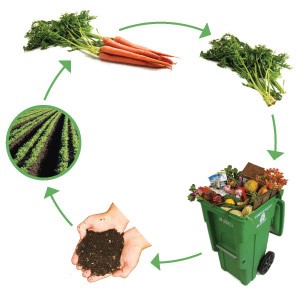
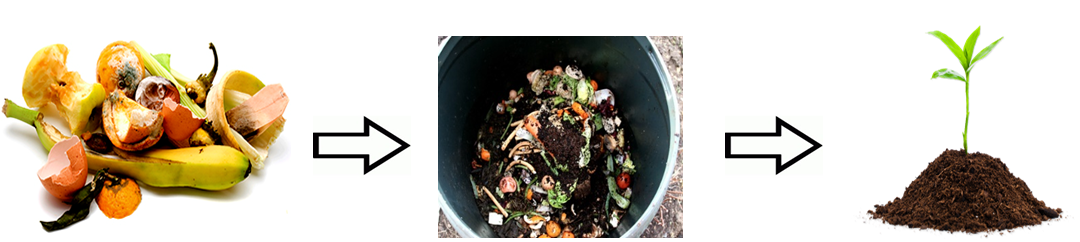
Composting is quite simple and very useful. The dictionary defines it as a mixture of various decaying organic substances, such as dead leaves or manure, used for fertilizing soil. This sounds like an easy process, but it is actually quite complex and can be done with varying levels of success. I define composting as the re-use of old organic materials that would’ve otherwise been thrown away, giving them purpose while creating new life.

Why Compost?
Look into a trash bin sometime and you will see the endless amounts of organic material in there. This organic material is going to end up in the landfill mixed in with a ton of other random trash and will not decompose successfully. According to the Composting Council, “in 2005, an estimated 245.7 million tons of municipal solid wastes were generated in the United States; that’s 4.5 pounds per person per day.” That is such a waste. Composting, when done properly, can give new life to this organic material and eliminates waste going to landfills.

What to Compost?

Ashes, wood Alfalfa
Bark Algae
Cardboard, shredded Clover
Corn stalks Coffee grounds
Fruit waste Food waste
Leaves Garden waste
Newspaper, shredded Grass clippings
Peanut shells Hay
Peat moss Hedge clippings
Pine needles Hops, used
Sawdust Manures
Stems and twigs, shredded Seaweed
Straw Vegetable scraps
Vegetable stalks Weeds

Where to Compost?
There are many different places to compost. The most popular is just your average backyard compost. With a little research, you can also find larger composting operations in your local area. One of the biggest composters here in the Albuquerque area is Soilutions. This is a large-scale composting operation. Many people take their larger organic materials here. Soilutions then properly sorts the material and eventually, after the organics go through their breakdown cycle, Soilutions sells the finished compost product. These local, larger scale operations are great places for farmers, construction workers, landscapers and others to take their hefty amounts of organic material and have it properly dealt with.

Image credit: soilutions.net

Image credit: soilutions.net

Different Types of Composting

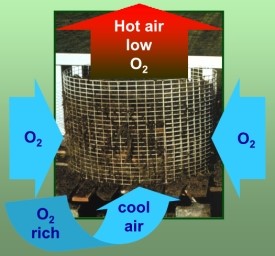
Aerobic Composting– Compost with air, needs to be turned every couple of days, and requires a good amount of moisture. Good type of composting for a large compost. Lots of positives come with this type of compost, including no smell, which is nice for you and your neighbors. This method is also much quicker than anaerobic composting because of the constant maintenance, which includes turning, making sure the temperature is at 125-160 degrees F, and adding moisture. Although it is more work, it takes about two weeks to decompose into usable material.

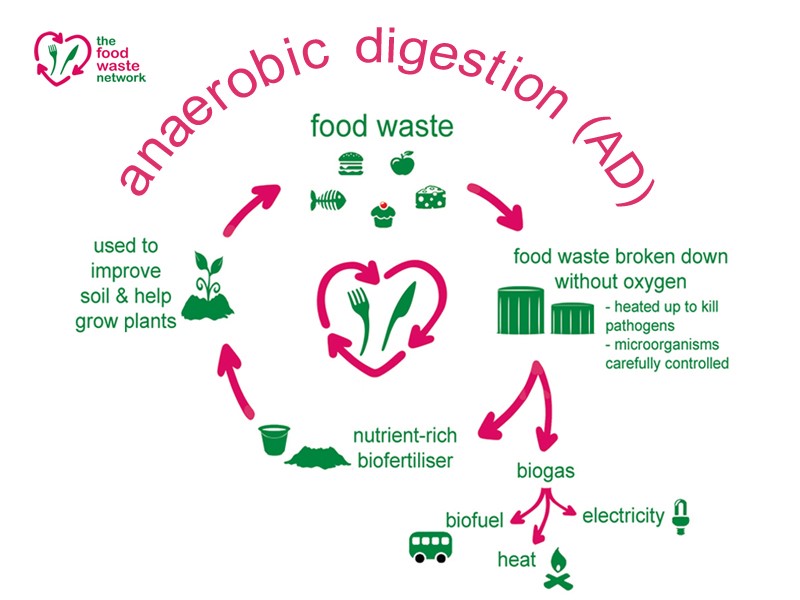
Anaerobic Composting– Composting without air; very low maintenance, but takes a long time to break down. The most positive thing I hear about this type of compost is that it is very low maintenance, which is always nice. However this type of compost can get smelly, also there are occasionally pests involved such as flies. This is a good option for anyone who wants to save their organic material and eventually reuse it but is in no hurry.

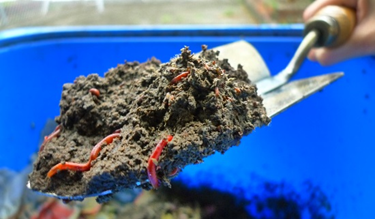
Vermicomposting– Composting with worms. Works best with food waste. Needs oxygen and moisture. Worms break down organic material into quality compost. Used by many gardeners because of garden and kitchen food scraps. To start, about 1000 worms are needed. Populations of worms can double in about a month!

Industrial– A great alternative to a landfill. Large scale composting that helps reduce methane that is created at a landfill. Although big machines are needed to move materials around, it is still worth the methane reduction and the heaps of compost that can later be used productively.

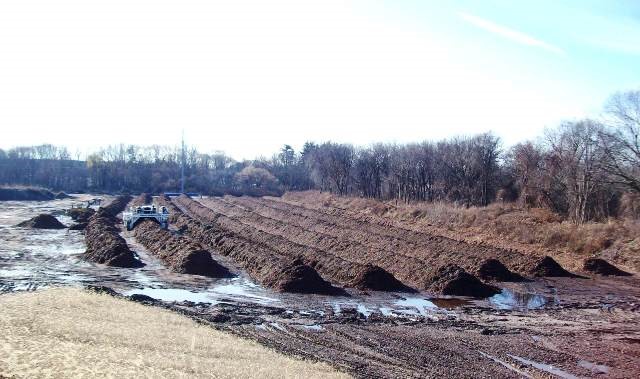
Agriculture– Uses windrow composting that involves piling material in long rows. These rows are mixed around to create a healthy compost. Windrow composting is often used at farms and is large scale because you are dealing with a ton of material. It is similar to a little backyard garden compost but needs heavy duty equipment in order to move around and mix the large amounts of materials.

Home– Small scale, easy process, usually using a bin or a pile in your yard. Any of the above methods can be used at home depending on how you want to do it. I personally use a bin with a lid that locks. I have a container near the sink, put my food scraps in there and then mix that in with yard scraps that are found in my backyard. All I do is throw it in the bin and mix it around every few days. It is so simple to do, yet so effective. Every couple of weeks I look back and boom! – the organic material is now beautiful, usable compost!

-Posted by Nathan

Posted in Uncategorized | Leave a comment

College 101: Eat Healthy

We’ve all heard of freshman fifteen and we all try to avoid it. We promise ourselves that we’re not going to gain that extra fifteen pounds during our first year of college. Most of us think we’re going to make it to the gym. Let’s be honest. After taking at least twelve credit hours and studying for midterms, you’re worn out. There’s no time to think about that freshman fifteen.

One easy way to avoid it is by simply eating fruits and vegetables. Luckily, we are surrounded by fresh fruits and vegetables. Even some value-added products are healthful and organic, making it easy to avoid the freshman fifteen. Local growers’ markets allow you to get natural fruits and vegetables while investing in our local economy. There are also financial barriers that keep students from being able to purchase local and organic food because it tends to be a little higher in price. However, in the long run it is worth it. The University of New Mexico is a great location for the staff, students, and faculty to receive local, wholesome foods.

The best place to buy organic and local food is the La Montanita Co-op; two locations near campus allow students to easily access these products. The small store is located next to the UNM Bookstore on campus. However, there isn’t a huge inventory of fresh fruit or vegetables, but they do have local and organic products. The larger La Montanita store is conveniently located in Nob Hill at Central & Carlisle. The Nob Hill location offers a large variety of fresh fruits and vegetables.

Growers’ markets supply some of the local food you will find in the community. There are two nearby locations to benefit the UNM community. The Downtown Growers’ Market is located in Robinson Park, at the corner of 8th Street & Central, and is held on Saturdays from 7-11 am. The Nob Hill Growers’ Market is held at Morningside Park off of Morningside & Lead. This market runs on Thursday evenings from 3-6:30 pm. In addition to fresh produce, you can find local value-added products at these growers’ markets. Heidi’s Raspberry Jam is made with the raspberries that are grown in Corrales and Los Lunas. The jam is delicious and makes a nutritious snack.

Another place you can find local and organic food is at grocery stores such as Whole Foods and Sprouts. Walmart and Smith’s also have organic sections now. UNM holds an annual growers’ market in the spring that allows for students, staff, and faculty to enjoy local and organic products ranging from soaps to sprouts.

Transportation can be one of the most challenging obstacles to eating local, especially for UNM students. Many students either don’t have cars or depend on other modes of transportation. For the on-campus co-op and growers’ market event, transportation shouldn’t be too difficult. However, the stores and markets off campus are more challenging to reach. Luckily, UNM students receive free bus passes on our college IDs. Being able to ride the bus for free is a huge benefit especially when traveling more than a few stoplights.

The three stars indicate the University of New Mexico, and the growers' markets at Robinson Park and Morningside Park. Map by Ashli.

The three stars indicate the University of New Mexico, and the growers’ markets at Robinson Park and Morningside Park. Both are easily navigable by bus. Map by Ashli.

Even if you dread going to the growers’ market, Albuquerque offers so many unique ways to enjoy local food. There are some fantastic restaurants that use local food. Seasons, Zinc, Scalo Italian Restaurant, and Artichoke Café are some of the restaurants where you can enjoy local food.

Albuquerque has a thriving foodshed that all students should have an opportunity to benefit from. We can avoid the freshman fifteen by eating more local produce and healthful options. If you haven’t yet gotten your free bus pass, now is the time. Enjoy all the local food and products Albuquerque has to offer!

Check out http://www.deliciousnm.org/eat-local/ for more ways to connect with local food.

-Posted by Ashli

Posted in Uncategorized | Leave a comment

Your Garden and You: The Benefits

Gardening is hard work, but it is fun and the rewards are even better! Just having a small garden in your backyard can lead to outstanding benefits for the environment, for the community, and for your own personal health. Why not give it a shot?

Having a garden in your backyard can improve the air quality. Plants will clean the air by breathing in air pollutants like carbon dioxide and producing oxygen for a better atmosphere. A good addition to the garden would be flowers that produce pollen and nectar. By planting flowers, you can help support the bee colonies in the surrounding area. Bees need to be able to collect pollen, and we need them to pollinate for the health of our plants. A good flower to plant in the garden in New Mexico to attract native bees is the Mexican Hat.

When we have our own backyard garden we can choose what we put on our plants. We can choose to keep our garden free of pesticides. The website Sustainable Baby Steps talks about the harmful health risks of some commercial synthetic pesticides and fertilizers. Synthetic fertilizers can raise the level of nitrates out of balance in the soil, and in turn can raise levels in the plant. According to Natasha Gilani, who wrote an article for Home Guides, when the nitrates are transferred into the food we eat it becomes a toxin in our intestines, and could eventually lead to complications with the vascular and respiratory systems.

There are more natural routes we can take to care for our garden. The best substitute for fertilizers is to use compost, which is decomposed organic matter filled with nutrients for the plants and soil. Compost can be either bought or made on your own in the backyard. There are also natural alternatives to insecticides for your plants. Jack DeAngelis from Livingwithbugs.com mentions using neem oil as a natural insecticide. A neem oil and water mixture will stop bugs from eating away at the plant when applied. However, because it is natural, it will wear off much faster and will need to be re-applied to the plant.

Gardening can bring communities together and help feed neighborhoods. When communities come together and grow food, they learn to work together and share the feeling of satisfactions as they accomplish something great together.

The last benefits would be the health benefits to the practice of gardening. Gardening can lower stress levels and raise self esteem. Gardening for only 30 minutes a day can lower cortisol levels, which is the stress hormone. Having high levels of cortisol has been linked to obesity and heart disease. Gardening also carries out a major role for our brain. Gardening involves so many “critical functions,” like problem solving, strength, increasing the dexterity of our hands, and constant learning. Since gardening exercises the brain so well, gardening has been linked to lowering the chance of dementia and Alzheimer’s. This concept is termed “horticulture therapy.” Horticulture therapy incorporates sciences into the practice of gardening to rehabilitate the mind. There are a range of different types of gardening in horticulture to best fit patients’ needs. Gardening can be a fantastic therapy with the time spent outside, working hard. Being close to nature and living things can lower levels of depression.

So, why not start a garden in your backyard? Doing so can bring so many benefits to the environment and can make you feel better about yourself, and your overall health will be better. Only good can come from gardening.

-Posted by Kyle

Posted in Uncategorized | Leave a comment

The History of the Ochá Food Co-Op

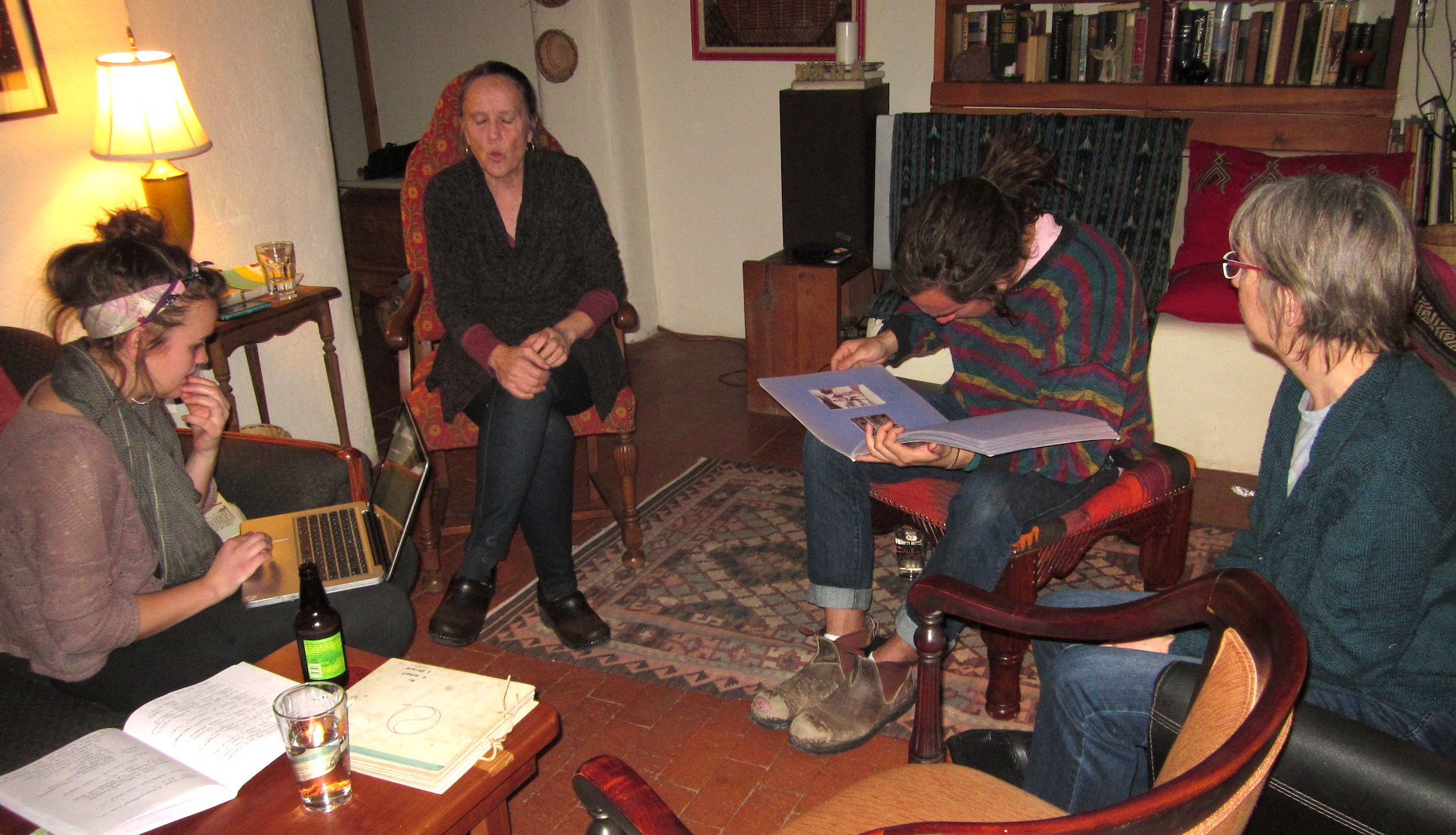
On Sunday, February 8th, I met with Michelle Franklin, Cirrelda Snider-Bryan and Martha Whitman to discuss the history of one of the first food cooperatives in Albuquerque – Ochá – and how it laid the foundation for movements and programs that exist today.

Photo of the author (CB), Michelle Franklin, Sean-Paul VonAncken, and Martha Whitman - taken by Cirrelda Snider-Bryan

The author (CB), Michelle Franklin, Sean-Paul VonAncken, and Martha Whitman – Photo by Cirrelda Snider-Bryan

In 1970 the Ochá food cooperative was started on a five acre lot that ran from Second Street to Fourth Street in Albuquerque, New Mexico. Through the collaboration of many, Ochá supplied those living north of Albuquerque, including Rio Rancho, Jemez Springs, and Bernalillo with bulk foods and fresh produce. There is no current online record of Ochá ever really existing — Google searches turn up very little. Its history should be an important tool and piece of inspiration for those looking to start co-ops or increase the potential of those already in existence. I learned about it through my mother, Cirrelda Snider-Bryan, who worked within and for the cooperative from 1980-1984. My mother met Martha Whitman and Michelle Franklin while working at Ochá.The information that I gathered is critical for understanding what we have lost and gained since the demise of Ochá and what growth is possible for today’s community.

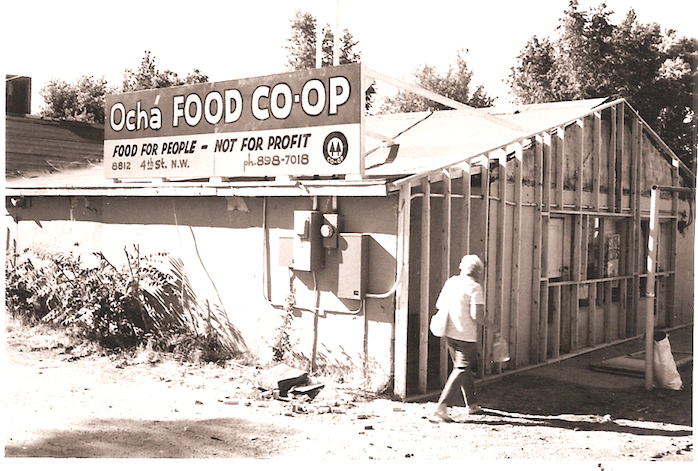
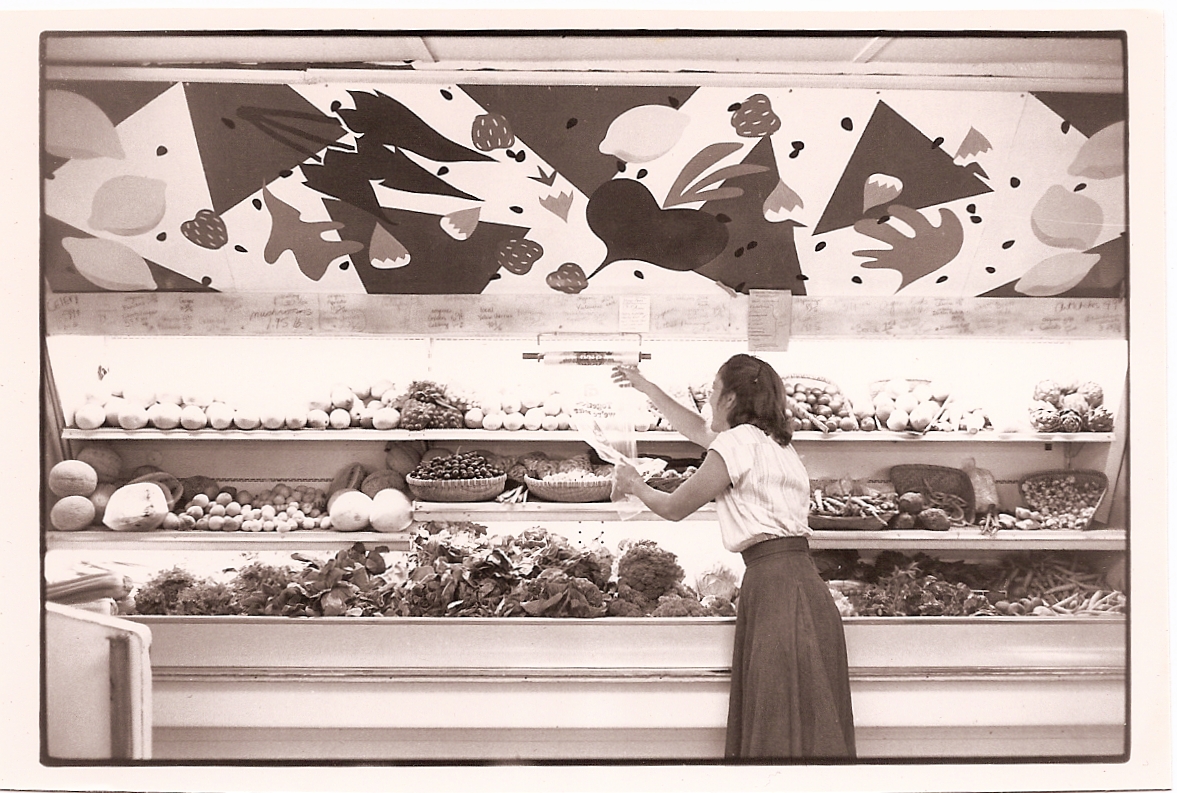
Photo of storefront by Jeffrey Finer, via Cirrelda Snider-Bryan archive

The storefront – Photo by Jeffrey Finer, via Cirrelda Snider-Bryan archive

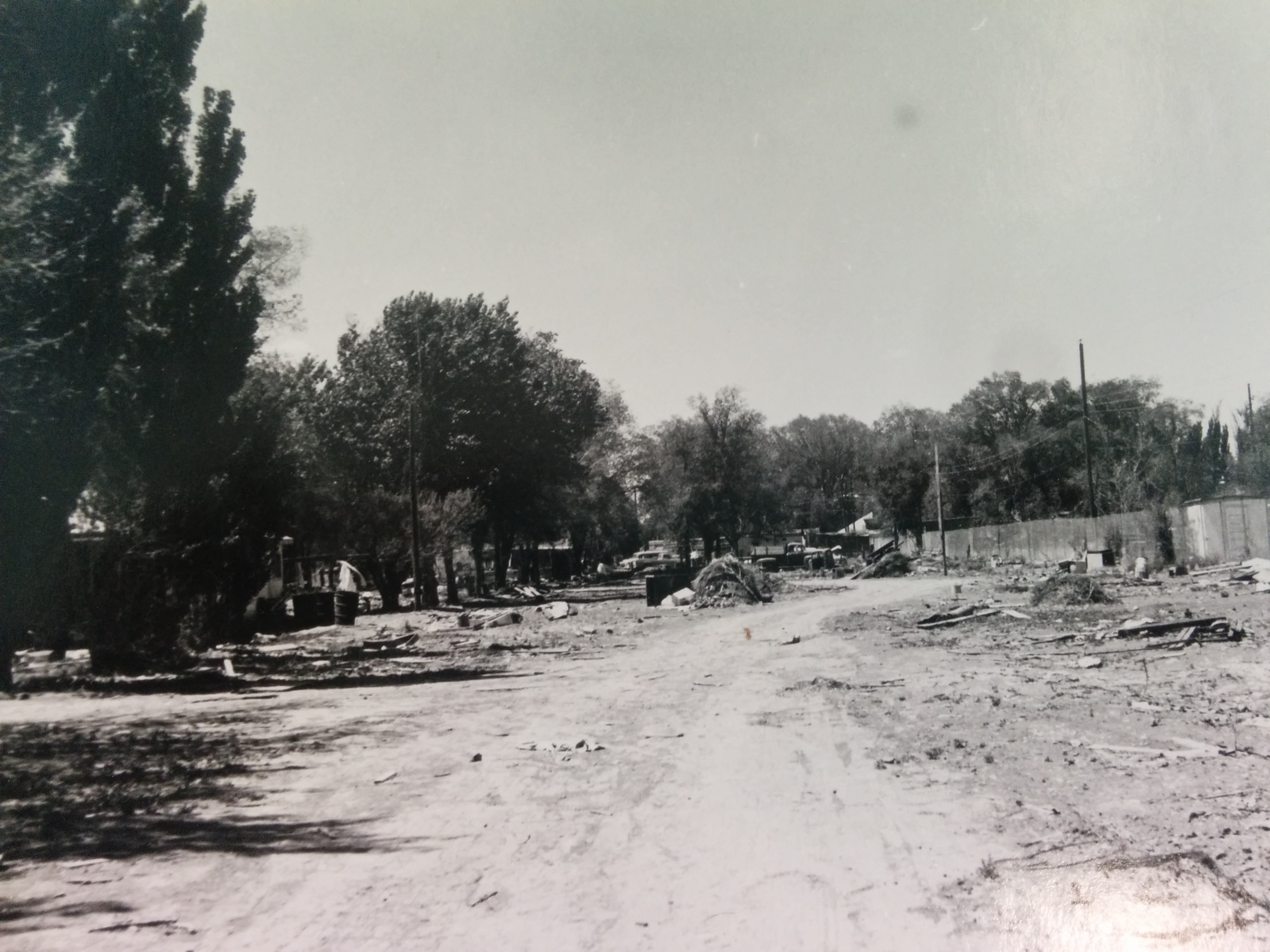
The store was first housed in a UNM professor’s front yard in the Summer of 1970. Later that year a junk yard on North Fourth Street was leased. The land was in disrepair and served as a dumping site for old machinery, metal, and wood scraps. Later, in 1980 founding co-op members cut a deal to clean up the land and use it for various purposes. These included dwellings on site that were “slapped together” from found materials. The presence of people living on site eventually lead to food that was grown and processed on site. There was a mill to process grains into flour and a one acre garden, the “Ajo Garden Co-op,” that members were able to harvest from and sell at the Downtown Grower’s Market, which at the time took place on the civic plaza.

View of original junkyard - photo by Jeffrey Finer

View of original junkyard – Photo by Jeffrey Finer

Though it would have been wonderful for the co-op to sell produce and product made directly on the North Valley land, food had to come from elsewhere in larger quantities in order for the co-op to serve a wider community. The Tucson Cooperative Warehouse (TCW) delivered the bulk of Ochá’s supply, in addition to the supplies of many co-ops and buying clubs across the Southwest. They operated on a cooperative basis, giving large co-op stores like Ochá with a member base of 2,000 the same buying power as small buying clubs of 20-40 members. This worked for the co-op systems until other competitors came on the scene.

Inside the co-op, photo by Jeffrey Finer

Inside the co-op – Photo by Jeffrey Finer

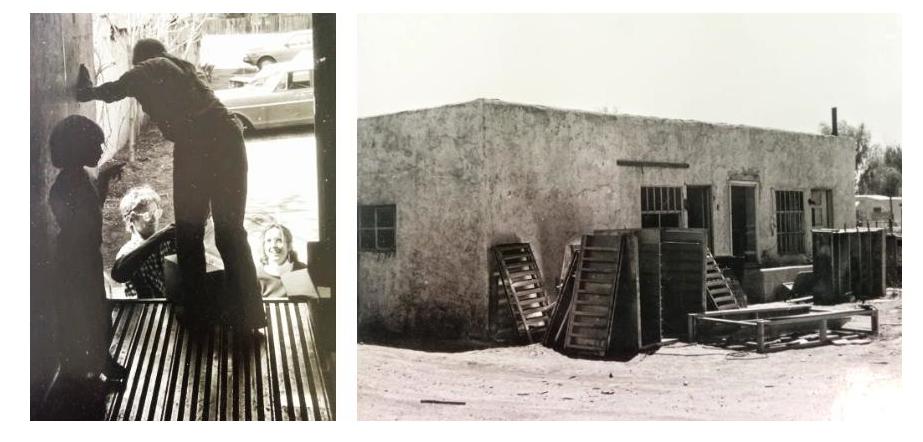
Unloading the TCW truck and palettes stacked against back of building - photo by Jeffrey Finer

Unloading the TCW truck and pallets stacked against back of building – Photo by Jeffrey Finer

The late 70s and early 80s were a time of rapid growth for alternative food sources. In John Curl’s For The People, The Cooperative League gave an estimate in 1979 that there were “between 5,000 and 10,000 small ‘new wave’ food co-ops of various structures [that had] formed in the past decade, and several thousand [that were] probably still functioning with a $500 million annual volume.” This meant there was a larger demand for natural food products and warehouses like TCW could no longer compete with larger distributors and grocers. Whole Foods and the many conventional groceries started carrying natural foods to compete. This meant that co-ops and buying clubs were no longer the singular importers and carriers of these “specialty” food items. Large warehouses such as United Natural and the People’s Warehouse in California merged to become one entity. United Natural Foods Inc. is now the number one natural foods distributor in the country.

Michelle Franklin stocking produce - Photo courtesy of Cirrelda Snider-Bryan

Michelle Franklin stocking produce – Photo courtesy of Cirrelda Snider-Bryan

Ochá could not compete for this reason, plus other market and business related issues. Ochá operated in what Michelle Franklin calls a “laissez-faire” business plan. “We had gotten a register at that point” she jokes, alluding to the time when they operated through pure hand to hand transactions. Every record was kept in a hand-written log and orders to TCW were filled with money made within the time that the bank took to process checks. As technology progressed, Ochá was unable to keep up.

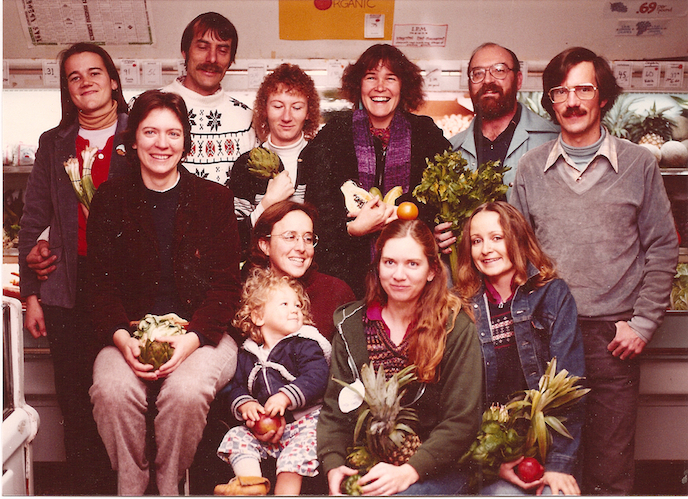
Ochá staff circa 1982 - Photo by Greg Johnston

Ochá staff circa 1982 – Photo by Greg Johnston

In 1984 Ochá had reached the end of its almost fifteen year life. At this point, La Montanita Food Co-op, which had begun in 1976, was growing at its location on Central and Girard. Ochá drew up a deal with the Nob Hill location to switch Ochá members over to La Montanita, allowing the newer co-op to grow in size and demographics. The five acre plot was given to the New Mexico Community Foundation where it was sold to new owners. In its demise, Ochá was able to create growth in other parts of the Albuquerque co-op community. Michelle Franklin is now the manager of the Co-op Distribution Center, which has opened up the flow of food in and out of New Mexico. Martha Whitman has been both the Vice President and President of the La Montanita Co-op board. Cirrelda now operates the Kiwanis Learning Garden, through the New Mexico Museum of Natural History, that continues the same communal energy around food that Ochá once had. The soul of Ochá was in those who put the time and effort in to make something beautiful. I see that energy around today and I have faith that something new could come out of that energy in the future.

-Posted by CB

Posted in Uncategorized | 17 Comments

To Eat or Not to Eat, and How Long to Eat It?

Do you remember what food you ate three days ago? Did you even take the time to savor it, or did you eat it as quickly as possible? How did it affect your body and mind once you ate it?

Food is essential to sustaining every inch of our being. The truth is, many people don’t understand the importance of the food they eat. Maybe we have never been cognizant of our eating habits or maybe we just don’t care. Maybe we know, but we look the other way in order to eat what we crave at that moment. Eating is about more than filling your stomach. How we eat and what the food does to our bodies is a huge part of eating. Food has the ability to alter our physical appearance, mood, and energy level.

Mindful eating is an ancient mindfulness practice that has the ability to resolve our love-hate relationship with food. It emphasizes complete engagement and awareness while eating in order to establish body, mind, and spirit balance. In other words, it’s a holistic form of eating.

Hunger is usually thought to be one sided. When you’re hungry, your stomach is empty and your mind tells to you eat food; or so you think. The process of mindful eating breaks down hunger into 7 categories.

  1. Eye Hunger – Eye hunger is the hunger we experience from seeing something delicious.
  2. Nose Hunger – Nose hunger is the smell we sense from a sweet aroma of food.
  3. Mouth Hunger – Your mouth has its own desire for pleasurable sensations.
  4. Stomach Hunger – A crushing feeling that your stomach is about to eat itself.

  5. Cellular Hunger – Your body is deprived of food, so much that you can’t seem to work your limbs the way you want to.
  6. Mind Hunger – Mind hunger is all based upon thoughts. “I should eat more eggs because they have a lot of protein” or “I deserve this ice cream cone because I’ve been working all day”
  7. Heart Hunger – Eating foods that you have an emotional attachment to. Maybe your parents used to make french toast, bacon, eggs, and biscuits and gravy every Sunday morning, so you do now as well.

There’s a constant battle between wants and needs. You may need to eat some carrots, but you really want the leftover cake that’s sitting on the counter. How do you keep yourself from making all the wrong decisions? In order to help, mindful eating has an exercise called Eating a Raisin to help realize that carrots can be equally as satisfying as cake. It really depends on how you eat it. These steps can be taken with any kind of food, not just a raisin.

  • Holding – Hold your raisin. Examine it within your hands; rub it between your fingers.
  • Seeing – Look at your raisin. Take time to really observe the raisin. What are the features of this food? Focus on the color and every wrinkle.
  • Touching – Touch your raisin. Explore the texture.
  • Smelling – Smell the raisin. Hold it right under your nose, close your eyes, and take a deep breath. Notice how your stomach and mouth react to the smell.
  • Placing– Put the raisin in your mouth. Notice how easily your body knows where to put food. Before chewing, notice the sensations in your mouth. How badly do you want to chew and swallow the food.
  • Tasting – Taste the raisin. Chew the raisin slowly and pay attention where you chew it and how it tastes.
  • Swallowing – Swallow the raisin. Don’t swallow on your first instinct to do so. Take a few more moments to get all of the taste out of the raisin.
  • Following – How do you feel now that you have finally eaten the raisin? Are you satisfied with the raisin?

Eating healthfully isn’t always feasible on a college budget, but learning mindfulness has made me realize how important it is to eat as healthy as possible. I’ve used the process to cut unnecessary consumption habits like drinking soda and eating hot fries. Little by little I decrease processed foods and replace them with local and organic fruits and veggies. Although the change seems small, over time it has really made a difference in my lifestyle and the way my body feels.

It doesn’t matter if you are practicing mindful eating to lose weight, become healthier, or support sustainable practices. Simple steps can guide anyone to realizing the power of food and the power they have to choose the better choice. So, what are you going to eat for your next meal?

-Posted by Delaney

Posted in Uncategorized | Leave a comment

Ruth Olivas Community Garden: Healing through Gardening and Community Activism

A few months after my 20th birthday, my mom was diagnosed with Stage IV Metastatic Breast Cancer. A little more than a month later, she passed away to the despair of her loved ones, former colleagues, and students. Now, a year later, some of her former 5th graders will form part of the group of students who are working to establish the Ruth Olivas Community Garden.

Desert View Elementary is a local elementary school in Los Lunas, New Mexico, off the Manzano Expressway between the Sandia mountains and Tomé hill. The school serves 82.6% Hispanic students, and is located within a food desert – as it is defined by the United States Department of Agriculture (USDA). Food deserts are associated with low-income areas, and the prevalence of diet-related diseases, such as obesity. Valencia County has a 28.5% obesity rate that has doubled since 1990, mirroring our nation’s trends.

Retail Environment in El Cerro

This slideshow requires JavaScript.

During my internship with the SouthWest Organizing Project’s (SWOP) Project Feed the Hood, I started to consider the idea of a community garden as a way to combat this resource-poor environment. SWOP’s work in planting seeds for community needs, served as an example of how community gardens offer an alternative to food deserts. These spaces are becoming tools for people to reclaim their agency in choosing a healthy and affordable diet. Community gardens have health benefits that positively affect nutrition, brain health, exercise, and stress relief. These and other benefits form part of the reason that I chose a garden space to honor the memory of my mom.

Kind Kids Club fundraiser, photo courtesy of Yvette Gonzales

Kind Kids Club fundraiser, photo courtesy of Yvette Gonzales

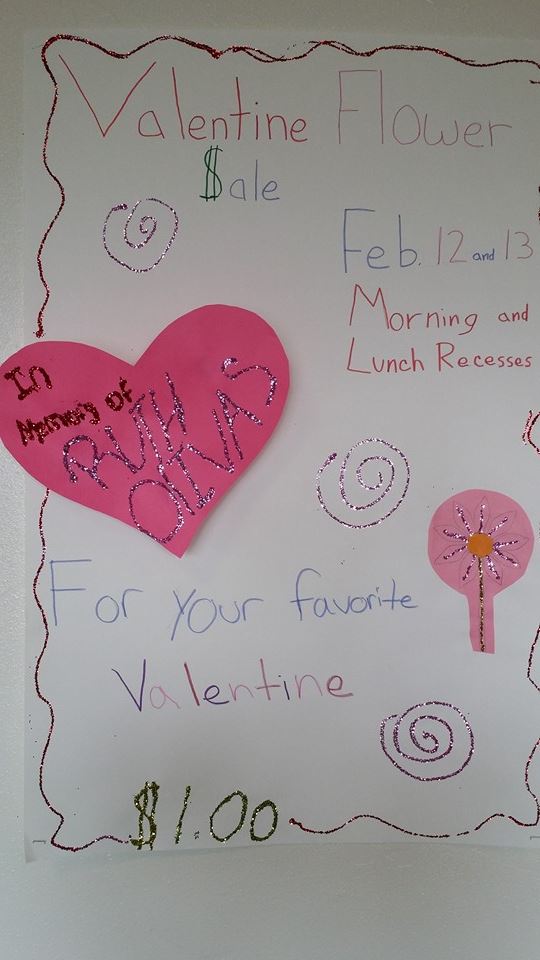
Desert View Elementary is supportive of the garden space with administration, teachers, and staff working together to make this a reality. But most importantly, the students are engaged with the planning and implementation process. The Kind Kids Club recently hosted a Flower Sale to fundraise for the garden, and raised over $250 to help get any materials we will need for the space!

During the summer, the garden will be supported in collaboration with the K-3 Summer Program at the school, and with the UNM Valencia Campus’ Upward Bound Program. The Upward Bound high school students from the 3 local high schools in the area, (Belen HS, Valencia HS, and Los Lunas HS) will work with the K-3 students to mentor them using the garden as an educational and relationship-building space.

This garden is a personal project for me, but I think it can be applied to diverse situations, and perhaps especially for people who seek to use their pain of losing a loved one in a productive way. My education here at the University of New Mexico influences my academic pursuit of learning how to start the process of creating food justice in my community. I understand this community garden as one way to start that process, and use it as a tool to improve access to produce in the community.

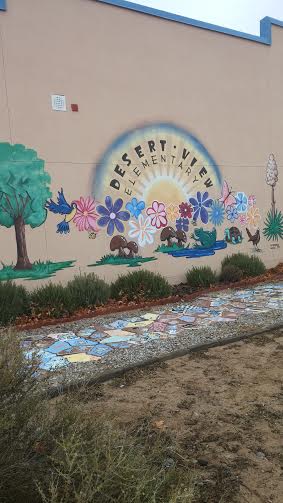
Mural in garden space, photo taken by Divana Olivas

Mural in garden space, photo taken by Divana Olivas

The Ruth Olivas Community Garden will be dedicated at Desert View Elementary’s Annual Spring to Student Success Event, on Thursday, April 9th 2015. My Abuelita and other close family and friends will join us in the dedication. The 6th grade band students will play a short piece, and the students’ research on the garden will be on display. To stay true to the community aspect of it, there will be sign-up sheets for anyone interested in learning more and/or volunteering with the garden.

Almost a year and a half after her passing, the garden will be dedicated in Ruth’s name. Losing my mom has been the single most impactful event of my life, and it will continue to shape everything that happens from here on out. The sadness is inexplicable, but I know that working towards creating something that will carry some part of her has made it feel a little better. Knowing that students will be learning how to live healthier lives in the garden makes all the hard work worth it.

I hope you’ll join me in celebrating the Ruth Olivas Community Garden, whether it’s by starting your own garden or donating to our fund.

This slideshow requires JavaScript.

-Posted by Divana

Posted in Uncategorized | 5 Comments

7th Annual Sustainability Expo

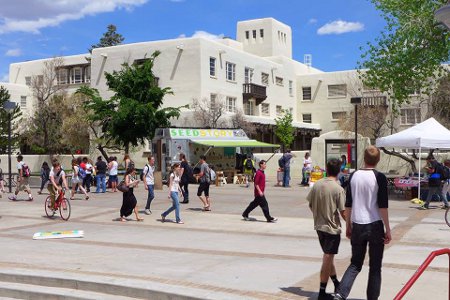
SUSTExpologo-webCome celebrate Earth Day at the University of New Mexico’s 7th Annual Sustainability Expo. The event will be held on Cornell Mall — just east of the Student Union Building — on Tuesday, April 21st from 10:30 am to 2:30 pm. Everyone is invited to join in the Earth Day-inspired festivities.

The Expo offers an opportunity to interact with sustainability-minded organizations at a variety of engaging displays and activities. There will be a growers’ market, food trucks, live entertainment, an arts & crafts fair, bicycle auction, and much more! Learn about sustainable initiatives on campus and in the community, grab lunch, connect with potential employers, meet local farmers, and enjoy the fun, energetic atmosphere.

The Expo is organized by UNM Sustainability Studies Program students in the Growers’ Market Practicum class who are passionate about educating campus and community members about sustainability. In addition, numerous campus organizations are responsible for coordinating and supporting the Expo, including the ASUNM Arts and Crafts Studio, the UNM Office of Sustainability, the Associated Students of UNM, and UNM Parking and Transportation Services. In the spirit of sustainability, the 7th Annual Sustainability Expo  will be a zero waste event; we encourage your participation and support.

Can’t wait for this year’s Lobo Growers’ Market? Check out video clips from local television stations, KASA and The Mtn, to see their coverage of previous years’ events.

Get connected to our local sustainability community at this festive and educational event! For more info, or to participate in the event, contact us at sustexpo@unm.edu.

expo

Posted in Uncategorized | 1 Comment

New Markets in Town

Image credit: New Mexico Farmers' Marketing Association

In addition to the longtime summer favorites – like the Downtown, Los Ranchos and Nob Hill Growers’ Markets, there are a number of new Albuquerque-area markets starting up this season! Support one or support them all…

Visit the New Mexico Farmers’ Marketing Association website to find the market nearest you!

Albuquerque: Rail Yards Market
Location: ABQ Rail Yards, 777 1st St. SW
Schedule: Sundays, 9 am – 3 pm
2014 Market Season: May 4 – November 2
Contact: Chad Gruber, (505) 203-6200 or chad.gruber@gmail.com

Albuquerque: San Pedro Farmers’ Market
Location: Mark Twain Elementary School
Schedule: Sundays, 10 am – 12 pm
2014 Market Season: June 8 – October 26
Contact: Heather Esqueda, ladyredclover@gmail.com

Albuquerque: Downtown Growers’ – Wednesday Satellite Market
Location: Albuquerque Civic Plaza, Marquette Ave NW & 4th
Schedule: Wednesdays, 11 am – 2 pm
2014 Market Season: July 16 – October 9
Contact: Gina Meyers, (505) 243-2230 ext 106 or growersmarket@downtownabq.com

South Valley: Historic Bridge/MainStreet Gateway Growers’ Market
Location: 100 Isleta Blvd. SW
Schedule: Wednesdays 4pm – 7pm
2014 Market Season: May 28 – September 24
Contact: Richard Meadows, (505) 217-2484 or rmeadows@bernco.gov

Posted in Uncategorized | Leave a comment