The Importance of a Seed

I never fully comprehended the risks and dangers that farmers went through until I watched the documentary Food, Inc. I can remember the image of a humble older man (Maurice Parr) being interrogated by Monsanto in regard to seed patents. Watching this distraught seed cleaner having his livelihood become threatened made me choked up inside, and it chokes me up to this day.

Observing territorial struggles over seeds seemed disturbing and unfathomable. Maurice Parr represents the farming community, as many have faced issues concerning seed patents. When I think of farmers faced with similar circumstances, I think of the man I saw in the film. I think about the security of livelihoods that have been threatened and years of hard work sabotaged. In the age GMOs (Genetically Modified Organisms) and food insecurity, seed sovereignty is strongly sought after by many farmers and growers. To a consumer, a seed can be an annoyance, but to a farmer–a seed is a right.

Local Artists: Mike 360, Release, and Vela. Photo by Anna

Local Artists: Mike 360 and Release. Photo by Anna

Reasons for Attaining Seed Sovereignty
Farmers and individuals consider seed sovereignty important for the following reasons: To protect seeds from environmental degradation and harmful agricultural practices, to ensure food security and diversity, and to uphold a rich culture of farming traditions that includes protecting native and heirloom varieties. Seed varieties can be endangered by monoculture, climate change, war, catastrophe, and governmental regulations. One primary concern in many seed sovereignty organizations is the pervasiveness of GMOs in the food chain. When a GMO seed inadvertently cross contaminates a farmer’s field by wind or bee pollination, it puts that farmer at risk for lawsuit. According the University of Chicago, seed sovereignty is being threatened with the advent of GMOs. The GMO seed patents are considered by some to be intellectual property.

The Importance of Pollination for Seeds and our Food Source
Bacillus thuringiensis (Bt) is a toxic, spore-forming bacterium used in some farms to kill herbivores like Lepidoptera (butterfly and moth larvae). Although this bacteria is used to kill off specific pests, it can also be toxic to beneficial insects like bees and butterflies.   Karen W. Wright, UNM PhD candidate in Insect Evolution, states that “A GMO is something that cannot be contained. Once a living organism is released into the environment, it cannot be controlled.” GMOs affect plants such as heirloom corn grown in Mexico. In addition, Karen states that there are only two bee genera (Peponapis) that offer top pollination for the squash family (Cucurbitaceae). Farmers sometimes need to hire hand-pollinators if fields are not property pollinated or to protect certain crop varieties from being cross-pollinated by nearby fields. The use of Bt on farms is an environmental paradox because killing off larvae means killing off some of earth’s most beneficial pollinator insects—bees and butterflies.

Image from Science Kids

Image from Science Kids

Make Way for Monarchs is a progressive organization that advocates for milkweed and monarch restoration in 31 million acres in the Conservation Reserve Program.

The implementation of GMO seeds may have initially been well-intended to alleviate hunger or to increase farm yields. Unfortunately, Bt technology and other GMOs have posed dangers to farmers’ livelihoods, contributed to environmental degradation, provided poor food quality, and has affected people’s health around the world.

Seed Savers and Farmers Unite

Image from CIP Americas

Image from CIP Americas

Protecting the Heritage of New Mexico Native Heirloom
The New Mexico Acequia Association has a beautiful mission. Their mission is to protect native seeds, such as traditional chile, crops, and animals while reviving the culture around aceqiuas in New Mexico. One of their primary purposes is to protect native seeds against Genetic Engineering. In March of 2006, a Seed Sovereignty Declaration was signed.The declaration was drafted by the members of the Traditional Native American Farmers Association and NMAA. These two organizations form the core of the New Mexico Food and Seed Sovereignty Alliance.

Save New Mexico Seeds is a helpful website that exists advocating to protect New Mexico’s native chile seeds against genetic modification and stands to protect the rights of farmers in our land. See what you can do to join locals in upholding a rich cultural heritage-the New Mexico Red and Green.

UltimateChile_7001

Seed Sovereignty Advocacy and Conservation
Communities are coming together on a local, national, and global level to take a stand for seed sovereignty. They are realizing that seed sovereignty plays a vital role in food security. A stronger connection to the land and stronger sense of food security can be done through seed sharing and conservation.

Local Advocates and Seed Banks
Seed Broadcast
seed-broadcast-logo-350x144


Native Seeds/SEARCH
Native Seed Search


Albuquerque Bernalillo County Seed Library
ABC Seed Library


National and Global Organizations

Seed to Plate – How to ensure your own food security through seed sovereignty and what you can do to make a differenceNon-GMO Project Seal

  • Purchase packaged products labeled with Non-GMO Project verified seals.
  • Save your seeds after consuming authentically-grown, organic produce.
  • Plant your own small garden using the seeds you saved or heirloom, non-GMO seeds from other sources.
  • Support local farms using organic or sustainable agriculture.
  • Sign a pledge, join an association or contact your local legislators.

Bounty beyond beliefSo now we know how important seed sovereignty is for us and what damage a GMO can do to the environment. When you eat something, remember–it all boils down to a tiny little seed. Seed sovereignty is a critical link for maintaining food security. Protecting our seeds means protecting life.

Posted by Anna

Posted in Uncategorized | 1 Comment

Keeping it in the Shed

Restoring the level of our water table is a major issue for New Mexico. Standard backyard gardening practices often use water in unsustainable ways. One recent trend is rainwater collection. By collecting rain water we prevent runoff and are able to provide plants an early start with water that’s perfectly good. In addition, the water that is absorbed slowly increases the water table.

Why does this matter? New Mexico is in a near constant state of drought, and a few rainfalls of just 1” inch can easily fill a massive tank of rainwater. The process isn’t as complex as one would think, but it does take some work. This blog is designed to give you some inspiration on how to set up your rain water collection system and help you through a little bit of the process. Some of these steps can seem daunting, but you can always ask a friendly neighbor for assistance.

Picking a location for your water tank should be fairly straight forward; the side of the house where you have the most water drainage can help you with that choice. Before you go further though ask your neighborhood association for any bylaws or prior agreements that might prevent you from doing such an installation. Certain states even restrict rainwater collection. So first, make sure it’s legal.

These equations will help you figure out how much water you’ll be able to harvest. There are a few basic things you need to know when first planning your rain water collection. The first is the catchment area, taking into to consideration everything from the slope of the roof to the amount of rain water that you can actually harvest.

This slideshow requires JavaScript.

After you’ve figured out the catchment area it’s onto the next challenge which is the gutters and downspout, or conveyance. You need to figure out the sizing of your gutters and downspouts so you know how much water they can handle. There’s plenty of information on rainwater collection systems at the Texas A&M Agrilife website. The systems manual contains all the information you need on how to plan for your spouts.

Rainwater is incredibly vital to the environment. Collecting it retains runoff and helps the water table increase. Making sure you have enough water for your garden is dependent on nature, but nature usually provides what we need. Collecting this water is a good way to help your garden and help the environment. When the growing season comes around you’ll have water ready to go and can seed your plants early for a great start. The benefits of using rainwater are many, and even though it takes some time and money to set up depending on the size of your tank and what you want to do.

While you’re at it you can check out using grey water and how that will help your water usage even more. The legality of rain water in New Mexico is perfectly acceptable to collect it. Up to 250 gallons per day you’re allowed to use the rainwater on your garden and many other things (anything more needs a permit). It’s not only great for the environment, it’s actively encouraged.

Posted in Uncategorized | Leave a comment

Grow Big or Grow Small

Many UNM students who live in the city live in apartments, townhouses, or small homes that do not offer a lot of yard space for gardening. But even for those lucky enough to live in a place with a large enough yard to garden in, obstacles may come up that are usually associated with poor soil quality. For those wanting to do some urban gardening in the Albuquerque Metro area, I offer some advice. victory garden

But why garden in the first place? The most prominent reason is, of course, safe and healthy food. Average Americans are becoming more cautious of what they consume. Food-borne illnesses and contamination and the additional additives and preservatives in our everyday foods are growing problems in the States. The easy solution is to grow your own food so that you know that your friends and family are eating fresh and safe. During World Wars I and II the United States, United Kingdom, Canada and Germany all had campaigns in their home countries encouraging their citizens to grow their own vegetables and fruits in ‘Victory Gardens,’ in order to alleviate the problem of food shortages.

There are many other reasons why one should start a garden. For instance, gardening activities offer both cardio and aerobic exercise. It can add beauty to any space and could also encourage artistic creativity. Finally, gardens can be very therapeutic. As a full time student who works full time as well, I get very little true relaxation time. Gardens provide a necessary retreat and escape from the demands of everyday life. The beauty of thriving plants instantly makes me feel better and everyday maintenance of the garden (such as pulling weeds or even just quietly watering) relieves stress. Eating the beautiful and healthy vegetables you just grew not only helps with your physical health, but also gives you a sense of achievement and success.

Now, how to go about with your garden? First of all, I am a big believer in vermicomposting. Vermicomposting is a term used for worm bin composting. I am a proponent of worm bin composting because:

  1. You can scale it to any size, whether it be a fully functional urban food forest or a small garden. You may have a few vegetable plants outside planted in poor soil or a few indoor potted plants that just need a little kick. Worm bin composting can be scaled down or up to suit your needs in replenishing or adding nutrients to soil.
  2. It’s low maintenance. The more common composting methods require a little bit more space and maintenance. A vermicomposting bin can be located in a small area, even in a shelf, in a garage or closet. Not only that, but the primary upkeep involves feeding the worms any vegetable or fruit scraps – they do the rest!

Here is a simple online guide to vermicomposting, but I recommend reading, “Worms Eat My Garbage,” by Mary Applehof, for more in-depth information about worm bin composting.

Secondly, go organic. With small scale gardening, I personally believe that there is absolutely no reason not to go completely organic. This means no chemical fertilizers, synthetic pesticides or herbicides. You’ll have to keep a vigilant eye on your garden though. Also, experimentation is a huge part of organic gardening. Sometimes plants get a greater yield with more or less sun so you might have to move them around. You might want to start companion planting with the Three Sisters, which does well in New Mexico. Embrace experimentation and play around before you resort to a nuclear deterrent such as chemical pesticides.

And finally, grow what you will eat. It is much more motivating and satisfying eating something you’ll enjoy, that you also grew yourself. If you like eating salads, grow greens. If you really enjoy fresh herbs, plant some cilantro or parsley. If you start growing something you won’t even enjoy eating, you just spent a season growing compost material!

Now, how to grow a garden in a small space? Container gardening and vertical gardening is the answer for small space gardening.


This slideshow requires JavaScript.

-Posted by Billy


Posted in Uncategorized | Leave a comment

Seasonal Super Foods!

Spinacia oleracea

Spinach is hands-down my favorite vegetable. I love using spinach in everything from soups to salads, sandwiches and stir fries.  Spinach is a staple vegetable in my kitchen and I figured it’s time that take a closer look at where it comes from.  It turns out that about 90% of U.S. spinach is grown in Arizona and California.

Being a Sustainability Studies minor I try to incorporate as many sustainable practices into my life as I can, so naturally, I want to learn how to use spinach in a sustainable manner.  One component regarding sustainable food is getting food from your local foodshed.  Albuquerque’s foodshed is defined as food that comes from within a 300-mile radius.  A community that supports their local foodshed benefits from fresher produce, knowing where their food comes from, and investing in their local economy.

Eat Local
We can support Albuquerque’s local foodshed by using our dollars as our vote.  Every dollar that we spend is our vote on where we want food to come from.  I support the local growers’ markets here in Albuquerque and Santa Fe as well as La Montanita Coop. I try to incorporate as many local foods in my diet as possible, but I feel like I can do more.

Eating seasonally is my next big challenge.  With today’s technology people can grow pretty much anything anytime of year and ship it anywhere in the world.  This is convenient and has allowed us to enjoy any food any time we want regardless of the season, however, the resources that go into this process are far from sustainable. Eating produce within our foodshed that is in season reduces the stress on resources used to grow foods that are not in season.  This is an overall more holistic and sustainable way to support our foodshed and the health of the environment.

Image credit: Dreaming New Mexico

Image credit: Dreaming New Mexico

The History of Spinach 
Spinach originated in the Middle Eastern region of AnatoliaThe green made its way through Nepal, China and into the Mediterranean. Spinach was first introduced to Europe in the 15th century and was grown in the United States before the 19th century.  The Latin name, Spinacia oleracea means prickly seed (spinacia) and edible plant (oleracea).

Why Is Spinach so Awesome?
Spinach is packed with nutrients.  Spinach is high in vitamins A, C, thiamin, folic acid, potassium, iron, lutein, zeaxanthin, carotenoids, and glycoclycerolipids. Spinach has been found to help fight cancers, inflammation and is rich in antioxidants.

The following is a list some of the nutritional benefits found in spinach:

Image credit: World's Healthiest Foods

Image credit: World’s Healthiest Foods

  • Vitamins A and C
    -Cardiovascular health
  • Thiamin
    -Nervous system health
  • Folic Acid
    -DNA synthesis, cellular reproduction, fights depression
  • Potassium
    -Bone health, heart health
  • Lutein
    -Good for your eyes
  • Zeaxanthin
    -Good for your eyes
  • Carotenoids
    -Immune system health
  • Gycoclycerolipids
    -Decreases inflammation

Growing Spinach
Spinach is a cool weather crop, making it a perfect late winter/early spring or summer/early fall crop. Spinach has a potential growing season from February through November.

Please check out The National Garden Bureau for a more in-depth guide on how to grow and harvest spinach.

Where to Buy Local Spinach
If you do not have a garden or space to grow greens, you can support our local economy and foodshed by shopping from local distributers and retailers.  Local spinach can be found at the La Montanita Coop or many of New Mexico’s local growers’ markets.

Spinach Recipe
Here is one of my favorite soups that has spinach as one of the main ingredients.

Braised Coconut Spinach and Chickpeas with Lemon

Ingredients:
2 teaspoons oil or ghee
1 small yellow onion
4 large cloves garlic, peeled and minced
1 tablespoon grated ginger, from a 3-inch piece
1/2 cup sun-dried tomatoes, chopped
1 large lemon, zested and juiced (about 2 tablespoons juice)
1 dried hot red pepper or dash of red pepper flakes (optional)
15-ounce can chickpeas, drained
1 pound baby spinach
14-ounce can coconut milk
1 teaspoon salt, or to taste
1 teaspoon ground ginger

Cooking instructions:

  1. Heat oil/ghee in large pot, add onion and cook until brown. Add sun dried tomatoes, fresh ginger, lemon zest, red pepper and garlic. Cook for 3 more minutes.
  2. Add chickpeas and cook until brown.
  3. Stir in spinach a little bit at a time.
  4. Add coconut milk, salt, ground ginger, and lemon juice.
  5. Bring to a simmer then turn down heat and cook for 10 minutes.
  6. Season to taste and enjoy!
Image credit: Jaymi Heimbuch

Image credit: Jaymi Heimbuch

Here is a link to 30 more awesome spinach recipes. Happy Eating!

-Posted by Taylor

Posted in Uncategorized | Leave a comment

Strengthening Our FoodCorps

“And what do plants eat?’
-“Carrots!”
-“Mud!”

The kindergarteners through second graders at Kirtland Elementary in Albuquerque, NM were perhaps a little confused about how to answer this particular question. Nonetheless, they were all quite excited to be transplanting their grasses, after singing the Growing Song of course, which had been renamed by the students to include names such as “Grassy the Grass,” “Angelique,” and “Soaring Eagle.”

These students are a part of the after school program that FoodCorps member Tyler Wilson manages. Tyler works with students, from kindergarten through sixth grade during the school day, teaching them about climate change, seasonal planting, permaculture and other sustainable and agriculture focused curriculum. The after-school Gardening Club extends the work Tyler is doing in the classroom, and allows kids the opportunity to work in the school’s garden.

Kirtland Elementary School Garden. Photo by author

Kirtland Elementary School Garden. Photo by author

FoodCorps, a branch of AmeriCorps, focuses on connecting young students with healthy agricultural practices. They’ve had an incredibly successful impact nationally and we are lucky in New Mexico to be one of fifteen states that hosts a FoodCorps initiative. With 1 in 3 children experiencing hunger throughout the state, NM is a perfect candidate for this kind of program.

UNM students' artwork decorates the garden. Photo by author

UNM students’ artwork decorates the garden. Photo by author

FoodCorps’ main goal is to integrate the importance of health and sustainable agriculture with education in the young minds of students. Depending on the school and the FoodCorps member in charge, the curriculum can vary from permaculture to watershed management to implementing a seed library for the students. Tyler got his degree in Biology, and therefore uses his area of expertise to help him create his lesson plans. His students have learned how to map areas with different climates and now that the planting season is in full swing, the kids are learning about native and non-native plants and how to care for them in the garden. Tyler is particularly excited about the garlic that is growing. The garlic scapes (flowers) can be harvested by pulling them straight off the top of the plant, and what child doesn’t love pulling really, really hard?

Tyler has built up rock walls to sustainably maintain the garden. Photo by author

Tyler has built up rock walls to sustainably maintain the garden. Photo by author

Being a FoodCorps service member is not a job to be taken lightly. The organization looks for those who are passionate about educating our future generations about health, and who will be committed to working hard with large numbers of easily distracted young kids. Creativity and perseverance are musts, and recently, the NM FoodCorps branch is hoping to hire more local members, i.e. people who’ve lived or grown up in New Mexico.

Currently, the only native New Mexican FoodCorps member works in Santo Domingo Pueblo, where he grew up. Tyler is originally from Oregon and he points out the difficulties and advantages of having outsiders come into the system. “Having people from different states coming in is wonderful if they have the knowledge and qualifications, which many of them do. But then they leave, they move on, and a lot of that knowledge goes with them.”

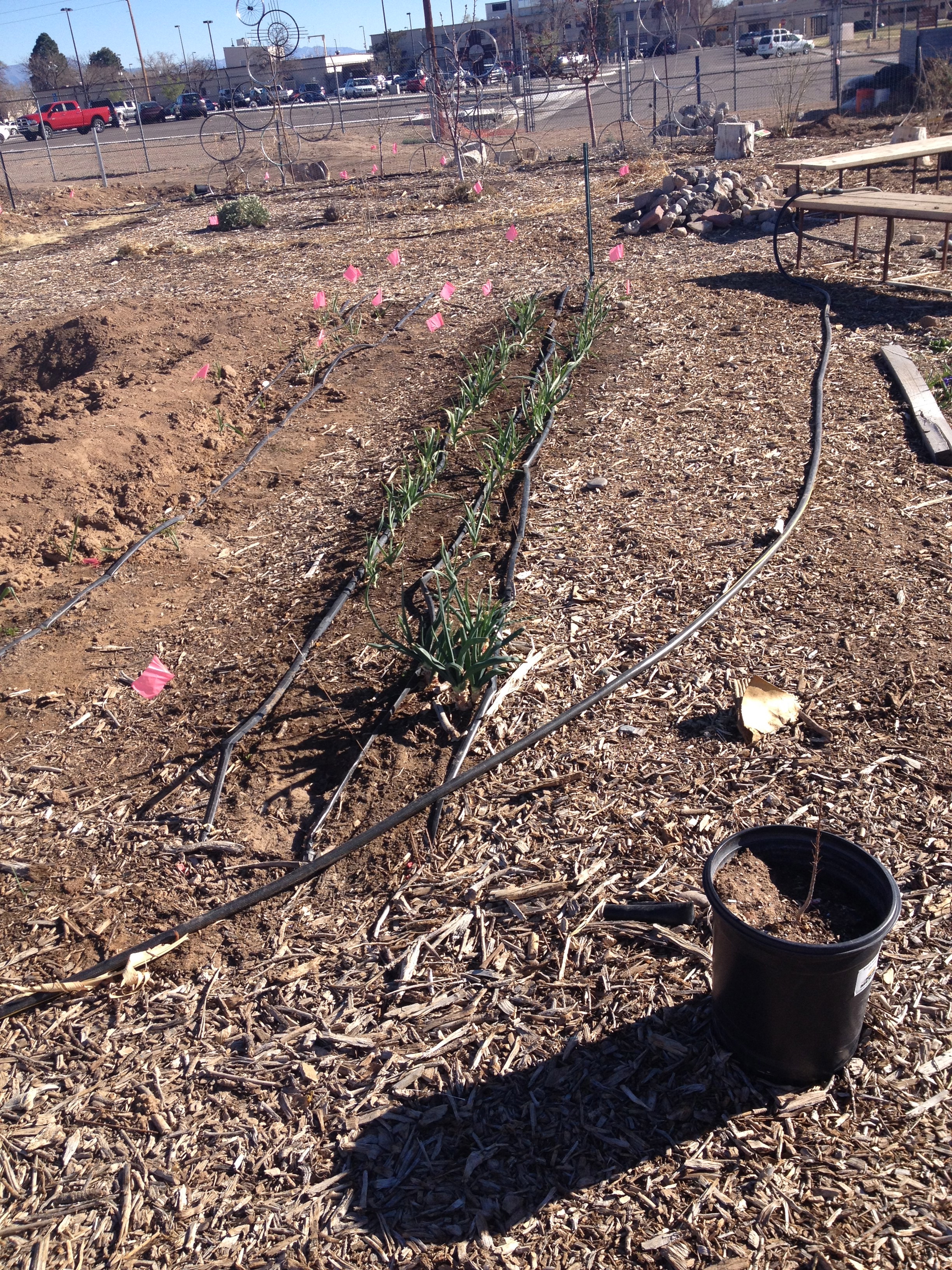
The garden coming alive! Photo by author

The garden coming alive! Photo by author

Tyler believes that a place-based education is essential, not only for people looking to work with FoodCorps, but for all schools and all ages. “When you apply for the National application, they look for people who’ve submitted a ‘good’ application; people who are either just out of college or close to finishing, people who are good at writing because that is always helpful in any application process, and people who’ve maybe had some hands on experience. But, those qualifications don’t always match up with the people who have all of the local knowledge, the people who have grown up working with the climate and soil and weather and really know the land. So it can be good and bad.” Integrating culture into the system is vital for educating youngsters about healthy food and lifestyles.  “These kids are smart,” says Tyler. “They have the intelligence, they just need to get their hands dirty.”

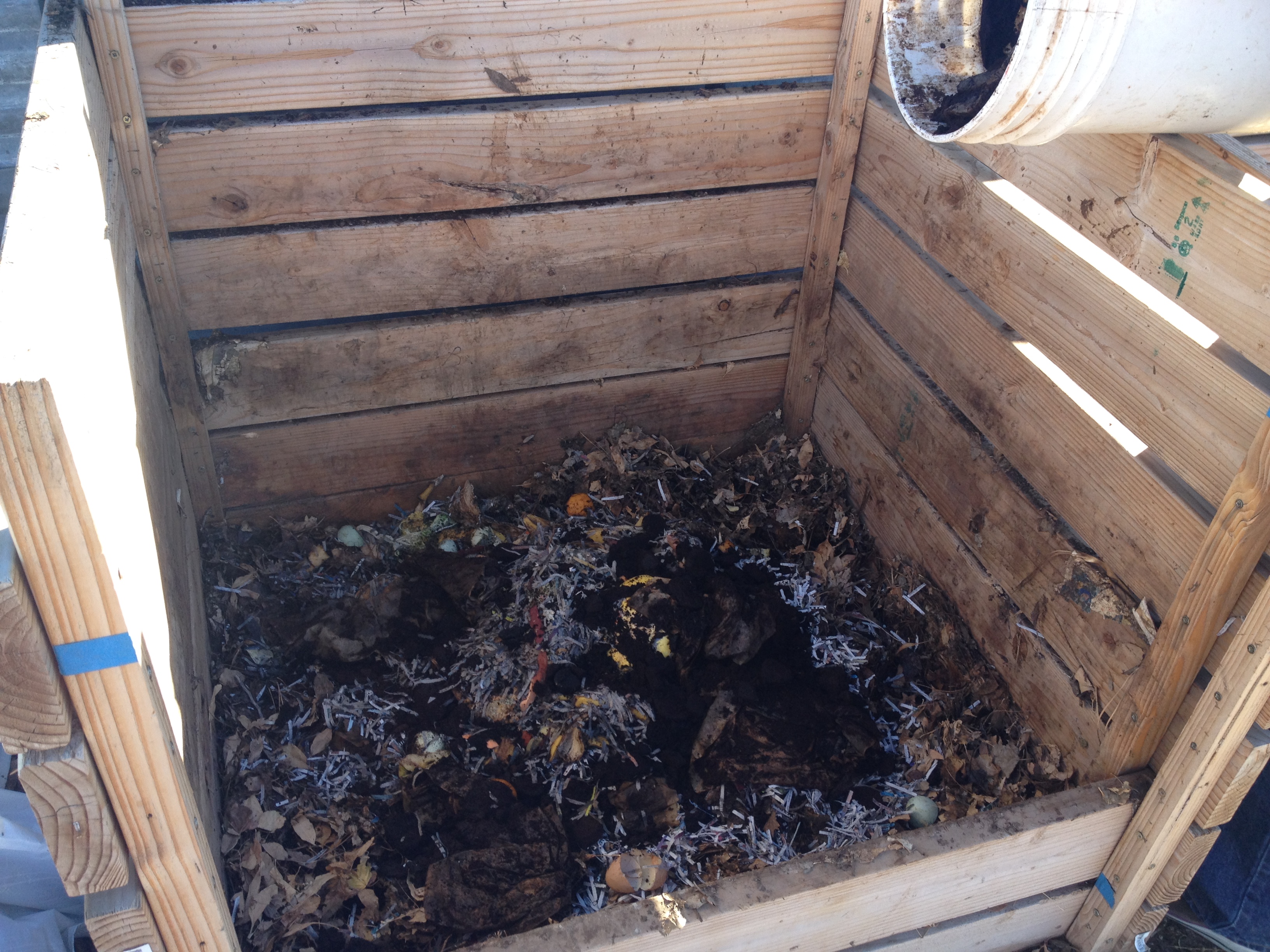
A compost supports the sustainable practices used in the garden. Photo by author

A compost supports the sustainable practices used in the garden. Photo by author

Each year, the state demands more English and more Math. Tyler’s solution: use the garden as a resource. Nature has endless lessons to plant in young minds and with student and teacher support, the garden can flourish. As a FoodCorps member, Tyler feels welcomed and supported by the faculty and students. “The kids all say hi and seem excited to see me,” he grins. It is those connections that validate the FoodCorps mission. Connecting the community to healthy food and to each other are the goals the program strives for.

Tyler Wilson, FoodCorps Service member. Photo by author

Tyler Wilson, FoodCorps Service member. Photo by author

-Posted by Olivia

Posted in Uncategorized | Leave a comment

A Life in the Day of a Farmer

Human beings share experiences with one another; it is an essential psychological process that allows us as a people to continue our evolution in the world. In these uncertain times, humans must reconnect across the divide that an industrialized global economy is creating. We have in a sense already begun to notice this reactionary movement that has gained momentum by promoting a sustainable, organic food system. This movement has enabled the farmer and his crop to reconnect into his local food web, and with the local consumer of his food.

We, as the consumer of this local food, gain vital knowledge by understanding that food is not created in the supermarket but in the soil, and thus a land ethic in sustainability is formulated. We profit when a sustainable agricultural practice is used to ensure food for not only our generation but also for our kids and grandkids. We have to be involved though; we must be active in our pursuit of this vision because it has been proven time and time again that our elected representatives are unable to do so.

Stuart Findley is one of these visionaries, and I met him on a Saturday in spring to discuss his attitudes on life, the Corrales Growers’ Market community, and of course his beautiful, organic farm located in the Northern Bosque in Corrales, NM. Stuart is a grizzled veteran of the sustainable farming movement in Corrales, and some might say it runs in his blood. After taking a 30 year hiatus to fly C-147s internationally from Bangkok to Afghanistan, Stuart decided to reclaim his yard from the weeds and rejoin the Corrales Growers’ Market to partake in the budding organic food movement here in the Southwest.

This slideshow requires JavaScript.


Luckily for Findley and other Corrales farmers, the zoning of Corrales, which only allows for commercial businesses along the main road, creates the perfect environment for farmers to maintain land for farming in the middle of the urban sprawl of Albuquerque and Rio Rancho. Because of this, the Corrales Growers’ Market that Stuart sells his goods at is one of the larger farmer markets in the region and attracts a variety of vendors and customers. In the 2013 summer and autumn season, there were over 60 vendors that would show up at the Sunday markets.

Findley Farms was fully ready for the Spring 2014 season and was a bonanza of peas, beans, asparagus, oregano, tomatoes, carrots, rhubarb and other delicious vegetables, each in a different stage of growth or planting, some still even in their starting sets.  The design of the landscape was kept simple. The soil had been freshly turned with cow manure and was rich with nitrogen when I arrived. Alongside this garden was located a small orchard with a variety of apples, apricots, and pears.

I interviewed Stuart hoping to find out more about why he is so interested in being a part of the sustainable movement here in Corrales. Stuart himself is an odd mix of the old cowboy bravado mixed with a healthy liberal background; he staunchly believes the sustainable farmer is the true hero in America. His answers echo his ideology but he emphasized several points about his personal experiences with sustainable agriculture. Findley feels that the key to a sustainable future in the United States lays in citizen knowledge of the dangers that industrial farming practices pose to the environment and our health. A grassroots movement of independent organic farmers is the only way to engage the community and consumer in healthier habits.

Lessons can be learned by reaching out to our community and finding integral people who provide the most vital sustenance to us. We can encourage our local representatives to engage in this healthy dialogue by contacting them by letter or email; you just have to find out who represents you in your district. There are also several different sites that can both increase your knowledge of agricultural issues and also give you the opportunity to volunteer. Change happens when the citizens of the community become involved in the issues that are affecting them.

-Posted by Felipe

Posted in Uncategorized | Leave a comment

A Day in the Life of a Baker

Baking the night before Downtown Growers’ Market! Photo by Kenneth Chavez

Baking the night before Downtown Growers’ Market! Photo by Kenneth Chavez

I dismount my bike in front of Bosque Baking Company’s small storefront; windows steamy, the aroma of freshly baked bread seeping from the cracks around the doorframe, the owners Jim and Stephen bustling behind the counter. I walk into the comforting space and am immediately enveloped with warm smells, sweet smiles and quiet conversation. Stephen ushers me over to his side, gives me a quick hug and explains what he is doing: kneading bread. I wash my hands and he hands me my own heap of dough to work with. It is somewhat meditative, the push and pull, push and pull of the sticky dough into a beautiful, smooth oval. A quick cut on the top of the loaf and it is popped into the fiery oven alongside an array of others.

Stephen wipes the flour from his hands and sits down on one of the stools adorning the place and begins to tell me how he got introduced to his craft in a small bakery in his hometown of Gettysburg, PA. Before settling in Albuquerque, Stephen moved around quite a bit, working in a wide range of bakery settings. During this time he befriended Jim, who he would later ask to join him as his business partner. The two began baking for the Downtown Growers’ Market and their following quickly grew, to the point they were having trouble keeping up with the demand. Feeling confident about their business, they took the leap and signed a lease on their current storefront at 922 Coal SW. Located on the edge of downtown, the bakery is a welcome addition to the area and draws customers from near and far.

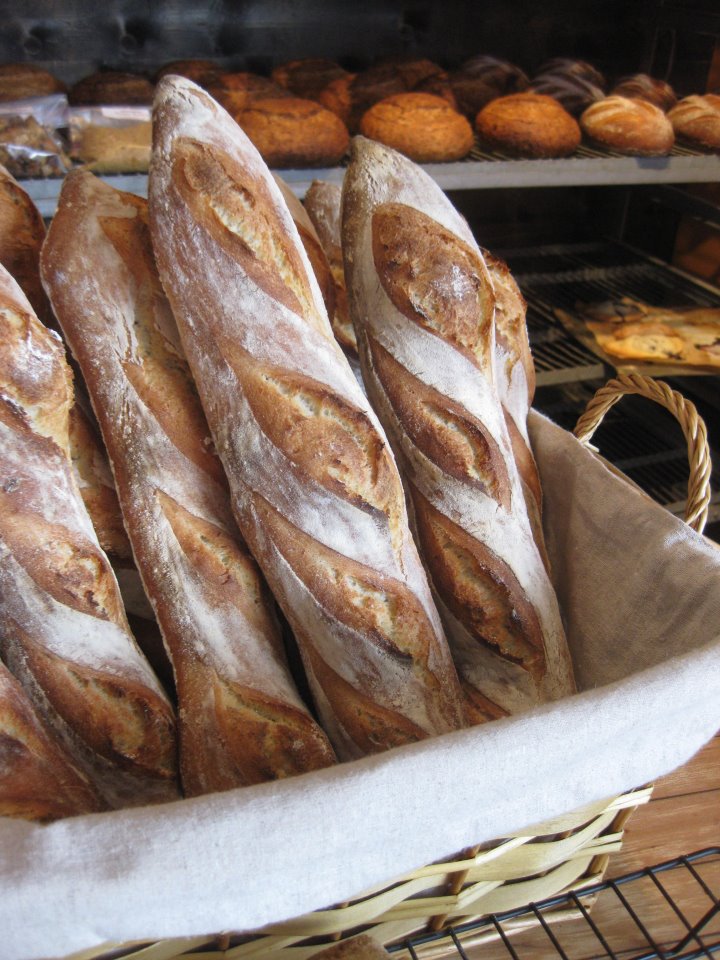
Baguettes at Bosque Baking Company photo by Kenneth Chavez

Baguettes at Bosque Baking Company. Photo by Kenneth Chavez

With a lull in the conversation, Jim calls me to the other side of the open kitchen to help him prep the savory empanadas. We place flavorful carne adovada in a circle of buttery pastry, fold it in half and crimp the edges before pricking the surface with a fork. Jim slides the tray into the oven and picks up the conversation without missing a beat. I ask him how they define themselves as a “local” business, and he discusses the array of local flours that they use in their breads and baked goods. Jim also assures me that their lunch menu utilizes as much in-season, local produce as possible. It is always refreshing to talk to a local businessman who cares about the community and strives to support the artisans and businesses around him. Jim and Stephen make it obvious in every corner of their storefront how highly they value this outlook. Even the interior furniture of the bakery was built entirely by local craftsman Rocky Norton, as well as the bike rack outside.

As Jim and I talk, Stephen has been flittering around the shop, prepping lunch items, cleaning the counters, putting AJ Woods on the sound system, and watering the plants in the windowsill. The duo work well together, acting with purpose but maintaining a certain level of Zen that others may spend a lifetime trying to achieve. Bosque Baking Company is one of Albuquerque’s many local treasures, and a must visit when in the downtown area. The pair can also be found at the Corrales and Downtown Growers’ markets, or at their storefront (922 Coal Ave SW) Wednesday through Saturday. For more information, check out the Bosque Baking Company Facebook page, read Amy White’s Edible article about the duo, and watch this short film by local artist Johnny Gomez that follows the preparation of Bosque Baking Co.’s legendary green chile sourdough loaf.

Chocolate chip cookies and fresh baguettes at Bosque Baking Company. Photo by Kenneth Chavez

Chocolate chip cookies and fresh baguettes at Bosque Baking Company. Photo by Kenneth Chavez

Bosque Baking Company at the growers' market. Photo by Kenneth Chavez

Bosque Baking Company at the growers’ market. Photo by Kenneth Chavez

-Posted by Zoey

Posted in Uncategorized | Leave a comment

How to Eat Sustainably, Locally, and Organically on a College Budget and Schedule

Blog Photo 1

As we all know, organic and locally grown food can be expensive. As college students, it is especially difficult to eat sustainably because we are already lacking disposable income and spare time. It can be quite challenging to break away from the Red Bull and French fry binge when life gets crazy with exams, class projects, a work schedule, and extracurricular activities.

However, no matter how financially constrained and busy you are, there is a way to eat healthy for you and the planet.

1- Eating healthy has to be a priority. What you put into your body directly affects how you feel, how much energy you have, and consequently how you perform in class. So make time for grocery shopping and cooking, even if it means prying yourself away from Netflix. As for the cost, be willing to pay a little extra for the good stuff…like Bee Chama Honey. If money is tight, which it is for most of us, you may have to sacrifice some other expenses. Personally, I choose not to pay for cable TV and instead use that money for healthy food.

2- Keep a running list of groceries you need (and keep it on your phone). Making a quick note when you realize you’re out of bananas and black beans makes it easy to remember what you need when you get to the grocery store. Keeping the list on your phone saves paper. Being organized and only getting what you need saves money and can potentially save gas and time in the event that you forgot something and had to go back.

3- Support a CSA. Various farms in the Albuquerque area offer Community Supported Agriculture through which you get a weekly box of fresh, locally grown produce. This is a means for farmers to acquire funding for the season and build relationships with their customers.

Farm CSA price per week
Amyo Farms $25
Erda Gardens $24
Skarsgard Farms $30
Sol Harvest Farm $27

I spend an average of  $15-$25 on produce each week at grocery stores. The prices from four local farms are comparable to that amount. Buying from a local farm also keeps money in our community, reduces food miles, and encourages consumers to be knowledgeable about their foodshed.

4-Grow your own food. When planning a garden, choose low maintenance fruits & veggies that thrive in the Southwestern environment. Growing plants that are sensible for the area will save valuable time and money.

  • If you have a small living space or don’t have a yard you can garden without a garden.  Or if you move frequently and do not want to part with your plant babies you can construct a portable container garden.
  • Composting is a means of naturally converting your food scraps into nutrient-rich soil amendment while reducing food waste. Thermophilic composting is a fun way to get rid of your unusable food, lawn trimmings, and even newspaper and cardboard, without throwing it into the garbage. Vermicomposting is a great alternative if you don’t have a place to compost outside.

5- Eat less (or no) meat. Here are a few interesting facts:

  • It takes about 2,500 gallons of water to produce 1 pound of beef and 25 gallons to produce one serving of rice or grain (San Francisco Public Utilities Commission).
  • Meat production is responsible for one third of fossil fuel consumption in the U.S (One Green Planet).
  • Thirty Percent of the land on earth is used to raise animals to be eaten (That’s 6 million hectares of forest land every year) (Friends of the Earth, FAO).
  • According to the UN’s Food and Agriculture Organization, the livestock industry is responsible for more greenhouse gas emissions than all the vehicles on the planet.

This means that skipping meat for one meal per week will save 84,000 gallons of water, 15 gallons of gasoline, and 8,000 square feet of land every year…per person. But this is just the tip of the iceberg. There are numerous reasons a low-meat or meat-free diet is better for the planet.

6-Last but not least, Dumpster Dive. Yes, I said dumpster dive. It’s free. It reduces food waste. It’s an incredibly fun activity to do covertly with friends. And it builds a community you can share and trade your findings with. However, there is such a thing as dumpster diving etiquette, and it’s important. If you want to know more, you can also check out Dive!, the dumpster diving documentary made by Jeremy Seifert.

Blog Photo 2

-Posted by Mickayla

Posted in Uncategorized | Leave a comment

6th Annual Sustainability Expo & Lobo Growers’ Market

expobuttonCome celebrate Earth Day at the University of New Mexico’s Sustainability Expo & Lobo Growers’ Market. Now in its sixth year, the Expo & Growers’ Market is one of the largest events on campus. This year it is scheduled to be held on Cornell Mall — just east of the Student Union Building — on Tuesday, April 22nd from 10 am to 2 pm. Everyone is invited to join in the Earth Day-inspired festivities.

The Expo & Growers’ Market offers a great opportunity to interact with sustainability-minded folks at a variety of engaging displays and activities, including an alternative transportation exhibition, a growers’ market, and a bicycle auction. Learn about sustainable initiatives on campus and in the surrounding community, connect with potential employers, meet local farmers, and enjoy the fun, energetic atmosphere.

The Lobo Growers’ Market portion of the Expo is organized by Sustainability Studies students who are passionate about promoting local farming and small business, and educating campus and community members about sustainable agriculture and healthy food choices. The Lobo Growers’ Market will kick off the upcoming Albuquerque area growers’ market season, and will feature numerous local growers, value-added producers, and prepared foods vendors.

Numerous campus organizations are responsible for coordinating the Expo & Growers’ Market event, including the UNM Office of Sustainability, the UNM Sustainability Studies Program, the Associated Students of UNM, and UNM Parking and Transportation Services. In the spirit of sustainability, the 6th Annual Sustainability Expo & Lobo Growers’ Market will be a zero waste event; we encourage your participation and support.

Can’t wait for this year’s Lobo Growers’ Market? Check out video clips from local television stations, KASA and The Mtn, to see their coverage of previous years’ events.

For more info, or to participate in the event, contact us at lgm@unm.edu.

cropped-lgm2.jpg

Posted in Uncategorized | Leave a comment

2013 Market Manager

ianMeet Ian Kerstetter, the Fall 2013 Lobo Growers’ Market Manager! Ian is a senior at UNM, pursuing a Bachelor of Fine Arts in Art Studio with a focus on Art & Ecology. He’s also minoring in Sustainability Studies.

Ian is deeply engaged – as both an advocate and an artist – with the local food community. He completed the SUST-364 Growers’ Market Practicum course this past spring, and has spent the summer working as the assistant market manager at the Nob Hill Growers’ Market. Ian is looking forward to bringing a diverse array of local vendors to campus this fall. In addition, he intends to use the market as an educational and collaborative space for both campus and community initiatives. More on that later…

As an artist, Ian explores the relationship of humans to the environment, and blends ecological and social practices into his work. He is a part of the Vecinos artist collective, a native New Mexican group that promotes sustainability and social change through the arts. Last fall, the collective created a Marigold Parade float for the AgriCultura Network, to honor past and present farmers.

Welcome, Ian. We’re excited to have such a creative and capable student managing the six-week series of markets…and can’t wait for the first market on Wednesday, August 28!

Posted in Uncategorized | Leave a comment